银无须魮
概要
| 字段 | 值 |
|---|---|
| 类别 | 鱼 |
| 学名 | Barbonymus gonionotus |
| 别名 | 乔氏四须魮、爪哇无须魮、爪哇四须魮、喬氏四鬚魮、爪哇無鬚魮、銀無鬚魮、爪哇四鬚魮、Barbus gonionotus、Barbus javanicus、Barbus koilometopon、Puntius jolamarki、Puntius viehoeveri |
| 分类 | 鲤形目 Cypriniformes › 鲤科 Cyprinidae › Barbonymus |
| 水体 | 淡水 |
| 原产地 | 柬埔寨、印度尼西亚、老挝、新加坡、泰国 |
| 成体体长 | 30 cm |
| 饲养难度 | 中等 |
| 最小水体 | 756 L |
| 最小缸长 | 210 cm |
| 群居方式 | 群游 |
| 特征 | 吃小鱼: 是;会跳缸: 是 |
| 外部数据 | seriouslyfish barbonymus-gonionotus;fishbase 286 |
| 食性 | 杂食 |
| 繁殖方式 | 散卵 |
水质参数
| 参数 | 耐受范围 | 最适范围 | 单位 |
|---|---|---|---|
| 水温 | 20–26 | — | °C |
| pH | 6–8 | — | — |
| 总硬度 | 2–15 | — | dGH |
概述
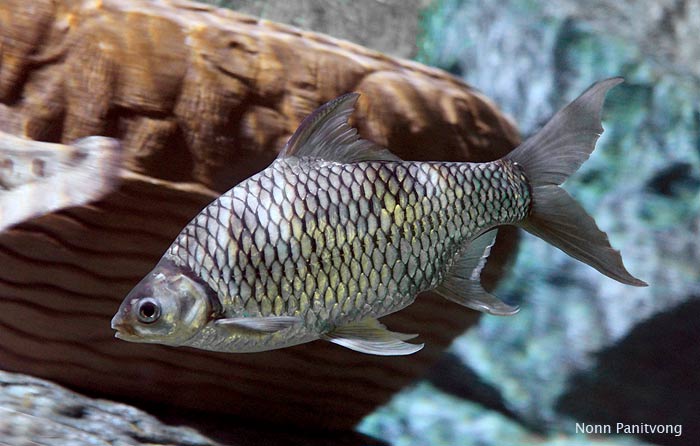
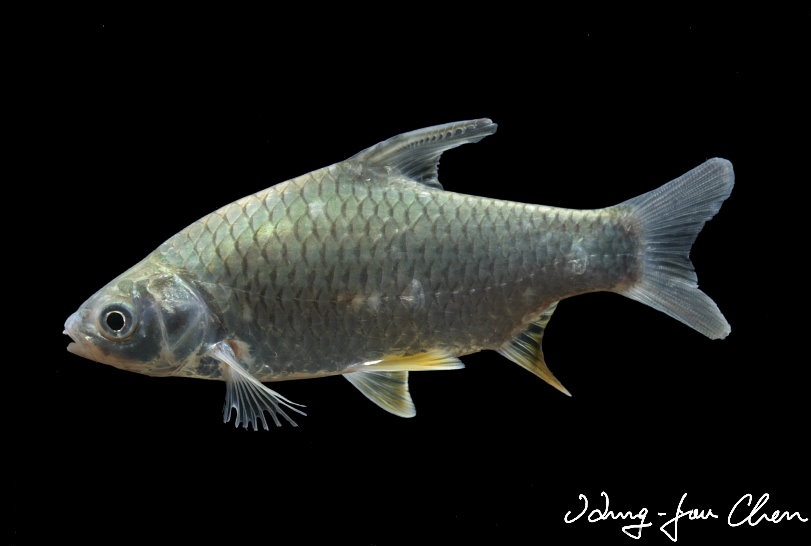
银无须魮(Barbonymus gonionotus)是适合大型设施的群游鲤科鱼,游动和取食积极。灰色背鳍、尾鳍与淡黄色腹鳍、臀鳍,是将它与同属红鳍近似种区分的重要外观线索。
分布与栖息地
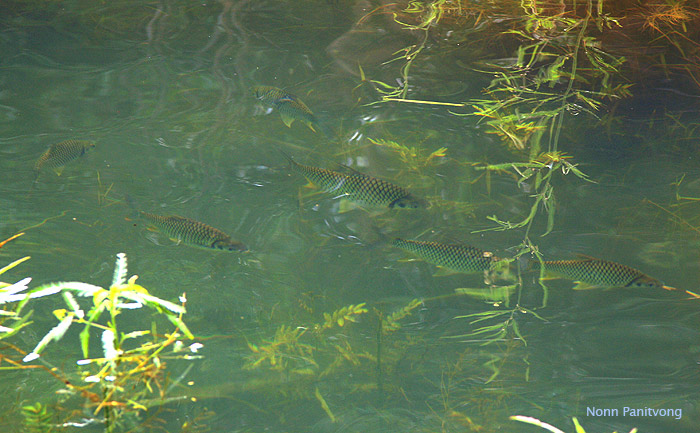
分布广及东南亚,包括湄公河、美功河、湄南河及印度尼西亚爪哇、苏门答腊等水系。马来半岛部分河流的种群似乎来自引入。常见于大型缓流河道及泛滥平原,也进入人工运河和湖泊;雨季到淹水岸地、森林觅食和繁殖,退水时回到河道。
饲养环境
应先保证足够的开放游泳空间,装饰不是主要限制。需要强大的成熟过滤来维持水质、氧气和水体循环。鱼受惊可能强力跳跃,使用沉重且贴合的缸盖,并确保固定可靠。
食性与喂食
机会性杂食,研究提示植物食物可能占主要部分,野外也会吃无脊椎动物、小鱼及其他动物材料。优质薄片、颗粒可搭配活饵或冷冻饵,但应安排足够蔬菜类食物,如去壳豌豆、烫软西葫芦和菠菜。大个体可吃切碎蚯蚓、虾和蚌肉,仍须控制分量。
习性与混养
通常不具攻击性,但会吃小鱼。持续游动与抢食会使慢游、胆小同伴受压,宜与体型相近、健壮且环境需求一致的鱼在大型缸内同养。
至少六尾成群更合适;数量不足可能使个体紧张或出现攻击行为。选择伙伴时,既要考虑成鱼体型,也要考虑整个群体占用的活动空间。
雌雄区分
成熟雌鱼尤其在怀卵时身体更深,其他明显的外观性别差别不多。
繁殖
散卵且不护卵,一次产卵量可达数千粒。作为食用鱼已有人工养殖,部分项目通过激素刺激催产,但这不等于家庭水族箱容易自然繁殖。若尝试,必须事先准备大型繁殖空间、卵的保护措施和大量幼鱼的后续设施。
补充说明
旧名称可能使用其他属名,核对身份时可结合本种较素的鳍色,避免仅凭“大型银色魮”这一外观印象选购。
图片
图片来自 SeriouslyFish,版权归各摄影者所有。
English
Overview
A large social cyprinid, Barbonymus gonionotus is an energetic swimmer and feeder requiring substantial facilities. Its plain gray dorsal and tail fins, together with pale yellow pelvic and anal fins, help separate it from red-finned relatives.
Distribution & habitat
The broad Southeast Asian range includes major mainland drainages and the islands of Java and Sumatra. Some populations in Peninsular Malaysia appear to be introduced. Large, slow river channels and their floodplains are typical habitats, with artificial lakes and canals also occupied. During floods it enters waterside land and forest to feed and reproduce, returning to channels as levels fall.
Aquarium setup
Open water for swimming is a priority; elaborate decoration is secondary. Substantial mature filtration is needed for waste processing, circulation and oxygen supply. Fit a secure, heavy cover, as frightened fish can make powerful jumps.
Diet & feeding
This opportunistic omnivore may feed predominantly on vegetation, while also consuming invertebrates, small fish and other animal material. Combine good prepared foods with moderate live or frozen portions and plentiful plant foods. Peeled peas, softened zucchini and spinach are useful additions. Large specimens accept chopped worms, shrimp and mussel, but portions still need control.
Behaviour & compatibility
Ordinarily nonaggressive, it nevertheless eats small fishes. Slow or nervous companions may fare poorly around its constant activity and strong feeding response. Choose robust, similarly sized tankmates with compatible requirements for a very large aquarium.
Keep at least six conspecifics. Too few can leave fish nervous or occasionally aggressive. Assess the swimming room required by the complete adult group when planning the community.
Sexual dimorphism
Adult females are deeper-bodied, especially when carrying eggs. Other obvious external distinctions are limited.
Breeding
The species scatters thousands of eggs without guarding them. It is farmed as a food fish, with hormone-induced spawning used in some projects, but an easy natural home-aquarium method should not be inferred from that success. Breeding attempts require extensive space, egg protection and facilities for a large number of young.
Notes
Older accounts may place the species in different genera. Its relatively plain fin coloration is a useful identity check when selecting among superficially similar large silver barbs.
来源
- https://www.seriouslyfish.com/species/barbonymus-gonionotus(抓取于 2026-10-10)
barbonymus-gonionotus · 文件: data/species/barbonymus-gonionotus.md · 状态: 草稿