高身四须魮 · Red-tailed Tinfoil Barb
概要
| 字段 | 值 |
|---|---|
| 类别 | 鱼 |
| 学名 | Barbonymus altus |
| 别名 | 高身四鬚魮、Puntius bocourti、Barbus altus、Barbus foxi |
| 分类 | 鲤形目 Cypriniformes › 鲤科 Cyprinidae › Barbonymus |
| 水体 | 淡水 |
| 原产地 | 柬埔寨、老挝、泰国、越南 |
| 成体体长 | 21 cm |
| 饲养难度 | 中等 |
| 最小水体 | 540 L |
| 最小缸长 | 150 cm |
| 群居方式 | 群游 |
| 特征 | 吃小鱼: 是;会跳缸: 是 |
| 外部数据 | seriouslyfish barbonymus-altus;fishbase 8171 |
| 食性 | 杂食 |
| 繁殖方式 | 散卵 |
水质参数
| 参数 | 耐受范围 | 最适范围 | 单位 |
|---|---|---|---|
| 水温 | 20–27 | — | °C |
| pH | 6–8 | — | — |
| 总硬度 | 2–15 | — | dGH |
概述
高身四须魮(Barbonymus altus)常以很小的幼鱼出售,但成年后的群养空间远超多数家庭水族箱。它虽比近似的施瓦氏四须魮(Barbonymus schwanefeldii)小,仍必须按大型群游鱼规划长期设施。
分布与栖息地
分布于泰国、老挝、柬埔寨和越南的多个大河水系,包括湄公河、湄南河与美功河。多栖于会季节性泛滥的河道及周边平原,雨季进入淹水农田和森林觅食、繁殖,水退后返回河流。
饲养环境
开放游泳空间和水质优先于装饰。需要大型成熟过滤系统提供足够生物过滤、溶氧和水体流动。受惊时可能猛跳,缸盖应厚重、贴合并固定牢靠。
食性与喂食
属于机会性杂食鱼,研究提示食物可能以植物为主。可供应优质干粮、适量活饵或冷冻饵,并加入较充分的植物性食物,如去壳豌豆、烫软西葫芦、菠菜及切碎水果。较大个体也能吃切碎蚯蚓、虾肉或蚌肉,但不要因其食欲旺盛而过量投喂。
习性与混养
通常不主动攻击,却会吞食小鱼;持续活动和猛烈抢食也会压制胆小、迟缓的同伴。混养只适合大型缸内体型相近、健壮且需求相容的鱼。
野外会形成大群,建议至少六尾同养。数量不足时部分个体会紧张,甚至转为攻击性行为;足够的同种伙伴有助于展现正常互动。
雌雄区分
成熟雌鱼身体通常更深,怀卵时尤为明显,除此之外外观性别差异不突出。
繁殖
属于散卵型,不照顾卵和鱼苗,一尾雌鱼一次可产数千粒卵。已有水产养殖应用,但家庭水族箱成功繁殖尚无明确记录。尝试繁殖需要大型设施、隔离亲鱼防止吃卵的措施,以及大量鱼苗后续的饲养和安置能力。
补充说明
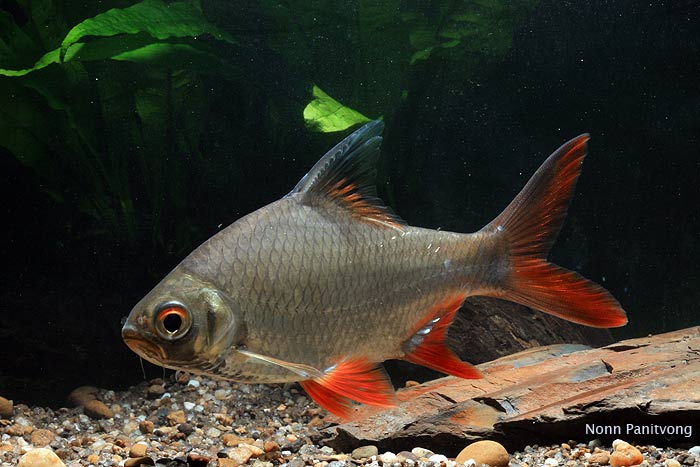
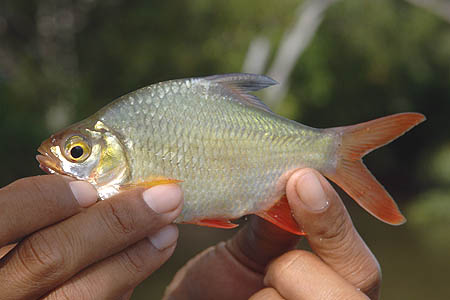
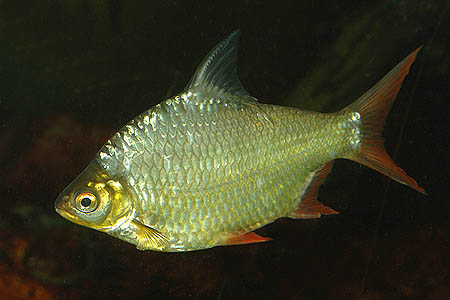
自然色个体的尾鳍两叶没有施瓦氏四须魮那样明显的黑色条带,成鱼身体常带金铜色。金色等选育品系并不会降低饲养空间需求,幼鱼外观也不能作为适合小缸的依据。
图片
图片来自 SeriouslyFish,版权归各摄影者所有。
English
Overview
Barbonymus altus is often sold as a small juvenile even though an adult shoal needs substantial accommodation. It is smaller than the similar Barbonymus schwanefeldii, but that comparison does not make it suitable for an ordinary small home aquarium.
Distribution & habitat
It inhabits major river systems in Thailand, Laos, Cambodia and Vietnam, including the Mekong, Chao Phraya and Mae Klong. Seasonal flooding opens adjacent fields and forests for feeding and reproduction; fish return to river channels as the water falls.
Aquarium setup
Prioritize open swimming space and water quality over elaborate decoration. Large, established filtration must provide adequate biological capacity, circulation and oxygenation. A startled fish can leap forcefully, so use a heavy, securely fitted cover.
Diet & feeding
An opportunistic omnivore, it may obtain much of its nutrition from plants. Offer a varied menu of good prepared food, measured portions of live or frozen foods and plentiful vegetable ingredients. Peeled peas, softened zucchini, spinach and chopped fruit are useful choices. Larger fish also accept chopped worms, shrimp and mussel, but their appetite should not encourage overfeeding.
Behaviour & compatibility
It is generally nonaggressive, yet small fishes may be swallowed. Timid or slow companions can be overwhelmed by constant movement and forceful feeding. Suitable tankmates must be robust, similarly sized and compatible with the same environment, all housed in a large aquarium.
Wild fish occur in sizeable schools. At least six should be maintained together; inadequate numbers may result in nervousness or even aggression. A proper group also allows a more representative social display.
Sexual dimorphism
Females are usually deeper-bodied when mature, particularly while carrying eggs. Other external sex differences are inconspicuous.
Breeding
Eggs are scattered without subsequent parental care, and one female can release thousands at a time. Aquaculture production is known, but successful private-aquarium breeding is not clearly documented. A serious attempt requires large facilities, protection against parental egg eating and a realistic way to rear and house the resulting juveniles.
Notes
Natural specimens lack the strong black stripes along the tail lobes characteristic of B. schwanefeldii, and adults often develop a bronze or golden body cast. Selected color forms require the same substantial accommodation as ordinary fish.
来源
- https://www.seriouslyfish.com/species/barbonymus-altus(抓取于 2026-10-10)
barbonymus-altus · 文件: data/species/barbonymus-altus.md · 状态: 草稿