侧条无须魮 · Spanner Barb
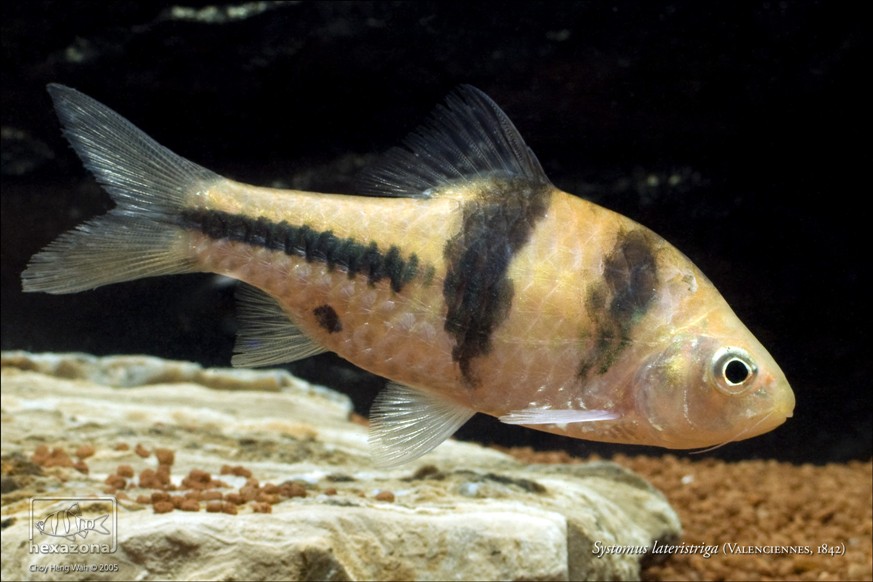
概要
| 字段 | 值 |
|---|---|
| 类别 | 鱼 |
| 学名 | Barbodes lateristriga |
| 别名 | 側條無鬚魮、Barbus lateristriga、Systomus lateristriga |
| 分类 | 鲤形目 Cypriniformes › 鲤科 Cyprinidae › Barbodes |
| 水体 | 淡水 |
| 原产地 | 印度尼西亚、马来西亚、新加坡、泰国 |
| 成体体长 | 15 cm |
| 饲养难度 | 中等 |
| 最小水体 | 304 L |
| 最小缸长 | 150 cm |
| 群居方式 | 群游 |
| 领地性 | 是 |
| 外部数据 | seriouslyfish barbodes-lateristriga;fishbase 10809 |
| 特征 | 啃水草: 是 |
水质参数
| 参数 | 耐受范围 | 最适范围 | 单位 |
|---|---|---|---|
| 水温 | 20–28 | — | °C |
| pH | 6–8 | — | — |
| 总硬度 | 1–10 | — | dGH |
概述
侧条无须魮(Barbodes lateristriga)是体格结实、活动量大的鱼,进食时尤其容易让胆小同伴退缩。不同产地的体侧花纹和行为可能有差异,成鱼也未必像幼鱼那样始终紧密成群。
分布与栖息地
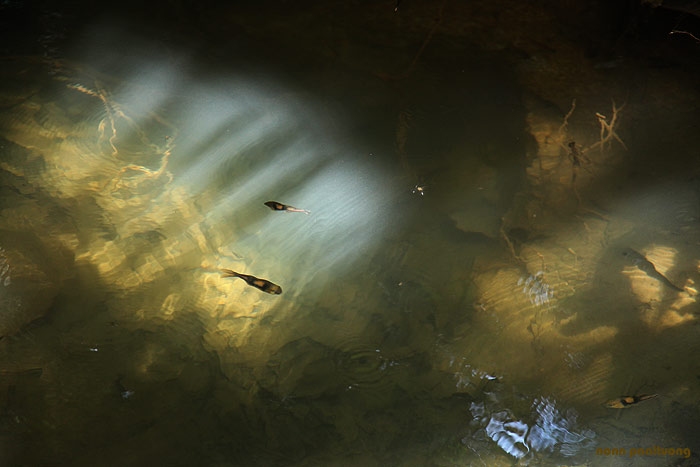
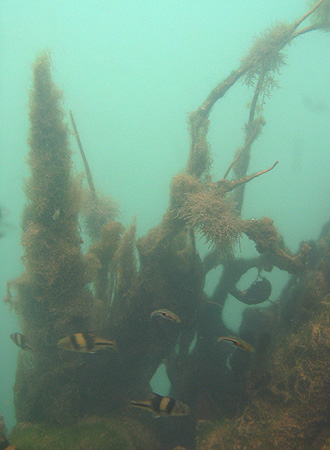
分布涉及泰国南部、马来半岛、新加坡、苏门答腊、爪哇及部分南海岛屿。主要生活在清澈森林溪流,常见于瀑布下水潭,也有泥炭沼泽和黑水溪流记录。幼鱼可进入浅水及小支流,成鱼似乎更偏好宽深河槽和水潭。
饲养环境
宽敞缸体可布置成溪流,用沙、砾石、圆滑大石及沉木形成结构。柔软水草可能被吃,耐养的附生种更合适。它不耐有机废物积累,应维持洁净水质、较高溶氧与适度水流,每周换水约三成至一半。
食性与喂食
野外可能摄食藻类、硅藻、有机碎屑及多种小型无脊椎动物。人工饲养容易喂食,可用含植物或藻类成分的优质干粮,轮换红虫、水蚤和丰年虾等活饵或冷冻饵。
习性与混养
混养宜选健壮、环境需求相容且不怕活跃同伴的鱼,并留足空间。幼鱼在野外能形成大群,随着成熟,雄鱼尤其倾向独处;空间有限时成鱼可能争斗。六尾以上同养理论上有助于分散等级冲突,但实际反馈不一致,不能把数量视为避免攻击的保证。
雌雄区分
雄鱼颜色较强,繁殖时头部有追星,有些个体头部轮廓也更隆起。雌鱼一般略大、身体更厚实,色彩较淡。
繁殖
可参考小型鲤科散卵鱼的方法设置独立繁殖缸:成熟水、昏暗照明、温和供氧,以网格、细叶水草或产卵拖把让卵避开亲鱼。调养好的雌雄可成对或成群尝试,发现卵后移走亲鱼;早期鱼苗从极细小的开口饵开始,再转用微虫、丰年虾幼体。具体产卵和发育节奏应以实际观察为准。
补充说明
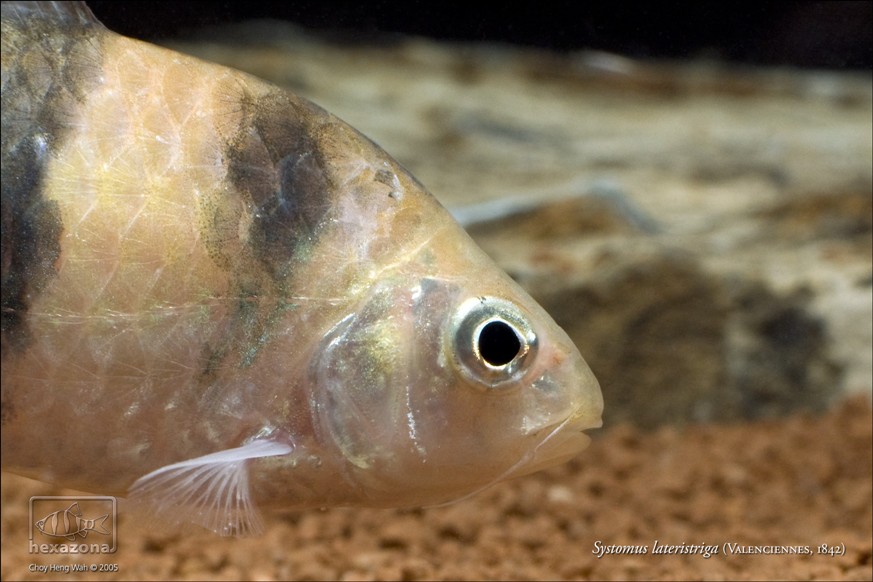
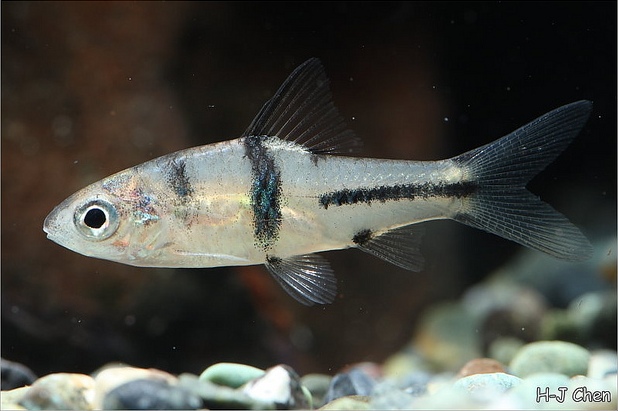
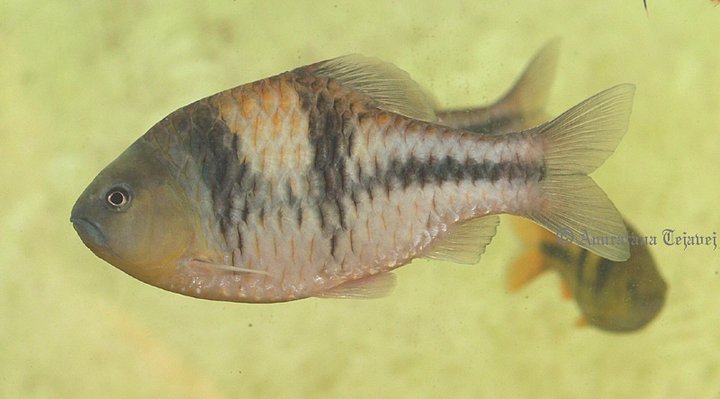
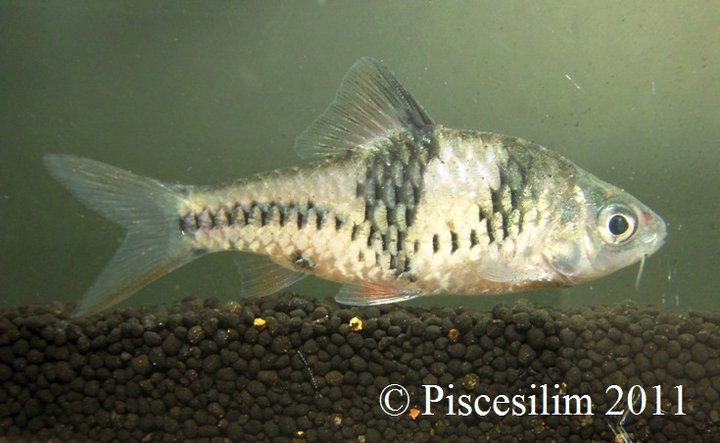
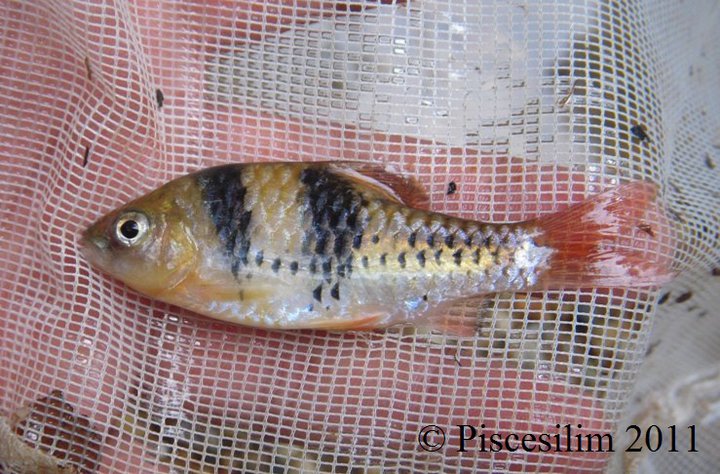
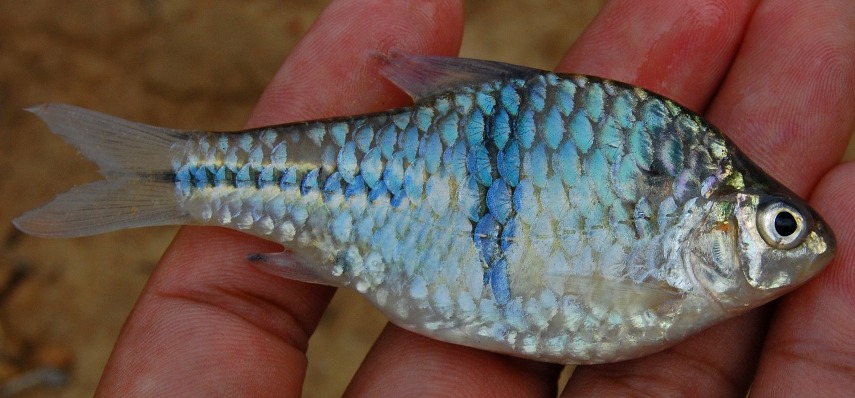
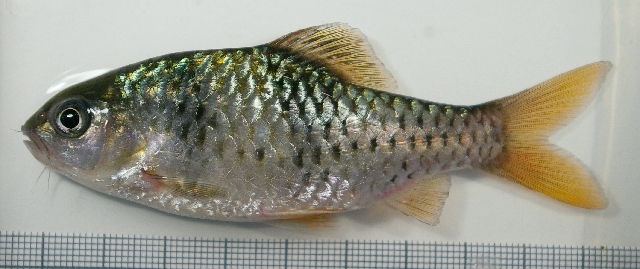
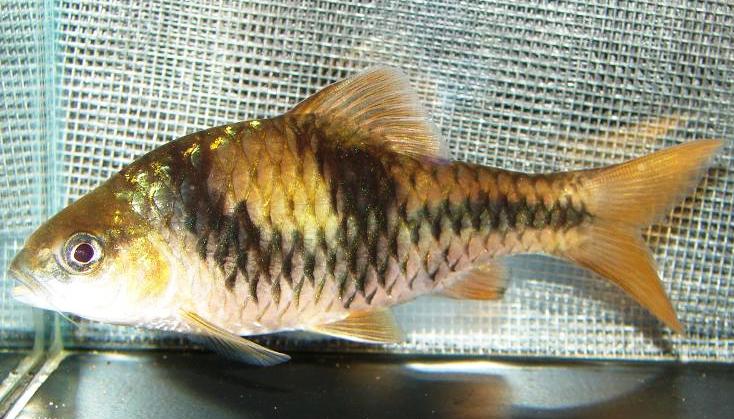
侧面黑纹通常连成实心条带,鳃盖上部没有向后延伸的短横纹。地域花纹差异很大,目前的物种概念可能包含近缘类群,不能把所有商品鱼视为完全相同。
图片
图片来自 SeriouslyFish,版权归各摄影者所有。
English
Overview
Barbodes lateristriga is a vigorous fish whose size and feeding activity can overwhelm shy companions. Regional forms vary in appearance and possibly behavior. In particular, adult social behavior should not be assumed to match that of a juvenile shoal.
Distribution & habitat
Its range includes southern Thailand, the Malay Peninsula, Singapore, Sumatra, Java and several nearby islands. Clear forest streams and waterfall pools are typical, with additional records from peat swamps and blackwater channels. Young fish may use shallow tributaries, whereas adults appear to favor deeper pools and larger channels.
Aquarium setup
Provide a spacious, stream-style layout with sand, gravel, rounded boulders and wood. Soft plants may be eaten; robust attached plants are safer choices. Good oxygenation and moderate flow should accompany consistently clean water. Replace roughly a third to half of the volume weekly to limit waste accumulation.
Diet & feeding
Algae, diatoms, debris and varied small invertebrates probably contribute to wild feeding. In captivity, combine good prepared foods containing plant or algal ingredients with suitable small live or frozen foods.
Behaviour & compatibility
Companions should be robust and comfortable with an active fish, as well as sharing its environmental needs. Wild juveniles gather in large groups, but adults, particularly males, tend toward a more solitary existence. Restricted space can lead to belligerence. Six or more together may spread social tension, yet reports differ, so group size cannot guarantee peaceful behavior.
Sexual dimorphism
Males develop stronger colors and head tubercles when reproductive; some also acquire a more pronounced head profile. Females are usually a little larger, heavier-bodied and less colorful.
Breeding
Methods used for small egg-scattering cyprinids provide a practical starting point: a separate dim tank with mature water, gentle aeration and mesh, fine plants or mops to protect eggs. Condition adults first, then try pairs or a group and remove the parents after eggs appear. Fry need microscopic foods before progressing to microworms or brine-shrimp nauplii. The actual spawning and developmental schedule should be established by observation.
Notes
The flank markings usually join into a solid stripe, without a short streak extending behind the upper gill cover. Considerable regional variation raises the possibility that several allied forms are being treated under one species name.
来源
- https://www.seriouslyfish.com/species/barbodes-lateristriga(抓取于 2026-10-10)
barbodes-lateristriga · 文件: data/species/barbodes-lateristriga.md · 状态: 草稿