皇冠无须魮
概要
| 字段 | 值 |
|---|---|
| 类别 | 鱼 |
| 学名 | Barbodes everetti |
| 别名 | 皇冠無鬚魮、Barbus everetti、Puntius everetti、Systomus everetti |
| 分类 | 鲤形目 Cypriniformes › 鲤科 Cyprinidae › Barbodes |
| 水体 | 淡水 |
| 原产地 | 印度尼西亚、马来西亚 |
| 成体体长 | 12 cm |
| 饲养难度 | 中等 |
| 最小水体 | 243 L |
| 最小缸长 | 120 cm |
| 群居方式 | 群游 |
| 外部数据 | seriouslyfish barbodes-everetti;fishbase 10805 |
水质参数
| 参数 | 耐受范围 | 最适范围 | 单位 |
|---|---|---|---|
| 水温 | 18–28 | — | °C |
| pH | 6–7 | — | — |
| 总硬度 | 2–10 | — | dGH |
概述
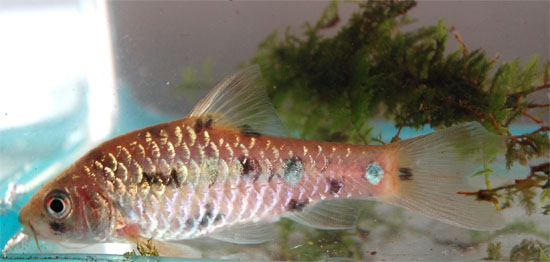
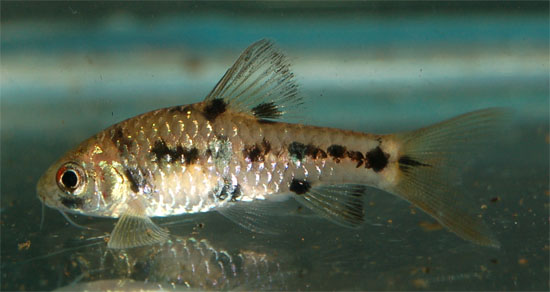
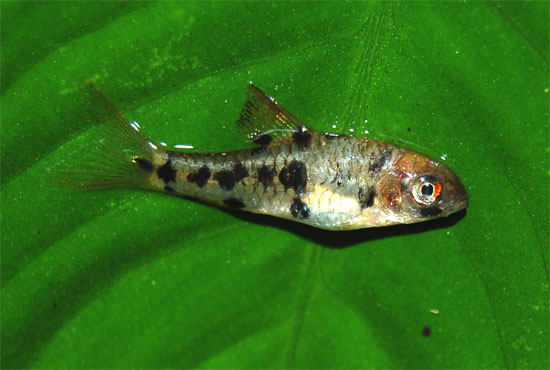
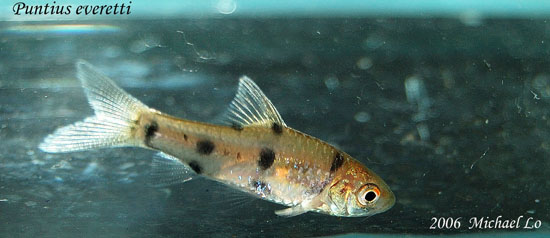
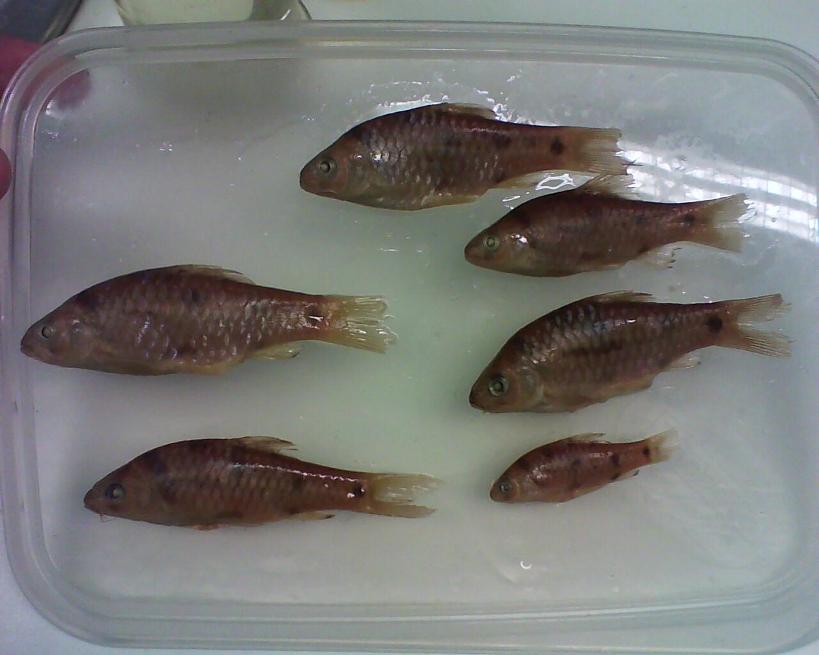
皇冠无须魮(Barbodes everetti)在观赏鱼贸易中并不常见,名称却经常被误用于邓氏无须魮(Barbodes dunckeri)。本种体侧黑斑相对较小,背鳍基部后端另有明显黑斑,整体色彩也较含蓄。
分布与栖息地
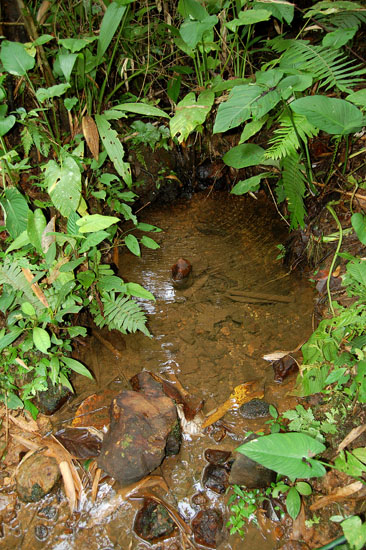
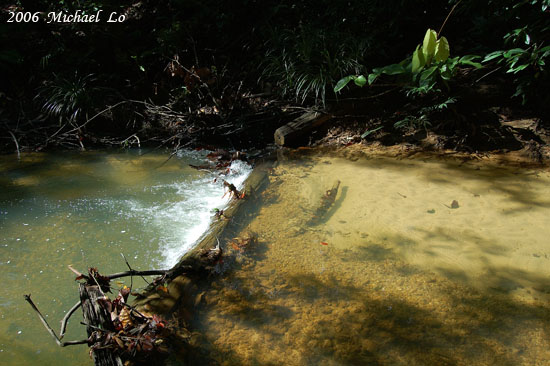
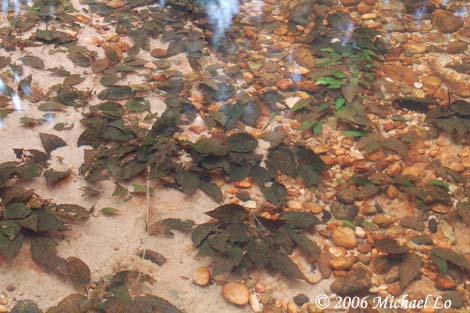
可靠分布主要涉及婆罗洲的砂拉越和西加里曼丹部分地区。苏门答腊的说法未获明确记录支持,纳土纳群岛则有较早采集记录。自然环境包括山麓清澈森林溪流;即使溪流较急,它也偏向水边较缓的位置,还可生活在很浅的林间水潭。
饲养环境
以沙、细砾、圆滑河石和沉木组成溪流式环境,可在硬景观上固定耐养水草。它不适合有机废物积累的水体,需稳定维护、充足溶氧和适度水流;建议每周换水约三成至一半,不必模拟猛烈激流。
食性与喂食
野外可能摄食多种小型动物、植物材料及有机碎屑。人工饲养通常不挑食,优质薄片、颗粒与红虫、水蚤、丰年虾等活饵或冷冻饵搭配,有助于维持体况和色彩。
习性与混养
适合与体型相近、温和而健壮的河流鱼同养;过小的鱼可能被当作食物,过于胆小的鱼也可能被其活动压制。建议至少六尾成群,能减少紧张,也让同种的等级互动有正常表达空间。
雌雄区分
雄鱼体色较鲜明,繁殖时头部有明显追星;雌鱼通常较大、较厚实,颜色较淡。
繁殖
本种尚缺可靠的专门繁殖记录。若参考近缘种尝试,可另设昏暗、用成熟水的繁殖缸,提供温和供氧,并用细叶植物、产卵拖把或网格保护散落的卵。发现产卵后把亲鱼移走,准备极细小的鱼苗开口饵,再逐步过渡至微虫和丰年虾幼体。这是尝试方向,并非已证实的本种繁殖流程。
图片
图片来自 SeriouslyFish,版权归各摄影者所有。
English
Overview
Genuine Barbodes everetti is uncommon in aquaria, although its name has often been applied to the more familiar Barbodes dunckeri. Relatively small flank markings and a conspicuous patch at the rear of the dorsal base help identify the less colorful true species.
Distribution & habitat
The clearest range information concerns Sarawak and parts of West Kalimantan on Borneo. Sumatran reports lack firm confirmation, while older collections exist from the Natuna islands. In foothill forest streams it occupies clear water and favors quieter margins when the main current is swift. Very shallow forest pools are also used.
Aquarium setup
Use sand, gravel, smooth river stones and wood, with hardy plants attached to the decorations. Clean water matters more than creating extreme flow. Good oxygenation, moderate circulation and weekly replacement of roughly a third to half of the volume are recommended. Organic waste should not be allowed to accumulate.
Diet & feeding
Small animal foods, plant material and debris probably make up a varied natural menu. Captive feeding is usually uncomplicated. Rotate quality prepared foods with suitable live or frozen items to support color and condition.
Behaviour & compatibility
It suits a community of similarly sized, peaceful but robust river fishes. Tiny companions may be viewed as food; very shy species may also struggle with its activity. A group of at least six is preferable, helping the fish settle while allowing normal social ranking within the shoal.
Sexual dimorphism
Males have stronger coloration and develop head tubercles when reproductive. Females tend to be larger, fuller and paler.
Breeding
A dependable species-specific breeding account is lacking. Methods used for close relatives suggest a possible trial with a separate dim aquarium, mature water, gentle aeration and fine plants, mops or mesh to protect eggs. Parents would be removed after spawning, and microscopic starter foods prepared before moving the fry onto larger foods. This remains an approach to test, rather than a proven breeding schedule for this species.
来源
- https://www.seriouslyfish.com/species/barbodes-everetti(抓取于 2026-10-10)
barbodes-everetti · 文件: data/species/barbodes-everetti.md · 状态: 草稿