邓氏无须魮 · Clown Barb
概要
| 字段 | 值 |
|---|---|
| 类别 | 鱼 |
| 学名 | Barbodes dunckeri |
| 别名 | 鄧氏無鬚魮、Barbus dunckeri、Puntius dunckeri |
| 分类 | 鲤形目 Cypriniformes › 鲤科 Cyprinidae › Barbodes |
| 水体 | 淡水 |
| 原产地 | 马来西亚 |
| 成体体长 | 12 cm |
| 饲养难度 | 中等 |
| 最小水体 | 243 L |
| 最小缸长 | 120 cm |
| 群居方式 | 群游 |
| 外部数据 | seriouslyfish barbodes-dunckeri;fishbase 12140 |
| 繁殖方式 | 散卵 |
水质参数
| 参数 | 耐受范围 | 最适范围 | 单位 |
|---|---|---|---|
| 水温 | 18–28 | — | °C |
| pH | 6–7.5 | — | — |
| 总硬度 | 2–12 | — | dGH |
概述
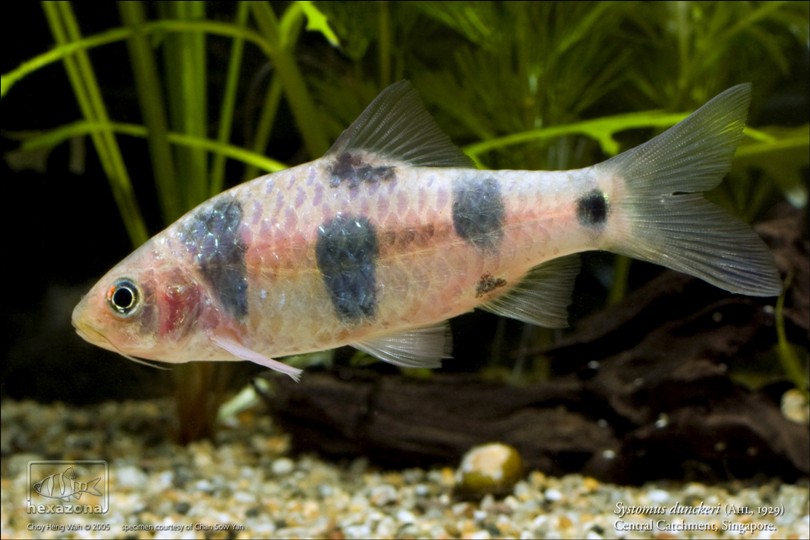
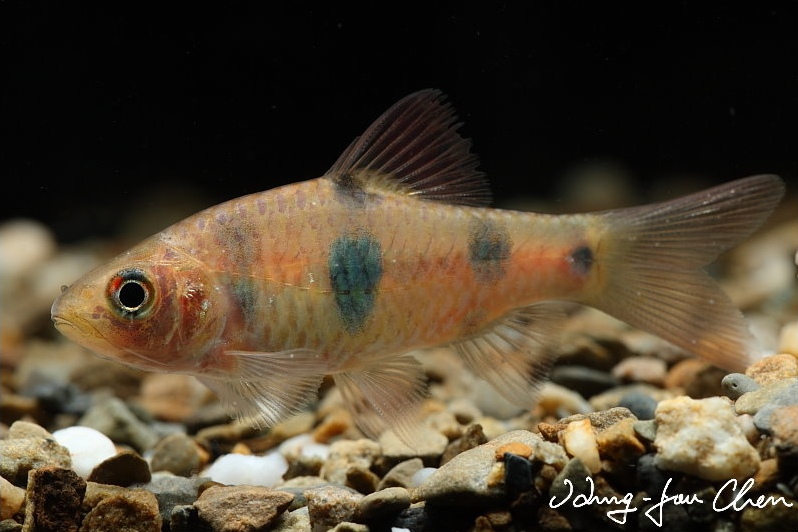
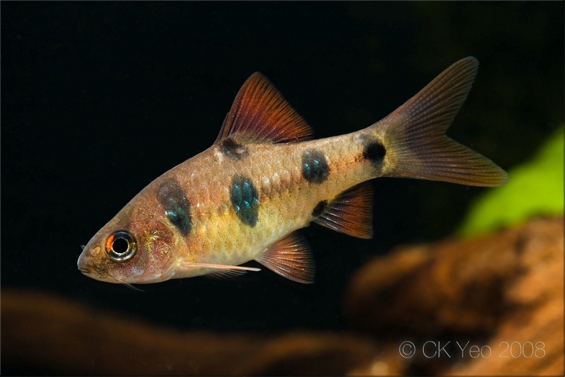
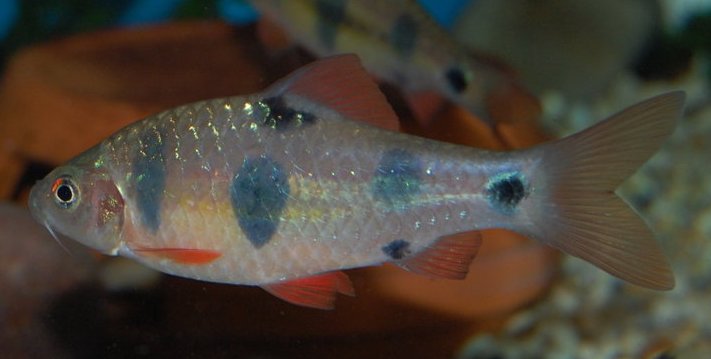
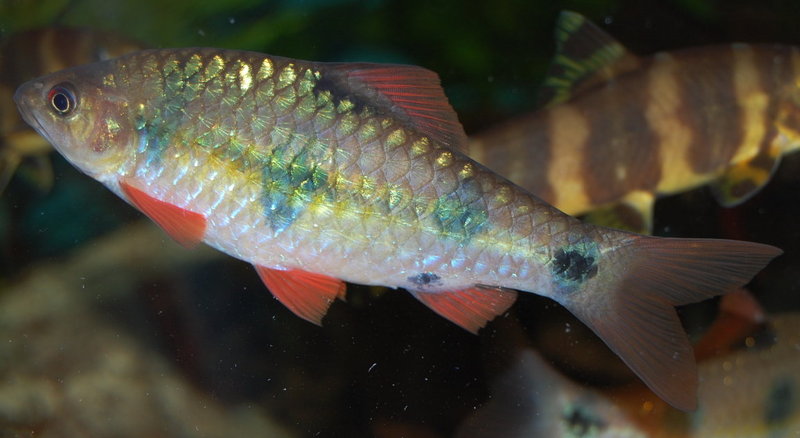
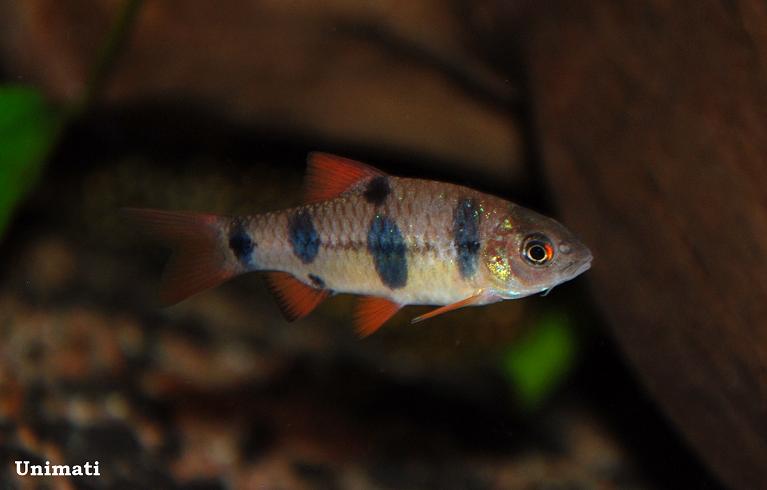
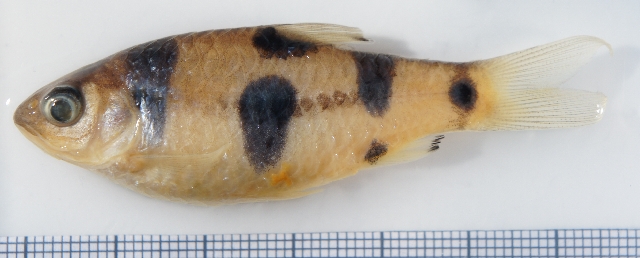
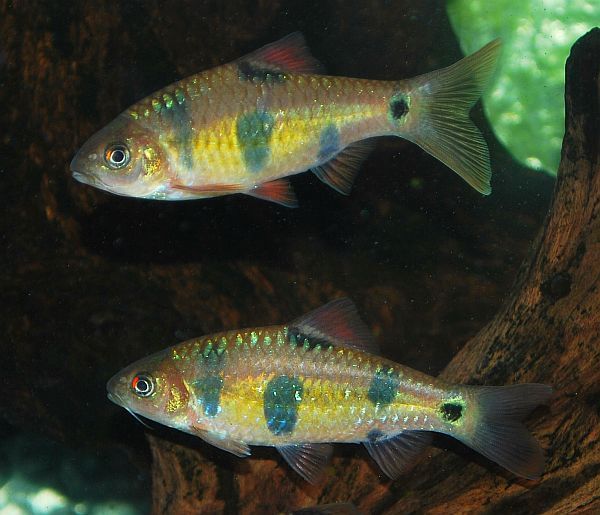
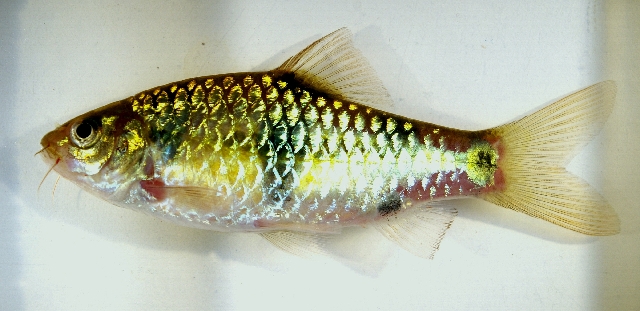
邓氏无须魮(Barbodes dunckeri)是活跃的群游鱼,水族贸易中常以小丑类商品名出现,也长期被误用其他近似种的学名。辨识时可留意较大的体侧黑斑,以及背鳍基部后端没有独立黑斑这一组合。
分布与栖息地
模式产地在新加坡武吉知马,也分布于马来半岛;新加坡种群可能已局部消失。具体野外范围仍不清楚,可能偏好森林溪流,但栖地偏好尚未得到充分确认。商品鱼看来多来自人工养殖。
饲养环境
可采用溪流式布置,以沙、细砾和圆滑石块作为底部,加上沉木根部或枝条。耐养附生水草比柔弱种类更适合。它不耐有机污染积累,应保持水体洁净,每周换水约三成至一半,提供高溶氧与适度水流,而非强行制造激流。
食性与喂食
野外可能广泛觅食蠕虫、昆虫、甲壳类、植物及有机碎屑。人工饲养较容易喂食,宜把优质薄片或颗粒与红虫、水蚤、丰年虾等活饵、冷冻饵搭配。
习性与混养
可与体型相近、温和而健壮的河流鱼混养,同伴不能小到可能被吞食,也不宜过于胆小。建议至少六尾一起养,能减少紧张并让群体等级互动主要发生在同种之间。
雌雄区分
成熟雄鱼颜色更强,繁殖时头部出现追星。雌鱼通常稍大、更厚实,颜色较淡。
繁殖
散卵且不护卵。可另设使用成熟水的昏暗繁殖缸,以网格、细叶水草或产卵拖把保护卵,并用气动海绵过滤或气石轻柔供氧。水质以弱酸至中性、日常温度范围偏高端为方向。
亲鱼调养好、雌鱼明显怀卵后,可尝试一两对或较大空间中的雌雄群体。产卵后应移出亲鱼,避免吃卵。卵通常约一至两天孵化,再过约一天鱼苗自由游动;早期投喂极细小的开口饵,长大后接续微虫和丰年虾幼体。
补充说明
皇冠无须魮(Barbodes everetti)与本种常混淆,但前者体侧黑斑较小、背鳍基部后端有明显黑斑,整体也较不鲜艳。购买时应结合这些特征核对身份。
图片
图片来自 SeriouslyFish,版权归各摄影者所有。
English
Overview
The active, social Barbodes dunckeri is the fish commonly traded as the clown barb. Confusion with another species has persisted in aquarium literature. Large flank marks and the lack of a separate dark patch at the rear of the dorsal base are useful clues to its identity.
Distribution & habitat
Originally described from Bukit Timah in Singapore, it also occurs on the Malay Peninsula. The Singapore population may have disappeared, and its precise remaining distribution is poorly defined. Forest streams are a probable habitat rather than a firmly established preference. Trade supplies appear to come from farms.
Aquarium setup
Arrange sand, fine gravel and rounded rocks into a stream-like setting, using wood for additional structure. Robust attached plants are practical choices. Prevent organic pollution through good filtration and weekly changes of around a third to half of the water. Provide ample oxygen and moderate circulation without an excessive current.
Diet & feeding
A range of animal foods, plants and debris is thought to be used in nature. Captive fish are readily fed on quality flakes or granules supplemented with varied small live or frozen foods such as water fleas, bloodworms and brine shrimp.
Behaviour & compatibility
Choose peaceful, robust river fishes of comparable size. A suitable companion must be too large to swallow and confident enough not to be overwhelmed by an active group. Keep at least six conspecifics to improve confidence and focus hierarchical interactions within the shoal.
Sexual dimorphism
Males develop more vivid markings and reproductive tubercles on the head. Females are generally larger, deeper-bodied and less colorful.
Breeding
Eggs are scattered and receive no parental protection. A separate dim tank with established water, gentle aeration and egg-protecting mesh, plants or mops gives better control. Slightly acidic to neutral water and temperatures toward the warmer end of the normal range are suggested.
Introduce well-conditioned pairs or, with sufficient room, a mixed group. Remove parents after spawning because they may consume eggs. Hatching generally requires one or two days, with free swimming about a day afterward. Offer microscopic starter foods before progressing to microworms and brine-shrimp nauplii.
Notes
The frequently confused Barbodes everetti is less colorful, has smaller flank marks and carries a distinct dark patch at the back of the dorsal base. Checking these features is more reliable than accepting a trade label alone.
来源
- https://www.seriouslyfish.com/species/barbodes-dunckeri(抓取于 2026-10-10)
barbodes-dunckeri · 文件: data/species/barbodes-dunckeri.md · 状态: 草稿