双点无须魮 · Spotted Barb
概要
| 字段 | 值 |
|---|---|
| 类别 | 鱼 |
| 学名 | Barbodes binotatus |
| 别名 | 双标魮、雙點無鬚魮、雙標魮、Barbus binotatus、Puntius binotatus、Systomus binotatus、Barbus maculatus、Barbus oresigenes、Barbus blitonensis、Barbus kusanensis、Barbus polyspilos、Systomus goniosoma、Barbus palavanensis、Barbus quinquemaculatus、Barbus ivis、Barbus maculatus hagenii、Puntius sibukensis |
| 分类 | 鲤形目 Cypriniformes › 鲤科 Cyprinidae › Barbodes |
| 水体 | 淡水 |
| 原产地 | 文莱、柬埔寨、印度尼西亚、老挝、马来西亚、缅甸、菲律宾、泰国、越南 |
| 成体体长 | 20 cm |
| 饲养难度 | 入门 |
| 最小水体 | 243 L |
| 最小缸长 | 120 cm |
| 群居方式 | 群游 |
| 外部数据 | seriouslyfish barbodes-binotatus;fishbase 5180 |
| 繁殖方式 | 散卵 |
水质参数
| 参数 | 耐受范围 | 最适范围 | 单位 |
|---|---|---|---|
| 水温 | 18–30 | — | °C |
| pH | 6–7.5 | — | — |
| 总硬度 | 2–12 | — | dGH |
概述
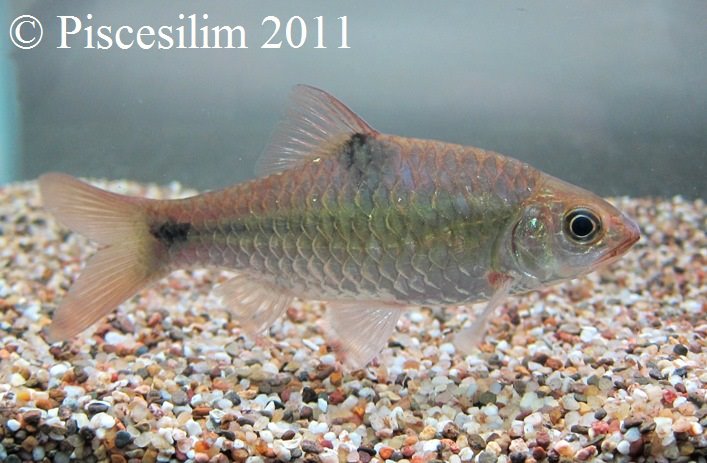
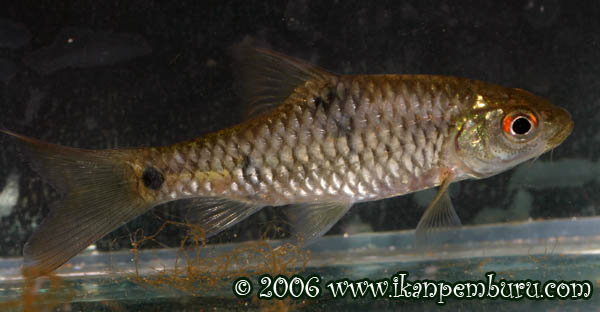
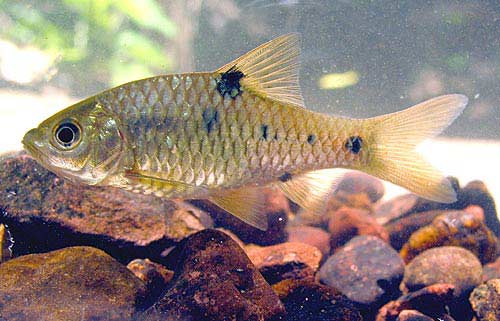
双点无须魮(Barbodes binotatus)是活跃的群居鱼,背鳍起点及尾柄处的深色斑点是常见识别线索,但不同产地和年龄的花纹变化明显。饲养时应为成群活动留下空间,并避免搭配过小或过于胆怯的鱼。
分布与栖息地
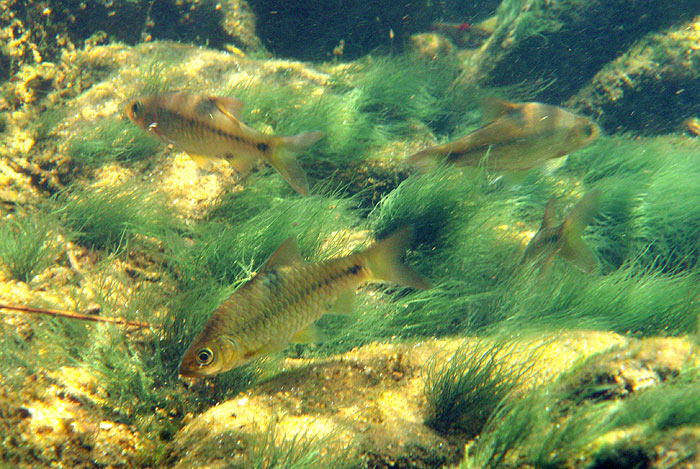
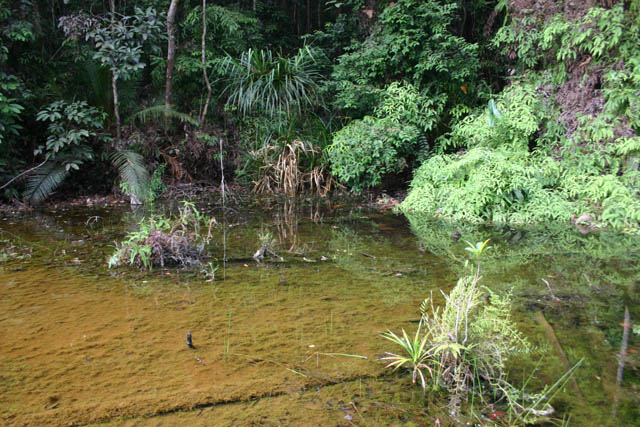
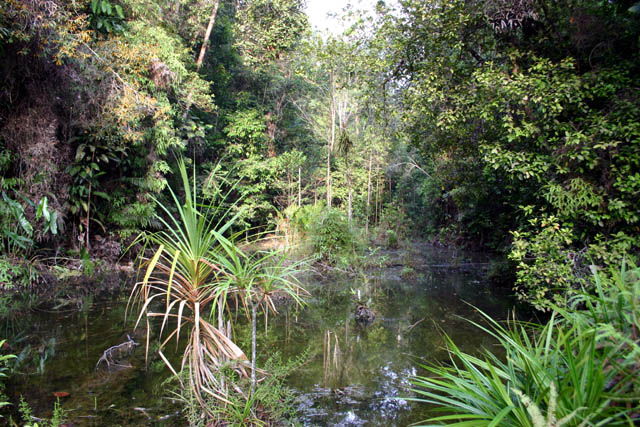
广泛分布于东南亚大陆及岛屿水系,记录从缅甸、泰国、马来半岛延伸到大巽他群岛、菲律宾,以及湄公河流域部分地区。栖地跨度很大,包括山间急流、含氧丰富的上游、瀑布下水潭,也包括沟渠、稻田灌溉水系和泛滥平原静水水体;底部可有泥沙、砾石、大石、沉木和落叶。
饲养环境
可用圆滑石块、沙和细砾布置溪流式水族箱,搭配沉木及固定于硬景观上的耐养水草。无需激流,但良好溶氧和适度水流很重要。每周换水约三成至一半,维持水体洁净。
食性与喂食
野外可能利用蠕虫、昆虫、甲壳类、植物及有机碎屑等食物。人工饲养不难喂,优质薄片、颗粒可与红虫、水蚤、丰年虾等活饵或冷冻饵轮换,避免长期只用单一食物。
习性与混养
适合与体型相近、性情温和但不怕活跃同伴的河流鱼混养,例如合适的鲤科鱼或健壮鳅类。过小的同伴可能被当成食物。建议至少六尾同养,数量足够时更安定,群体内的等级互动也较不易转移到其他鱼身上。
雌雄区分
雄鱼颜色更鲜明,繁殖状态下头部有明显追星。雌鱼一般稍大,身体也较厚实。
繁殖
采用散卵方式,不护卵。成熟缸中偶尔可能自行出现少量鱼苗;想提高存活率,可另设昏暗繁殖缸,使用成熟水和温和增氧,并以网格、玻璃珠、细叶水草或产卵拖把隔开亲鱼与卵。水质宜偏弱酸至中性,水温取日常范围偏高一端。
亲鱼养壮、雌鱼怀卵后可放入一两对,或在更大空间尝试群体繁殖。发现卵后及时移出亲鱼,因为它们可能吃卵。卵约一至两天孵化,随后约一天开始自由游动;先喂纤毛虫级别的小饵,再转为微虫和丰年虾幼体。
补充说明
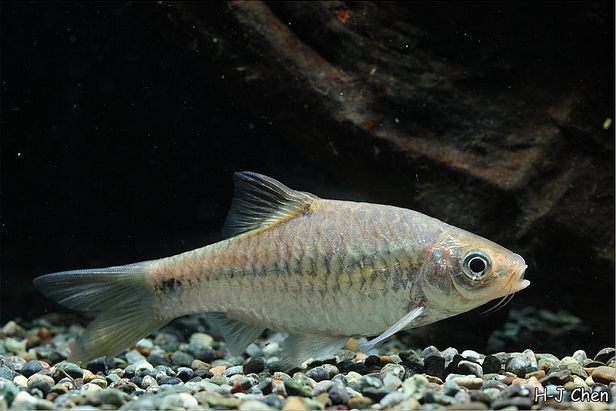
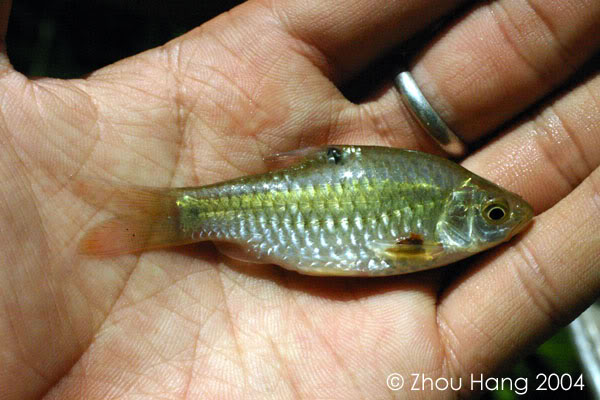
幼鱼可有比成鱼更多的侧斑,某些产地的斑点会连成条纹或竖带。商品鱼的花纹差异不宜直接理解成新品种或确定的种间差异。
图片
图片来自 SeriouslyFish,版权归各摄影者所有。
English
Overview
An active social cyprinid, Barbodes binotatus is often recognized by dark marks near the dorsal origin and tail base. Markings change with age and locality, however. Keeping it successfully involves room for a group and companions that are neither tiny nor excessively timid.
Distribution & habitat
Records span much of Southeast Asia, from Myanmar and Thailand through the Malay Peninsula to the Greater Sunda Islands and the Philippines, with occurrences in parts of the Mekong basin as well. Habitats range from oxygen-rich upland streams and waterfall pools to lowland canals, ditches and floodplain waters. Bottoms may contain anything from mud to bedrock, often with wood and leaf deposits.
Aquarium setup
A stream layout using sand, gravel and rounded stones works well, with wood and tough attached plants adding structure. Moderate circulation and good oxygenation are preferable to extreme current. Replace about a third to half of the water weekly as part of routine maintenance.
Diet & feeding
Wild feeding probably draws on worms, insects, crustaceans, vegetation and organic debris. Captive feeding is straightforward: combine reliable prepared foods with varied small live or frozen items rather than relying on a single food throughout.
Behaviour & compatibility
Appropriate companions include peaceful cyprinids of similar size and robust loaches. They must be confident enough to tolerate its activity and too large to be mistaken for food. Six or more conspecifics form a better group than a few individuals, reducing nervousness and allowing most hierarchical disputes to remain within the shoal.
Sexual dimorphism
Males show stronger colors and develop head tubercles in reproductive condition. Females usually become a little larger and fuller-bodied.
Breeding
This species scatters eggs without guarding them. Occasional fry may survive in an established aquarium, but a separate spawning tank improves control. Keep it dim, use mature water and gentle aeration, and protect the eggs beneath a mesh barrier or among marbles, fine plants or mops. Slightly acidic to neutral conditions and the warmer part of its normal range are suggested.
Well-conditioned fish can be introduced as one or two pairs; group spawning needs additional space. Remove adults once eggs are seen to reduce losses to egg eating. Hatching takes roughly one to two days, followed by swimming fry around a day later. Begin with microscopic foods and then move to microworms or newly hatched brine shrimp.
Notes
Juveniles may carry extra flank spots, and some populations retain connected stripes or bars as adults. These variable patterns should not automatically be interpreted as separate species or selected strains.
来源
- https://www.seriouslyfish.com/species/barbodes-binotatus(抓取于 2026-10-10)
barbodes-binotatus · 文件: data/species/barbodes-binotatus.md · 状态: 草稿