金带无须魮
概要
| 字段 | 值 |
|---|---|
| 类别 | 鱼 |
| 学名 | Barbodes aurotaeniatus |
| 别名 | 金帶無鬚魮、Barbus aurotaeniatus、Puntius aurotaeniatus、Systomus aurotaeniatus、Puntius stigmatosomus、Barbus pessuliferus、Puntius samatensis |
| 分类 | 鲤形目 Cypriniformes › 鲤科 Cyprinidae › Barbodes |
| 水体 | 淡水 |
| 原产地 | 柬埔寨、老挝、泰国、越南 |
| 成体体长 | 6.5 cm |
| 饲养难度 | 入门 |
| 最小水体 | 72 L |
| 最小缸长 | 80 cm |
| 群居方式 | 群游 |
| 性情 | 温和 |
| 外部数据 | seriouslyfish barbodes-aurotaeniatus;fishbase 27129 |
水质参数
| 参数 | 耐受范围 | 最适范围 | 单位 |
|---|---|---|---|
| 水温 | 18–26 | — | °C |
| pH | 6–7.5 | — | — |
| 总硬度 | 2–15 | — | dGH |
概述
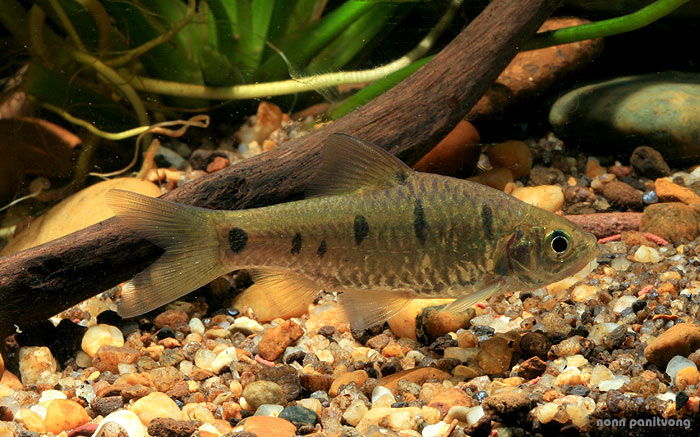
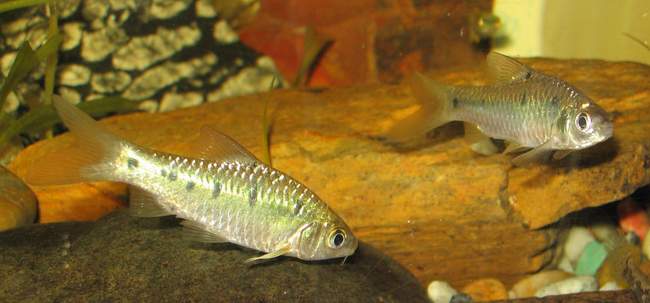
金带无须魮(Barbodes aurotaeniatus)是较少进入观赏鱼市场的小型鲤科鱼。体侧通常有四枚小型竖向黑斑,具有一对上颌须而没有吻须,不能把中文名中的“无须”理解成完全没有须。
分布与栖息地
分布涉及湄公河中下游及其支流,包括老挝、越南、柬埔寨和泰国,也见于泰国东南部一些沿海小水系。栖地从溪流到灌溉渠、沟渠都有,偶见于蓄水水体。
饲养环境
在维护良好的环境中要求不高,但过于空旷的缸可能让体色显得暗淡。柔和光线、深色底砂、沉木和浮水植物有利于展示颜色。可模拟缓流溪流,铺沙或砾石,放置圆滑河石,并用根部、枝条和水草提供遮蔽;少量落叶也可形成自然环境。过滤可温和,但仍应有一定水体流动。
食性与喂食
野外可能是杂食觅食者,利用小型无脊椎动物、植物材料及有机碎屑。人工饲养容易接受饵料,宜把优质薄片或颗粒与红虫、水蚤、丰年虾搭配,部分干粮应含植物或藻类成分。
习性与混养
看来性情很温和,适合仔细选择同伴的混养缸。体型相近、环境需求相似的小型鲤科鱼和部分鳅类可作为选择。建议六至十尾雌雄混群,其他群游鱼也可帮助它们安定;雄鱼在同种竞争者存在时通常更容易发色。
雌雄区分
成熟雄鱼可能比雌鱼更小、更修长且更鲜艳,繁殖状态下差异尤为明显。
繁殖
本种尚缺明确的人工繁殖记录,近缘小型鲤科鱼的散卵方法只能作为尝试方向:另设昏暗的成熟水繁殖缸,以网格、细叶水草或产卵拖把保护卵,使用温和气动过滤或气石供氧。亲鱼产卵后移出,初期鱼苗准备足够细小的开口饵,再逐步转喂微虫和丰年虾幼体。是否适用及具体发育时间,不能视为本种已验证结论。
图片
图片来自 SeriouslyFish,版权归各摄影者所有。
English
Overview
An infrequent aquarium import, Barbodes aurotaeniatus usually has four small upright dark marks along the flanks. Its single pair of maxillary barbels is notable: unlike most relatives it lacks the additional rostral pair.
Distribution & habitat
The range includes much of the central and lower Mekong drainage in Laos, Vietnam, Cambodia and Thailand, together with smaller coastal systems in southeastern Thailand. It occupies varied waters, from streams to ditches and irrigation channels, occasionally including impoundments.
Aquarium setup
Good maintenance is more important than a highly specialized layout, although a bare setting may leave the colors subdued. A dark floor, restrained lighting, wood and floating vegetation provide a more effective display. For a gentle stream arrangement, use sand or gravel with smooth stones, roots and planted cover. Leaf litter can complete the setting. Filtration may be gentle while still providing some circulation.
Diet & feeding
Natural feeding is thought to include small invertebrates, plant material and organic debris. Captive fish are readily fed. Use quality flakes or granules alongside varied small live or frozen foods, ensuring that some prepared foods supply algae or other plant ingredients.
Behaviour & compatibility
It appears very peaceful and is a candidate for a thoughtfully selected community. Similar-sized cyprinids and appropriate smaller loaches from comparable habitats are possible companions. A mixed-sex group of six to ten is recommended. Other shoaling fishes may improve confidence, and rival males can stimulate stronger coloration.
Sexual dimorphism
Adult males are expected to be slimmer, somewhat smaller and more colorful than females, particularly when ready to reproduce.
Breeding
A confirmed captive method for this species is lacking. Procedures used with relatives offer a possible trial: provide a separate dim aquarium with established water, gentle aeration and fine plants, mops or a mesh barrier to keep eggs away from adults. Remove parents after spawning and prepare microscopic starter foods, progressing to microworms and newly hatched brine shrimp. Both the method's suitability and developmental timings require confirmation for this particular species.
来源
- https://www.seriouslyfish.com/species/barbodes-aurotaeniatus(抓取于 2026-10-10)
barbodes-aurotaeniatus · 文件: data/species/barbodes-aurotaeniatus.md · 状态: 草稿