泰国钝齿鱼 · Princess Carplet
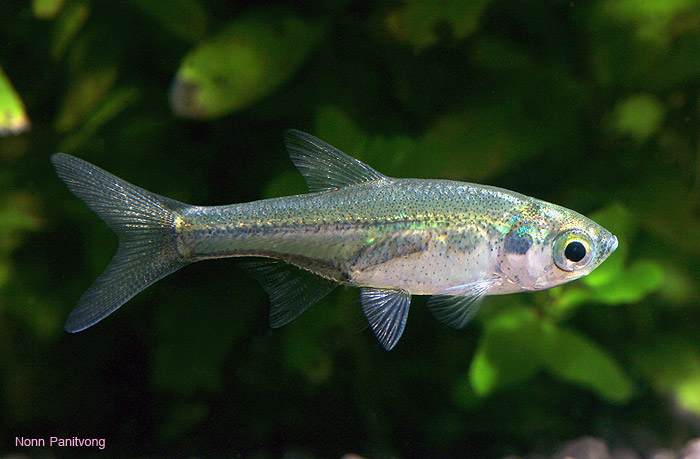
概要
| 字段 | 值 |
|---|---|
| 类别 | 鱼 |
| 学名 | Amblypharyngodon chulabhornae |
| 别名 | 泰國鈍齒魚、Prinzessinnenbärbling |
| 分类 | 鲤形目 Cypriniformes › 鲤科 Cyprinidae › Amblypharyngodon |
| 水体 | 淡水 |
| 原产地 | 柬埔寨、老挝、泰国、越南 |
| 成体体长 | 4 cm |
| 饲养难度 | 中等 |
| 最小水体 | 81 L |
| 最小缸长 | 90 cm |
| 群居方式 | 群游 |
| 性情 | 温和 |
| 外部数据 | seriouslyfish amblypharyngodon-chulabhornae;fishbase 27058 |
水质参数
| 参数 | 耐受范围 | 最适范围 | 单位 |
|---|---|---|---|
| 水温 | 18–28 | — | °C |
| pH | 6–8 | — | — |
| 总硬度 | 2–12 | — | dGH |
概述
泰国钝齿鱼(Amblypharyngodon chulabhornae)是体型小、性情温和的群游鱼,在观赏鱼贸易中很少见,有时随其他鱼的货批混入。饲养时宜安排八至十尾或更多同伴,成群后更安定,也更能表现自然状态。
分布与栖息地
原生分布包括泰国湄公河以外的多个水系,以及延伸至老挝、越南和柬埔寨的湄公河流域。它似乎偏好水流轻缓、水草及浮水植物丰富的湿地和岸边区域,雨季也进入被淹没的草地,并能利用稻田、灌溉渠等人工水体。新加坡曾发现逸生种群,但是否稳定建立尚不明确。
饲养环境
适合水草茂密的缸,可加入浮水植物或延伸至水面的植被。水流不必强,过滤系统则应已经成熟;对水质波动可能较敏感,不宜放入刚启动的缸。
食性与喂食
野外可能取食小型无脊椎动物、藻类及浮游生物。人工饲养可能接受尺寸合适的干粮,同时应供应水蚤、丰年虾等小型活饵或冷冻饵。
习性与混养
性情十分温和,环境需求相容时可与多种鱼混养,但必须考虑它的小体型。维持足够数量的同种鱼有助于减少紧张,群游展示也会更自然。
雌雄区分
成熟雌鱼腹部明显更圆,体型也可能略大于雄鱼。
繁殖
可能采取散卵且不护卵的方式,但这种判断尚未得到明确繁殖记录支持,不宜视为已验证的繁殖方案。
图片
图片来自 SeriouslyFish,版权归各摄影者所有。
English
Overview
A small and notably gentle shoaling fish, Amblypharyngodon chulabhornae is rarely offered deliberately and may arrive mixed with other imports. Keeping eight to ten or more together helps them settle and produces a more natural display.
Distribution & habitat
It is widespread through several Thai drainages, including the Maeklong and Chao Phraya, and occurs in the Mekong system of Laos, Vietnam and Cambodia. Vegetated wetlands and quiet margins appear to be favored. Flooded grassland becomes available during the wet season, and rice fields or irrigation channels can also be occupied. A feral occurrence in Singapore has been recorded, though lasting establishment was uncertain.
Aquarium setup
Dense planting is appropriate, with vegetation at the surface providing additional shelter. Powerful flow is unnecessary. The biological filter should already be established, as changing water chemistry may be poorly tolerated.
Diet & feeding
Small invertebrates, algae and plankton are thought to contribute to the natural diet. Suitably small dry foods will probably be accepted in captivity. Also provide small live or frozen items such as brine shrimp and water fleas.
Behaviour & compatibility
This is a very peaceful fish with potential for a carefully selected community. Its small size must be accounted for, even when water requirements match those of larger companions. Maintain a proper group rather than a few isolated individuals to reduce nervousness.
Sexual dimorphism
A fuller abdomen distinguishes mature females; they may also become slightly larger than males.
Breeding
Egg scattering without subsequent brood protection is considered probable, but it has not been demonstrated by a documented breeding account. That expectation should not be confused with an established captive procedure.
来源
ID:amblypharyngodon-chulabhornae · 文件: data/species/amblypharyngodon-chulabhornae.md · 状态: 草稿