大鳍鱊 · Giant Chinese Bitterling
概要
| 字段 | 值 |
|---|---|
| 类别 | 鱼 |
| 学名 | Acheilognathus macropterus |
| 别名 | 大鳍剌鳑鲏、大鰭鱊、大鰭剌鰟鮍(香港)、Riesenbitterling、Acanthorhodeus macropterus、Acanthorhodeus guichenoti、Acanthorhodeus taenianalis、Acanthorhodeus dicaeus、Acanthorhodeus bergi、Acanthorhodeus ngowyangi、Acanthorhodeus jeholicus |
| 分类 | 鲤形目 Cypriniformes › 鲤科 Cyprinidae › Acheilognathus |
| 水体 | 淡水 |
| 原产地 | 中国、朝鲜、俄罗斯、韩国、越南 |
| 成体体长 | 27.5 cm |
| 饲养难度 | 中等 |
| 最小水体 | 648 L |
| 最小缸长 | 180 cm |
| 群居方式 | 群游 |
| 特征 | 吃小鱼: 是 |
| 外部数据 | seriouslyfish acheilognathus-macropterus;fishbase 54380 |
| 食性 | 杂食 |
| 繁殖方式 | 产卵 |
| 领地性 | 是 |
水质参数
| 参数 | 耐受范围 | 最适范围 | 单位 |
|---|---|---|---|
| 水温 | 14–22 | — | °C |
| pH | 6–8 | — | — |
| 总硬度 | 2–15 | — | dGH |
概述
大鳍鱊(Acheilognathus macropterus)是需要较大饲养空间的鳑鲏类鱼,商品市场中并不常见。其繁殖依赖活的淡水蚌,不能按一般散卵鱼安排繁殖缸,更适合具备大型设施和经验的饲养者。
分布与栖息地
原生于中国、朝鲜半岛、越南北部及俄罗斯东南部;日本的种群属于引入,且已表现出入侵性。常见于有植物生长的缓流河段,也很适应湖泊、水库等较大的静水水体。
饲养环境
需要宽敞的水族箱。可模拟缓流河道,用沙、细砾、圆滑河石与较大的石块组成底部,再搭配沉木,并将耐养的附生水草固定在石块或沉木上。
食性与喂食
野外既吃昆虫及其幼虫,也摄食藻类和其他植物。人工饲养通常不挑食,可用优质干粮作为基础,定期搭配红虫、水蚤、丰年虾等活饵或冷冻饵,帮助维持体况和发色。
习性与混养
非繁殖期通常不具攻击性,但成鱼可能吞食远小于自己的同伴。混养宜选体型相近、性情温和、适应相同环境的鱼;繁殖期雄鱼会驱赶其他雄鱼。
雌雄区分
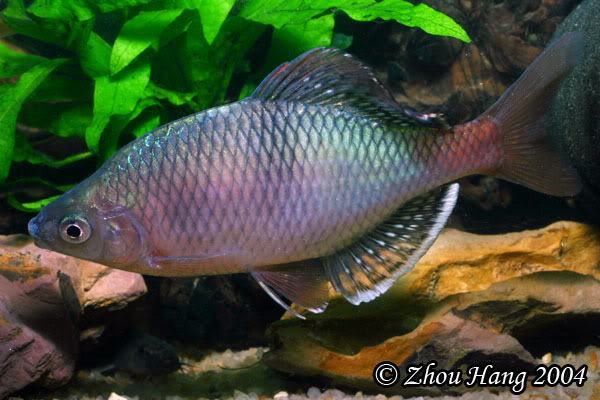
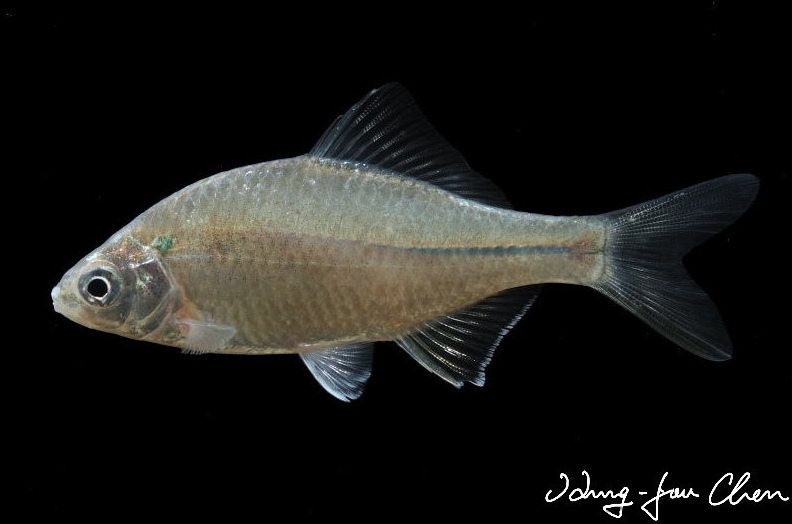
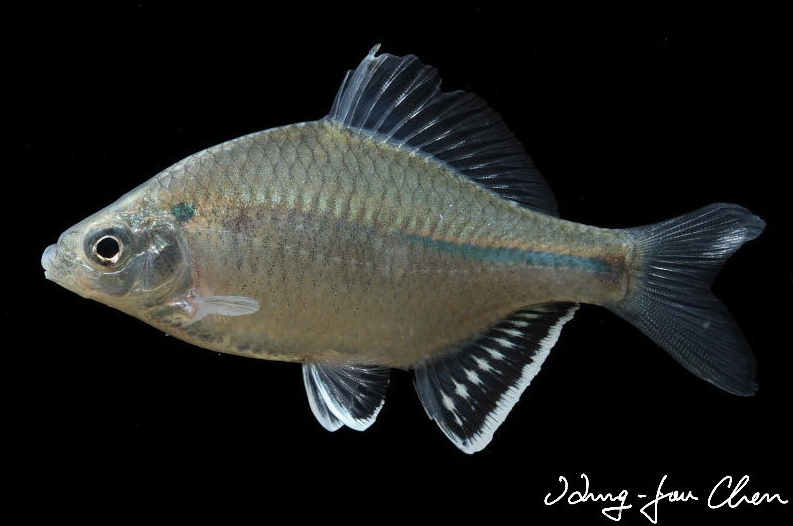
雄鱼背鳍和臀鳍的鳍条较长。繁殖雄鱼色彩加深,带淡粉色金属光泽,腹部变暗,吻部出现追星,臀鳍可见白点。繁殖雌鱼原本近乎无色的臀鳍变黄,并在产卵前伸出明显的产卵管。
繁殖
雌鱼用产卵管经蚌的出水管把卵送入鳃部,雄鱼向入水管排精,使蚌体内的卵受精。胚胎和早期鱼苗留在蚌内,能够独立游动后才离开。雌鱼可使用多只蚌,同一只蚌也可能容纳多尾雌鱼的卵。
本种原生地所用宿主蚌尚未明确,人工繁殖不能假定任意蚌都适用。日本引入种群已有利用当地蚌繁殖的记录,但宿主选择是否广泛仍需谨慎看待。
补充说明
广泛分布的种群可能包含若干近缘种,现有物种边界存在不确定性。繁殖对活蚌的依赖,也使水体及蚌类栖息地的质量格外重要。
图片
图片来自 SeriouslyFish,版权归各摄影者所有。
English
Overview
The bitterling Acheilognathus macropterus requires substantial accommodation and is an occasional aquarium import. Its dependence on live mussels for reproduction makes it a specialist breeding project, best approached by experienced keepers with adequate facilities.
Distribution & habitat
It occurs naturally in China, Korea, northern Vietnam and southeastern Russia. Japanese populations are introduced and regarded as invasive. Vegetated river margins with little current are typical settings, but the fish also thrives in sizeable standing waters, including reservoirs.
Aquarium setup
Use a spacious aquarium with a gentle river-style layout. Sand and gravel can be mixed with rounded stones and a few larger rocks. Wood and hardy plants anchored to the decorations provide further structure.
Diet & feeding
Both animal and plant material are eaten in nature: insects and larvae accompany algae and other vegetation. Most aquarium foods are readily accepted. A dependable dry food can supply the everyday base, with regular small live or frozen foods adding variety and supporting condition.
Behaviour & compatibility
Outside reproduction it is generally nonaggressive. Nevertheless, a large adult may consume a much smaller fish. Choose peaceful companions of comparable size with matching environmental needs. Males become defensive toward rivals during spawning.
Sexual dimorphism
Longer dorsal and anal rays distinguish males. Reproductive males develop stronger colors, a pinkish metallic sheen, a darker belly, snout tubercles and white markings on the anal fin. Females approaching spawning develop a conspicuous egg-laying tube, and the anal fin takes on yellow coloration.
Breeding
Eggs are placed inside a living mussel rather than scattered around the aquarium. The female inserts her ovipositor through its outgoing siphon; sperm released at the incoming siphon reaches the eggs within the gills. Young remain in this protected site through early development before emerging as swimming fry. A female may use several mussels, while a single host can receive eggs from multiple females.
The natural host used by this species has not been established, so successful breeding cannot be assumed with an arbitrary mussel. An introduced Japanese population does use a local host, but that observation alone does not resolve how flexible host selection is.
Notes
The wide distribution may conceal several closely allied species. Identification and population boundaries therefore deserve caution. Maintaining suitable mussel habitat is also relevant to the fish's reproductive survival.
来源
- https://www.seriouslyfish.com/species/acheilognathus-macropterus(抓取于 2026-10-10)
acheilognathus-macropterus · 文件: data/species/acheilognathus-macropterus.md · 状态: 草稿