Zoogoneticus tequila · Tequila Splitfin
概要
| 字段 | 值 |
|---|---|
| 类别 | 鱼 |
| 学名 | Zoogoneticus tequila |
| 别名 | Zoogoneticus sp |
| 分类 | 鳉形目 Cyprinodontiformes › 谷鳉科 Goodeidae › Zoogoneticus |
| 水体 | 淡水 |
| 原产地 | 墨西哥哈利斯科州阿梅卡河源头的特乌奇特兰河一带 |
| 成体体长 | 5 cm |
| 饲养难度 | 中等 |
| 最小水体 | 81 L |
| 最小缸长 | 90 cm |
| 群居方式 | 群游 |
| 外部数据 | seriouslyfish zoogoneticus-tequila;fishbase 57594 |
| 食性 | 肉食 |
| 繁殖方式 | 卵胎生 |
水质参数
| 参数 | 耐受范围 | 最适范围 | 单位 |
|---|---|---|---|
| 水温 | 17–27 | — | °C |
| pH | 6.8–7.6 | — | — |
| 总硬度 | 8–20 | — | dGH |
概述
Zoogoneticus tequila 是小型胎生鱼,繁殖雄鱼的追逐和咬鳍习性使混养选择受限。即使鱼不大,也应给雌鱼及弱势雄鱼足够空间和遮蔽,让它们能避开持续纠缠。
分布与栖息地
特有于墨西哥哈利斯科州,历史产地集中在阿梅卡河源头的特乌奇特兰河及附近泉水。自然环境包括清澈泉池、池塘和浅潟湖,底部多砂砾、岩块,岸边有丰富挺水植物。
饲养环境
布景形式不苛刻,重点是遮挡与躲避处。细叶植物可能受损,可使用结实粗茎植物或人工植物,莫丝和产卵拖把能为幼鱼提供更细密的藏身空间。
水体以近中性偏碱、适中硬度为宜。许多饲养者会在冬季适度降低温度和投喂量,提供繁殖休整期;日常不必刻意追求其耐受温度的极端。
食性与喂食
野外食物主要为昆虫幼体和小型水生无脊椎动物,也会吃其他鱼或同种的幼鱼。人工可接受干粮、活饵和冷冻饵,优质薄片或颗粒可作为日常主食。
习性与混养
有明显咬鳍倾向,避免混养很小或长鳍的鱼。体形较大的胎生鱼及部分中小型中美洲慈鲷在水况相合时可能可行,但选择有限,不能把温和小鱼当作普遍适用伙伴。
雌雄区分
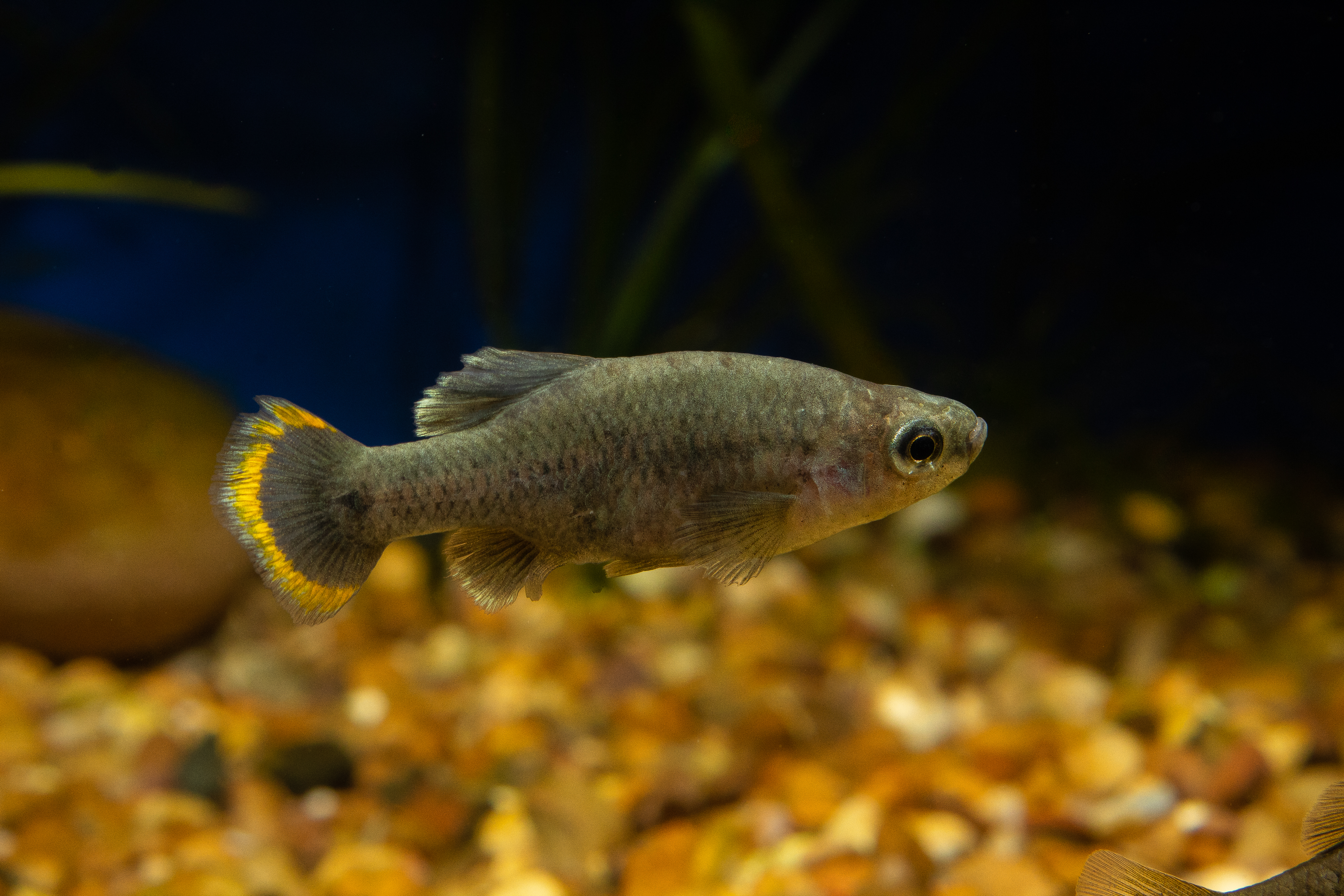
雄鱼较小、颜色更深,成熟后尾鳍周围有金黄色边环,臀鳍特化以辅助体内受精。雌鱼没有这种雄性臀鳍结构,体色较均匀偏橄榄色,通常更大,怀胎时腹部尤其宽。
繁殖
体内受精并直接产下幼鱼,孕期可达约 50 天,每窝约 5–30 尾,取决于雌鱼年龄和大小。临产雌鱼腹部非常宽,有时下缘近方形。
可移至独立待产育苗环境,出生后及时移开雌鱼,减少成鱼捕食。遮蔽丰富的群养缸也可能偶尔留存长大的幼鱼,但不能保证每窝安全。
补充说明
该鱼的野外历史包括种群消失、少量重新发现及再度失去记录,人工保存和放流具有重要意义。2015 年起已有大学、动物园和保育组织合作开展重引入项目。
图片
图片来自 SeriouslyFish,版权归各摄影者所有。
English
Overview
Small size does not make Zoogoneticus tequila an easy community choice. Fin nipping and persistent breeding-male attention limit companions. Females and subordinate males need enough room and cover to escape unwanted pursuit.
Distribution & habitat
Endemic to Jalisco, Mexico, its historical localities center on the Río Teuchitlán in the Ameca headwaters and nearby springs. Natural habitats include clear freshwater springs, ponds, and shallow lagoons with sand, gravel, rocks, and abundant emergent vegetation.
Aquarium setup
Decor is flexible as long as it supplies refuge. Fine plants may be damaged, while robust stems and artificial plants provide durable cover. Moss and spawning mops give fry smaller spaces in which to hide.
Slightly alkaline, moderately hard conditions suit routine care. Many keepers provide a cooler winter rest with reduced feeding to ease reproductive pressure. Aim away from the extremes of its temperature tolerance.
Diet & feeding
Insect larvae and small aquatic invertebrates dominate natural feeding, with fry of other fishes or its own kind also taken. Prepared, live, and frozen foods are accepted, and quality flakes or pellets can form the everyday staple.
Behaviour & compatibility
Fin nipping rules out very small or long-finned companions. Larger livebearers and some small to medium Central American cichlids may work when water requirements match, but suitable choices remain limited.
Sexual dimorphism
Males are smaller and darker, with a golden tail halo at maturity and a modified anal fin involved in internal fertilization. Females lack the male fin structure, remain more uniformly olive, and are usually larger, particularly when carrying young.
Breeding
Internal fertilization is followed by live birth. Gestation can last about 50 days, with broods of roughly 5–30 depending on the female’s size and age. Near-term females become very broad and may show a squared lower profile.
A separate birthing and nursery setup allows prompt removal of the mother after delivery to reduce predation. Heavily sheltered group tanks sometimes produce surviving juveniles, but cover does not guarantee the safety of every brood.
Notes
Its history includes local disappearance, rediscovery of small populations, and renewed losses, making captive conservation and reintroduction important. Universities, zoos, and conservation groups began a joint reintroduction project in 2015.
来源
- https://www.seriouslyfish.com/species/zoogoneticus-tequila(抓取于 2026-10-10)
zoogoneticus-tequila · 文件: data/species/zoogoneticus-tequila.md · 状态: 草稿