闪光沙鳅
概要
| 字段 | 值 |
|---|---|
| 类别 | 鱼 |
| 学名 | Yasuhikotakia splendida |
| 别名 | 閃光沙鰍、Botia splendida |
| 分类 | 鲤形目 Cypriniformes › 沙鳅科 Botiidae › Yasuhikotakia |
| 水体 | 淡水 |
| 原产地 | 老挝南部占巴塞及阿速坡省的色边河水系 |
| 成体体长 | 10 cm |
| 饲养难度 | 中等 |
| 最小水体 | 108 L |
| 最小缸长 | 120 cm |
| 群居方式 | 群游 |
| 特征 | 会跳缸: 是 |
| 外部数据 | seriouslyfish yasuhikotakia-splendida;fishbase 54703 |
| 繁殖方式 | 产卵 |
水质参数
| 参数 | 耐受范围 | 最适范围 | 单位 |
|---|---|---|---|
| 水温 | 20–28 | — | °C |
| pH | 6–7.5 | — | — |
| 总硬度 | 1–12 | — | dGH |
概述
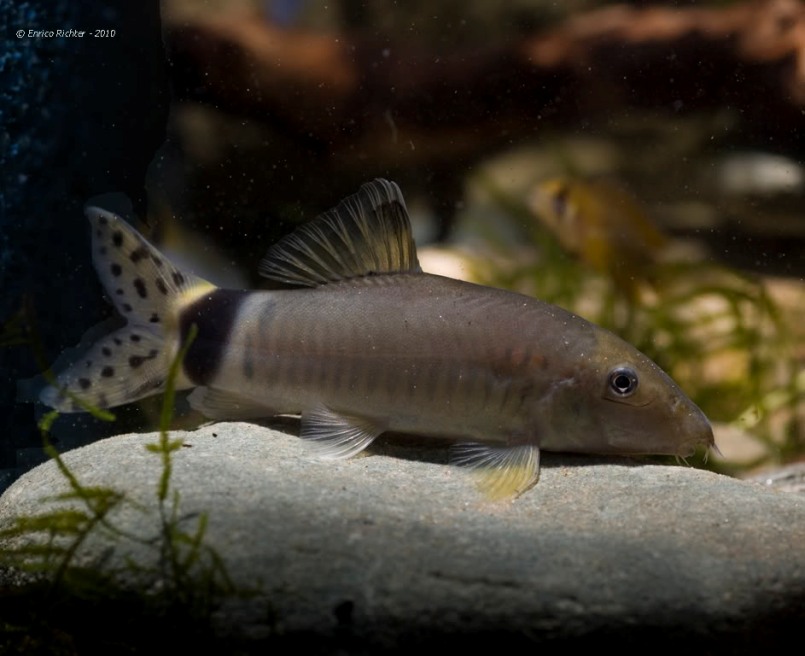
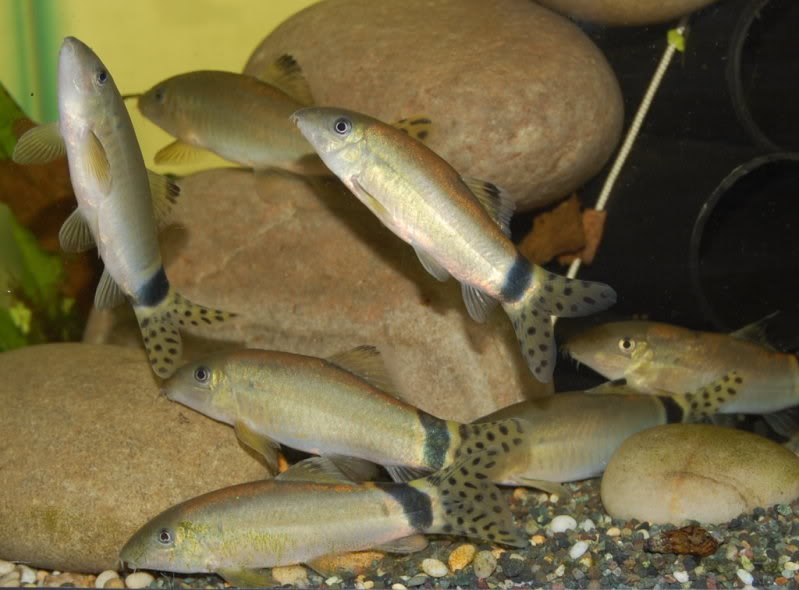
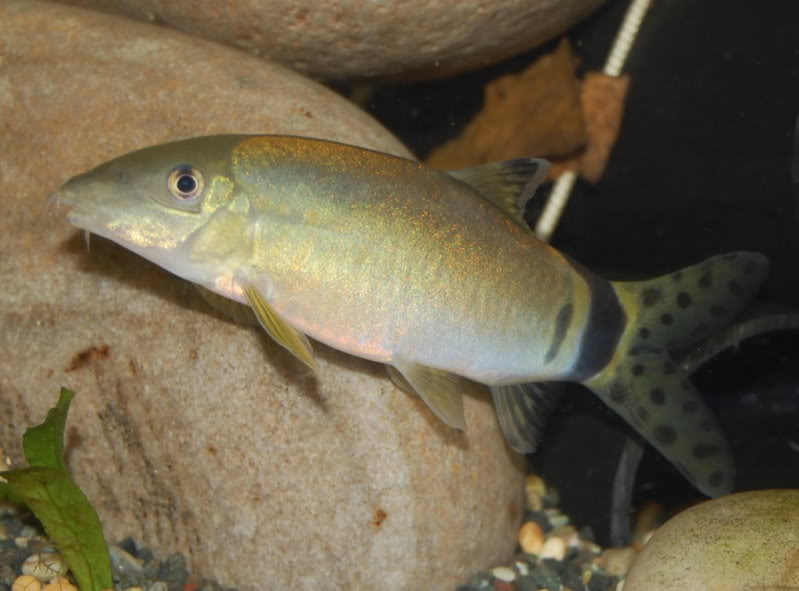
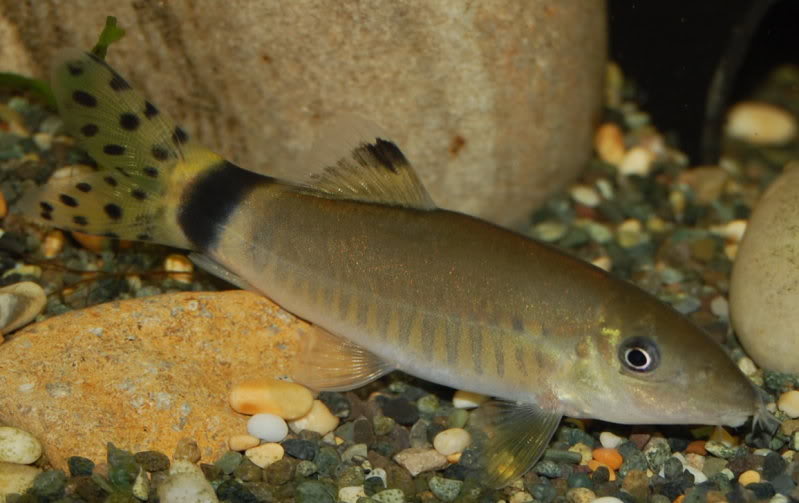
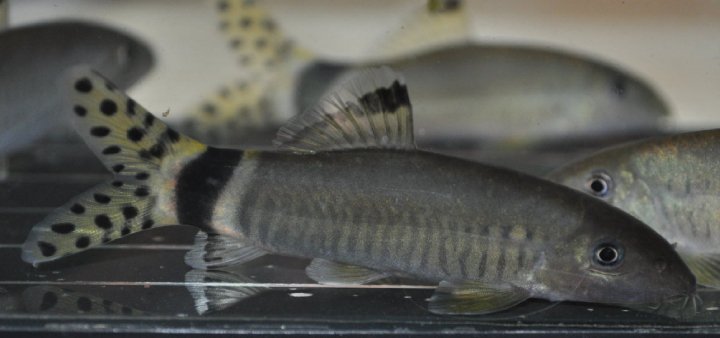
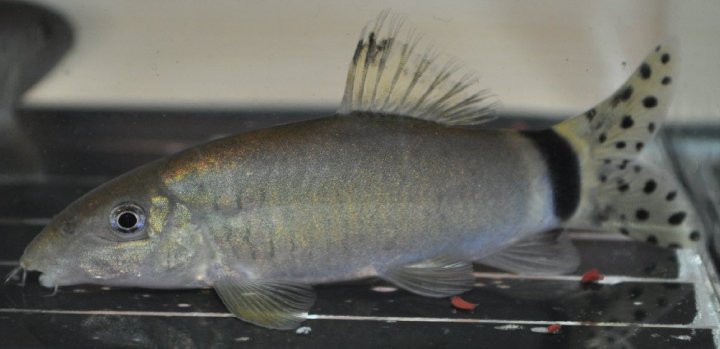
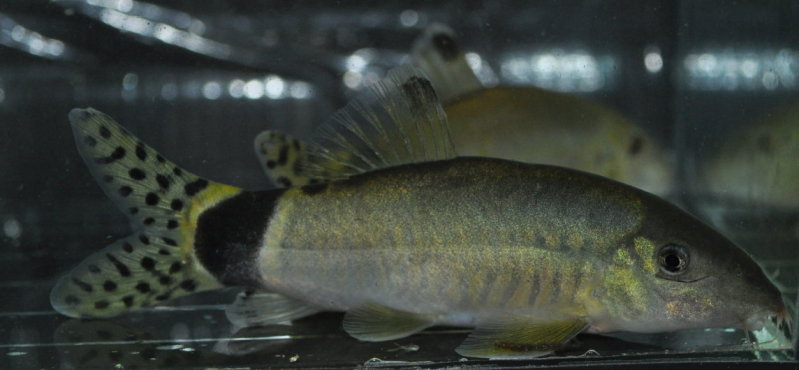
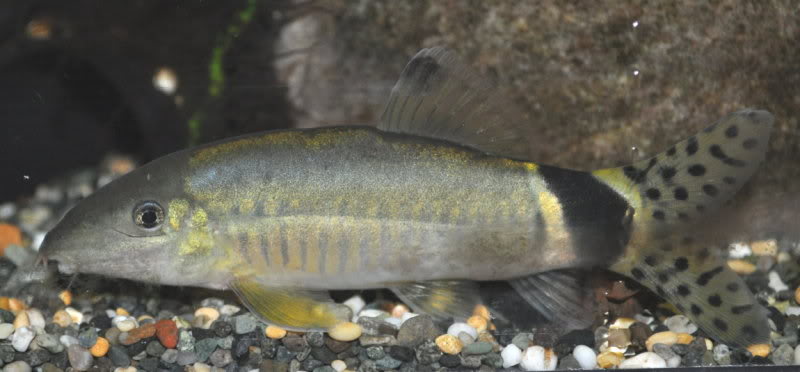
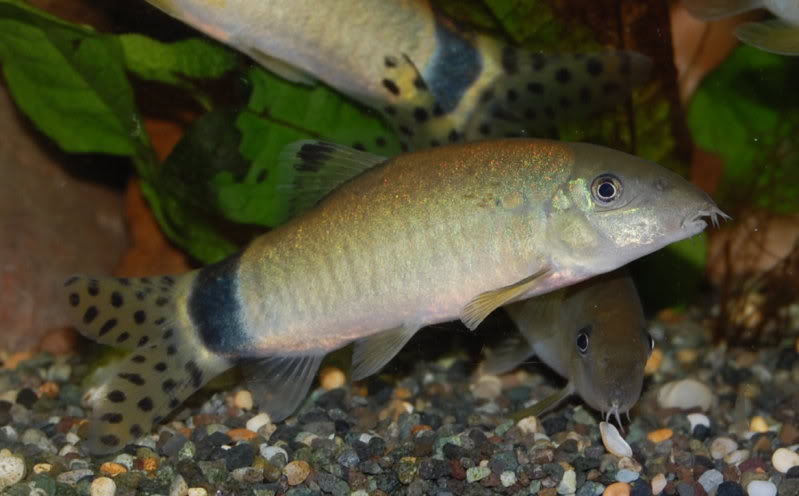
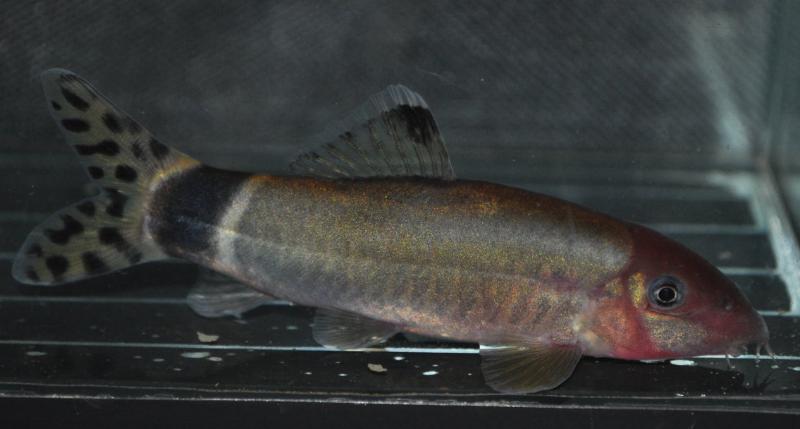
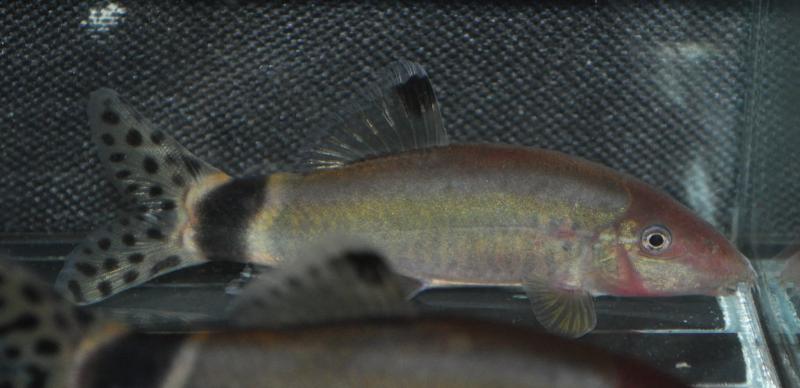
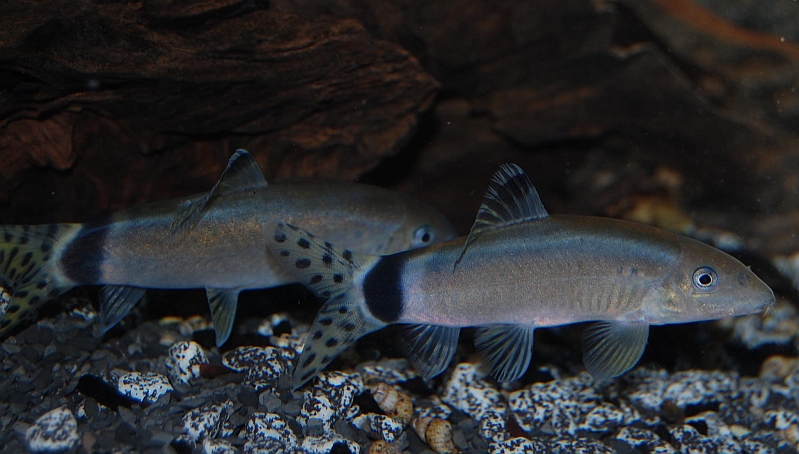
闪光沙鳅(Yasuhikotakia splendida)尾柄有完整暗环,黄色尾鳍上分布较大的暗斑。它的饲养经验常被描述为比部分同属鱼温和,但仍是需要群体和充分藏身空间的沙鳅。
分布与栖息地
已确认产地位于老挝南部占巴塞和阿速坡省的色边河水系,经色贡河流入湄公河。采集环境为波罗芬高原山麓流出的源头小溪,水清流急,底部多岩石和卵石。某处瀑布可能限制其上游分布,但这仍是推测。
饲养环境
底面积至少约 120 × 30 cm。以细砂、细砾石搭配圆石、沉木及树根,形成多个可躲藏的空间,弱光和附着水草可提供阴影。消除尖锐边缘及卡鱼孔洞,使用严密缸盖。
保持充分供氧、适度流动和成熟过滤,不必让整个鱼缸始终处于猛烈水流中。水质须清洁稳定,每周换水约三至五成,不适合刚开缸便入鱼。
食性与喂食
采用同属常用的多样化菜单:优质干饲料、红虫、水蚯蚓及丰年虾轮换,另配黄瓜、瓜类、焯菠菜或西葫芦。切碎蚯蚓少量使用,混合天然食材制作的凝胶饵也可提供。同属鱼可能啃柔软水草,但不能用这一概述确定每条本种鱼的表现;也不能将食螺当成可靠除螺方案。
习性与混养
较温和是饲养者的相对评价,慢游和长鳍鱼仍不适合。活跃的中上层鲤科鱼较值得考虑,强壮底栖鱼需逐种判断。
至少饲养五至六条,最好十条以上,借同种群体满足其社交需求。独养可能畏缩或迁怒相似鱼;两三条的小群容易由强势个体压制其他鱼,甚至导致弱势者停食。
雌雄区分
成熟雌鱼通常身体较饱满,体形也略大。
繁殖
已有一群十五条成鱼在水族箱内产卵、随后观察到自由游动鱼苗的记录。这是有限的成功观察,尚不能据此给出一套稳定可重复的家庭繁殖流程,也不能套用其他同属鱼的商业催产方法。
补充说明
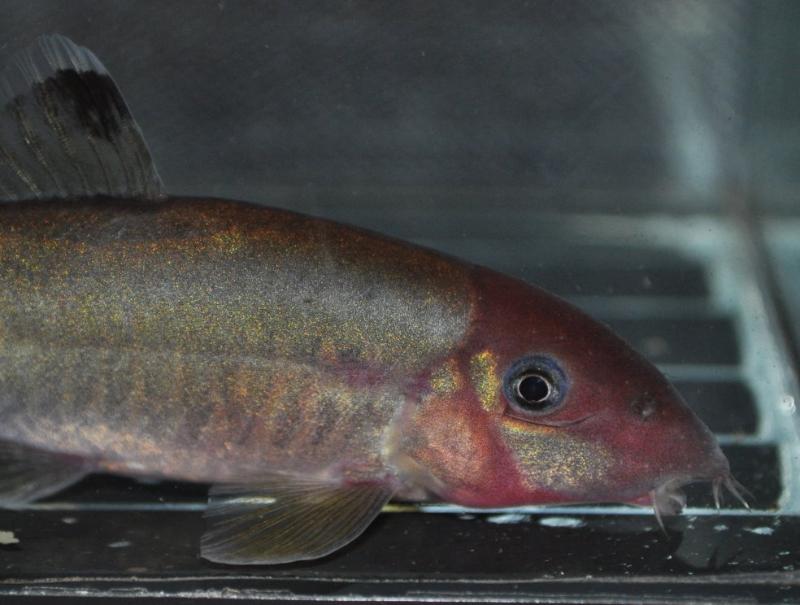
本种尾柄暗环前后都有浅色环,背鳍和臀鳍近边缘有暗条,尾鳍暗斑较大;身体背面没有贯通的深色纵带。尾斑沙鳅(Yasuhikotakia caudipunctata)则通常背鳍、尾鳍都有较小斑点,尾柄暗纹不那么明确。
同属鱼可能争位时褪色、伴游、发声或侧卧休息,这些动作本身不必立即视作病态。眼下可动硬刺会缠网或扎手;持续消瘦应区别于普通休息行为另行关注。
图片
图片来自 SeriouslyFish,版权归各摄影者所有。
English
Overview
Yasuhikotakia splendida has a complete dark ring around its tail base and relatively large spots on a yellow tail. Aquarium experience suggests a milder disposition than some relatives, but it still needs a social group and abundant refuge space.
Distribution & habitat
Confirmed sites are in the Xe Pian system of Champasak and Attapeu provinces, southern Laos. This drains through the Xe Khong to the Mekong. Collection sites were clear, fast headwater streams over rocks and cobbles in the foothills of the Bolaven Plateau. A waterfall may restrict upstream occurrence, but that remains a hypothesis.
Aquarium setup
Begin with a footprint around 120 × 30 cm. Combine fine substrate with rounded stones, roots, and wood to create several sheltered areas. Low light and plants attached to decorations can provide shade. Eliminate sharp edges and trapping holes, and secure the lid.
Maintain ample oxygen, moderate circulation, and a mature biological filter. The entire aquarium need not be subjected to intense current. Clean, stable conditions and weekly changes of roughly 30–50% are important; this is unsuitable for introduction into a newly established tank.
Diet & feeding
Use the diverse menu recommended for the genus: good dry foods alternating with worms and brine shrimp, accompanied by cucumber, melon, blanched spinach, or zucchini. Chopped earthworm should be occasional, and mixed gel foods are another option. Relatives may graze soft plants, but that generalization does not predict every individual of this species. Snail eating also does not guarantee infestation control.
Behaviour & compatibility
Its mild reputation is comparative and based on keeper experience. Slow or long-finned companions remain poor choices. Active open-water cyprinids are more promising, while robust bottom fishes require individual evaluation.
Provide at least five or six, preferably ten or more. Conspecific contact matters: lone fish can withdraw or redirect aggression toward similar species. A pair or trio may allow a dominant fish to pressure the others until they stop feeding.
Sexual dimorphism
Mature females are usually fuller-bodied and slightly larger.
Breeding
An aquarium group of fifteen adults has produced eggs, followed by observations of free-swimming young. This limited successful account does not establish a dependable, repeatable home-breeding protocol. Hormone-based production methods used for other relatives should not automatically be attributed to this species.
Notes
The dark tail-base ring is bordered by pale rings. Dorsal and anal fins carry dark stripes near their edges, the tail has relatively large spots, and there is no continuous dark line along the back. In Yasuhikotakia caudipunctata, smaller spots usually occur in both dorsal and tail fins, with a less definite tail-base mark.
Related loaches may pale during rank contests, shadow companions, click, or rest on their sides. These actions alone need not indicate illness. Movable spines below the eyes can entangle nets or prick hands; persistent wasting should be assessed separately from ordinary resting behavior.
来源
- https://www.seriouslyfish.com/species/yasuhikotakia-splendida(抓取于 2026-10-10)
yasuhikotakia-splendida · 文件: data/species/yasuhikotakia-splendida.md · 状态: 草稿