橙鳍沙鳅 · Redtail Loach
概要
| 字段 | 值 |
|---|---|
| 类别 | 鱼 |
| 学名 | Yasuhikotakia modesta |
| 别名 | 橙鰭沙鰍、Botia modesta、Botia rubripinnis |
| 分类 | 鲤形目 Cypriniformes › 沙鳅科 Botiidae › Yasuhikotakia |
| 水体 | 淡水 |
| 原产地 | 泰国、老挝、柬埔寨和越南的湄公河中下游,以及泰国湄南河、夜功河水系 |
| 成体体长 | 25 cm |
| 饲养难度 | 困难 |
| 最小水体 | 304 L |
| 最小缸长 | 150 cm |
| 群居方式 | 群游 |
| 特征 | 会跳缸: 是 |
| 外部数据 | seriouslyfish yasuhikotakia-modesta;fishbase 10907 |
| 食性 | 肉食 |
| 繁殖方式 | 产卵 |
水质参数
| 参数 | 耐受范围 | 最适范围 | 单位 |
|---|---|---|---|
| 水温 | 23–28 | — | °C |
| pH | 6–8 | — | — |
| 总硬度 | 2–12 | — | dGH |
概述
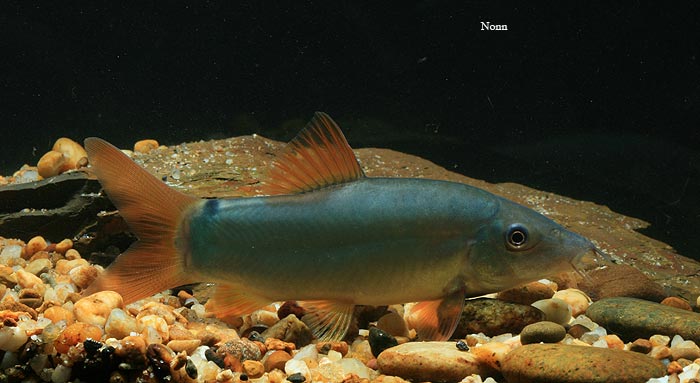
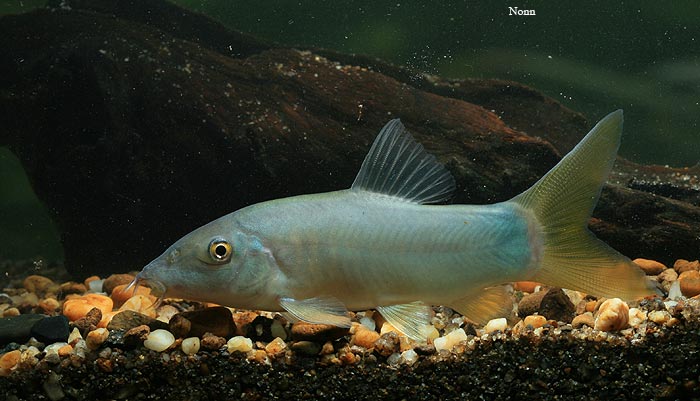
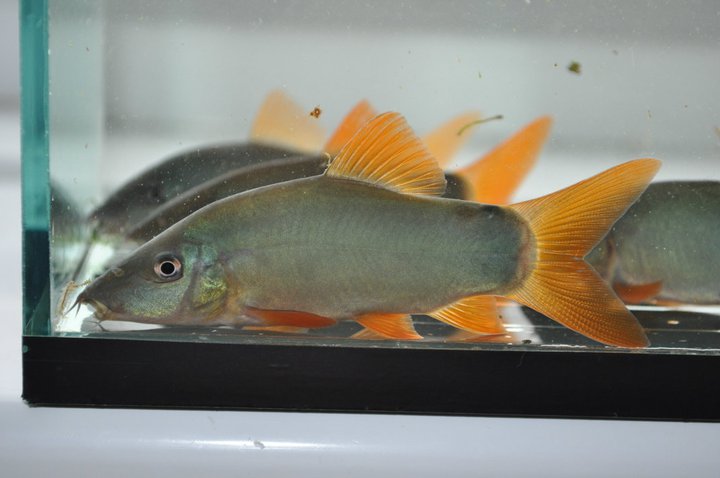
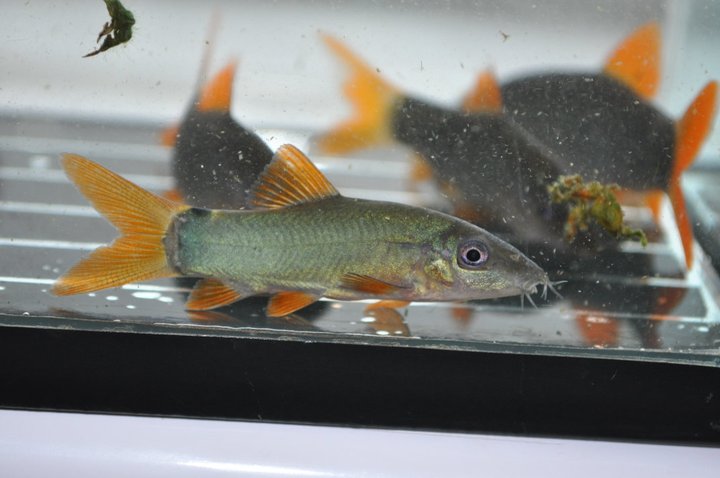
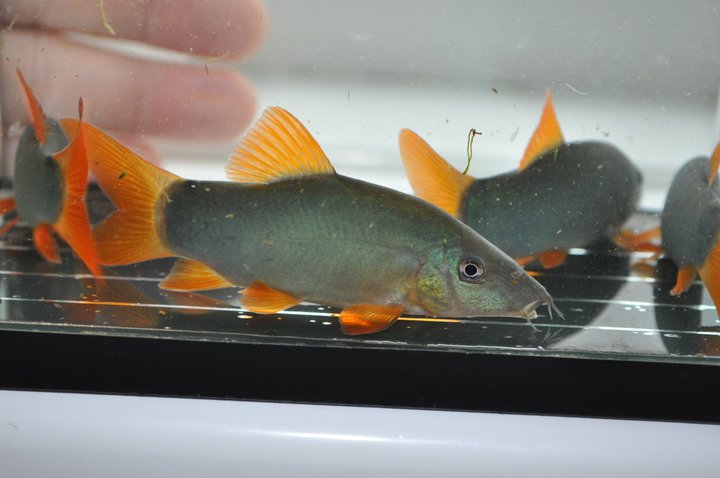
橙鳍沙鳅(Yasuhikotakia modesta)身体厚实,常见蓝灰色身体搭配红色或黄色鳍。它成鱼较大,需要足够空间及同种群体,虽比部分同属鱼温和,仍可能阶段性攻击或咬鳍。购鱼时还应避开人工染成异常鲜蓝、紫色的个体。
分布与栖息地
分布于泰国、老挝、柬埔寨、越南的湄公河中下游,以及泰国湄南河和夜功河水系。偏好流动水域,白天隐蔽在石块和树根间,夜间出来觅食。由于季节性迁移,一年中可利用大河、支流及暂时被淹没的区域。
饲养环境
底面积至少约 150 × 45 cm。设置细砂或细砾石底床,以圆石、树根和沉木形成多处遮蔽,可配弱光及耐阴水草。检查狭窄孔洞,封闭会卡鱼的位置,去除尖角,并盖好缸盖。
保持成熟过滤、充足溶氧及适度水流,无需极端湍流。不能容忍有机废物积累,每周换水约三至五成,避免使用尚未稳定的新缸。
食性与喂食
自然食物包括水生软体动物、昆虫、蠕虫等无脊椎动物。饲养时轮换优质干饲料、活饵或冷冻红虫、水蚯蚓、丰年虾,并提供黄瓜、焯菠菜、西葫芦等植物材料。切碎蚯蚓少量使用,混合凝胶饵也可供食。吃螺不等于能靠螺维持营养或可靠清除螺害。
习性与混养
至少五至六条,空间许可时十条以上较好。单养可能畏缩或攻击形似的鱼;两三条的小群容易让弱势鱼被集中压制,甚至拒食。
本种有偶发攻击阶段,长鳍可能被咬,不适合慢游和长鳍鱼。较活跃的中上层鲤科鱼更值得考虑;体格合适的其他沙鳅及底栖鱼仍需逐种评估,不应把“相对温和”理解为绝无冲突。
雌雄区分
成熟雌鱼较饱满,通常也略大。
繁殖
商业养殖会使用激素催产,但家庭缸成功繁殖并无可靠记录。野外繁殖与迁移及雨季涨水相连:湄公河下游种群退水期向上游移动,涨水后转向下游并进入洪泛区;较上游种群则需先进入支流才能到达这些区域。
卵和幼鱼会被水流带入被淹区域完成早期发育,退水时幼鱼再转入常年河道。卵的记录以五月至六月最集中,幼鱼侧面有随成熟消退的暗竖带。
补充说明
与黄鳍沙鳅(Yasuhikotakia lecontei)相比,本种更高身、紧凑,常有蓝绿色光泽;尾柄暗纹若存在,往往围成完整一圈。红鳍与黄鳍型都有,所谓“蓝鳍”型的背鳍与身体同色,其身份仍有讨论,不能仅凭鳍色下定论。
“蓝莓”“覆盆子”等商品名有时指人工染色鱼,染色过程通常损害健康。另需注意,侧躺休息、伴游或争位时褪色可见于同属鱼;眼下可动硬刺会缠网或刺伤手。
图片
图片来自 SeriouslyFish,版权归各摄影者所有。
English
Overview
Yasuhikotakia modesta is a deep-bodied loach often combining a blue-gray body with red or yellow fins. Its adult size and social needs demand generous housing. Although less confrontational than some relatives, it can have aggressive phases and damage fins. Avoid specimens artificially dyed vivid blue or purple.
Distribution & habitat
The range covers the middle and lower Mekong in Thailand, Laos, Cambodia, and Vietnam, together with Thailand's Chao Phraya and Mae Klong systems. It favors moving water, sheltering among rocks and roots by day before foraging after dark. Seasonal migrations bring it into main channels, tributaries, and temporarily flooded ground at different times.
Aquarium setup
Allow a footprint of about 150 × 45 cm or more. Arrange rounded stones and branching wood over fine substrate to provide many refuges. Dim illumination and shade-tolerant plants are useful. Remove sharp edges, close openings that could trap a fish, and secure the cover.
Use mature biological filtration with ample oxygen and moderate circulation rather than extreme turbulence. Organic waste accumulation is poorly tolerated. Replace roughly 30–50% of the water weekly and avoid unstable new systems.
Diet & feeding
Wild foods include aquatic mollusks, insects, worms, and other invertebrates. Rotate quality dry foods with live or frozen worms and brine shrimp, adding cucumber, blanched spinach, or zucchini. Offer chopped earthworms sparingly; mixed gel foods can also broaden the diet. Snail consumption does not provide a complete feeding plan or guarantee pest removal.
Behaviour & compatibility
Five or six fish is a minimum, with ten or more preferable when space allows. Isolation can lead to withdrawal or attacks on similarly shaped species. In pairs or trios, harassment may focus on weaker individuals until they stop eating.
Occasional aggression and fin biting rule out slow swimmers and trailing fins. Active open-water cyprinids are more promising. Other suitably robust loaches and bottom fishes still require individual assessment; a comparatively mild disposition does not mean conflict is impossible.
Sexual dimorphism
Mature females are fuller and generally a little larger.
Breeding
Commercial farms use hormone-assisted spawning, but reliable breeding by private aquarists has not been reported. Wild reproduction is linked to migration and rising wet-season water. Lower Mekong populations move upstream during falling levels, then downstream with renewed flooding to enter inundated areas. Farther upstream, tributaries provide access to these nursery zones.
Eggs and young drift into flooded ground for early development. Juveniles later leave for permanent channels as water recedes. Egg records peak in May and June. Dark bars along juvenile flanks disappear as the fish mature.
Notes
Compared with Yasuhikotakia lecontei, this fish has a deeper, more compact body, often with blue-green reflections. When present, the dark tail-base mark tends to form a complete ring. Both red- and yellow-finned forms occur. The identity of a blue-fin form, whose dorsal matches the body, remains debated; fin color alone is inconclusive.
Blueberry and raspberry trade labels sometimes indicate dyed fish, whose health is commonly compromised by coloring. Related loaches may rest sideways, shadow one another, or pale during social disputes. Movable spines below the eyes can snag nets and injure hands.
来源
- https://www.seriouslyfish.com/species/yasuhikotakia-modesta(抓取于 2026-10-10)
yasuhikotakia-modesta · 文件: data/species/yasuhikotakia-modesta.md · 状态: 草稿