光背鱼 · African Knifefish
概要
| 字段 | 值 |
|---|---|
| 类别 | 鱼 |
| 学名 | Xenomystus nigri |
| 别名 | 光背魚 |
| 分类 | 骨舌鱼目 Osteoglossiformes › 弓背鱼科 Notopteridae › Xenomystus |
| 水体 | 淡水 |
| 成体体长 | 30 cm |
| 饲养难度 | 入门 |
| 最小水体 | 205 L |
| 最小缸长 | 120 cm |
| 外部数据 | seriouslyfish xenomystus-nigri;fishbase 5065 |
| 原产地 | 尼日利亚、喀麦隆、刚果民主共和国、埃及、乍得、利比里亚、加蓬、多哥、苏丹、贝宁、塞拉利昂、安哥拉 |
| 食性 | 肉食 |
| 领地性 | 是 |
| 特征 | 夜行性: 是 |
| 繁殖方式 | 附着产卵 |
水质参数
| 参数 | 耐受范围 | 最适范围 | 单位 |
|---|---|---|---|
| 水温 | 23–28 | — | °C |
| pH | 5.8–7.5 | — | — |
| 总硬度 | 1–20 | — | dGH |
概述
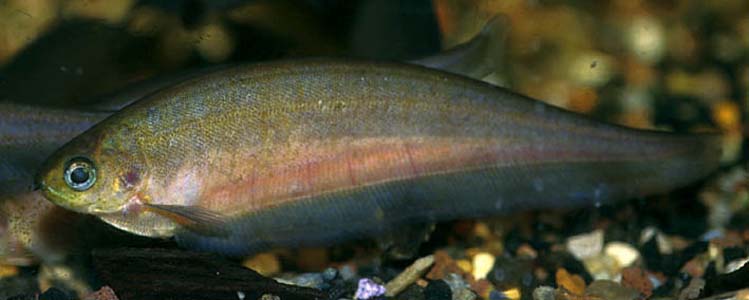
光背鱼(Xenomystus nigri)是主要夜间活动的非洲刀鱼,初入缸可能很胆小,适应后通常更敢出来。它会定期上浮吞咽空气,有时伴随类似铃声的声音;无背鳍是与外形相近弓背鱼区分的重要线索。
分布与栖息地
非洲多个国家有分布记录,涉及尼罗河、刚果河和尼日尔河等大水系。通常被认为较常出现在静缓、植被丰富的水域,广分布提示适应能力较强,但不能忽略具体个体需要的稳定环境。
饲养环境
单条底面积约 120 × 45 cm 可作为长期安排。至少提供较暗照明和足够遮蔽,用陶盆、圆滑石块和沉木形成洞穴,也可在局部密植耐弱光水草。
细软砂底较合适,可加入干落叶营造隐蔽感。应保留上浮接触空气的通道,因为它会周期性到水面换气。
食性与喂食
主要为肉食性,通常容易适应缸内投喂。活饵、冷冻饵可用红虫、虾肉、切碎贝肉、蚯蚓等,部分个体也能接受干饲料或肉食鱼颗粒,菜单宜多样化。
习性与混养
不能与小到会被当成食物的鱼同养。体形适当的温和大鱼可考虑,但仍须核对环境和行为需求。
幼鱼可以群养,成熟后对同种尤其容易守地盘,成年群体需要明显更大的空间。不能因早期相处平静就忽略成年后的冲突。
雌雄区分
抱卵雌鱼更丰满,其他情况下外观区分较困难。
繁殖
有少量缸内繁殖记录,求偶时亲鱼会发出类似吠声的声音。卵产在木头或岩石表面,一窝约一百五十至二百粒,由雄鱼守护并用鳍扇水照料。
据观察卵约十天内孵化,孵化后应移走雄鱼。鱼苗可用丰年虾无节幼体或微虫开口,具体过程仍应以实际发育和摄食观察为准。
补充说明
与弓背鱼(Notopterus notopterus)相比,它没有背鳍,成年体形也较小。臀鳍和尾鳍相连,能以波浪状摆动推进,甚至倒游。
对入缸药物较敏感,不宜把某一种药的剂量习惯直接套到所有处理,也不宜随意加盐。出现健康问题时应先核对药物对敏感鱼的适用说明,再确定具体处理,不能用统一减半取代判断。
图片
图片来自 SeriouslyFish,版权归各摄影者所有。
English
Overview
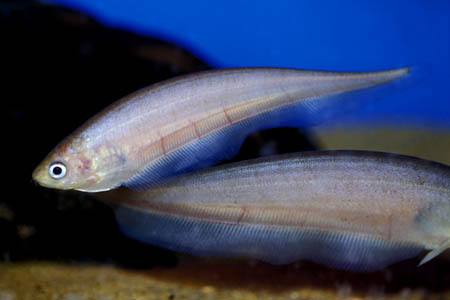
The African Xenomystus nigri is mainly nocturnal and may hide extensively when first introduced, becoming bolder after settling. It periodically surfaces to gulp air, sometimes producing a bell-like sound. Absence of a dorsal fin is a useful identification feature.
Distribution & habitat
Records span numerous African countries and major systems including the Nile, Congo, and Niger. It is reported most often from quiet, overgrown water. A broad distribution suggests adaptability but does not remove the need for stable conditions for the individual fish.
Aquarium setup
A footprint around 120 × 45 cm can accommodate one for life. At minimum, provide subdued lighting and plentiful cover. Ceramic pots, smooth stones, and wood form caves, with dense patches of low-light plants also useful.
Soft sand and some dried leaves suit this arrangement. Preserve access to the surface because periodic air intake is part of its normal respiration.
Diet & feeding
This primarily carnivorous fish generally adapts readily to aquarium feeding. Vary live and frozen foods such as bloodworms, prawn, chopped mussel, and earthworms. Some individuals also accept dry foods or carnivore pellets.
Behaviour & compatibility
Do not combine it with fishes small enough to be prey. Suitably sized peaceful companions can be considered after checking their environmental and behavioral needs.
Juveniles may live together, but adults become more territorial, especially toward conspecifics. A mature group requires considerably larger accommodation. Early tolerance should not be mistaken for guaranteed lifelong compatibility.
Sexual dimorphism
Females become fuller when carrying eggs. Otherwise, external sexing is difficult.
Breeding
Aquarium spawning has occurred infrequently. Courtship includes barking-like sounds. About 150–200 eggs are placed on wood or rock, with the male guarding them and moving water across them with his fins.
Reported hatching is within roughly ten days, after which the male should be removed. Brine-shrimp nauplii or microworms can serve as initial foods. Actual development and feeding response still need close observation.
Notes
Unlike the similar Notopterus notopterus, it lacks a dorsal fin and remains smaller. Its combined anal and caudal fin produces an undulating swimming motion and allows backward movement.
Sensitivity to aquarium medications calls for product-specific assessment, rather than transferring one treatment's dosage rule to every medicine. Avoid casual salt additions. A universal half-dose instruction should not replace checking suitability and directions for sensitive fish.
来源
- https://www.seriouslyfish.com/species/xenomystus-nigri(抓取于 2026-10-10)
xenomystus-nigri · 文件: data/species/xenomystus-nigri.md · 状态: 草稿