Xenentodon canciloides
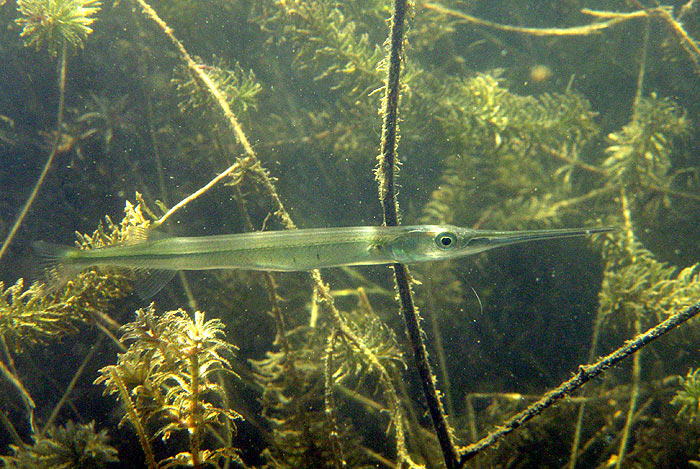
概要
| 字段 | 值 |
|---|---|
| 类别 | 鱼 |
| 学名 | Xenentodon canciloides |
| 别名 | Belone canciloides |
| 分类 | 颌针鱼目 Beloniformes › 鹤鱵科 Belonidae › Xenentodon |
| 水体 | 淡水 |
| 原产地 | 柬埔寨、印度尼西亚、老挝、马来西亚、泰国、越南 |
| 成体体长 | 30 cm |
| 饲养难度 | 困难 |
| 最小水体 | 648 L |
| 最小缸长 | 180 cm |
| 群居方式 | 群游 |
| 特征 | 吃小鱼: 是;会跳缸: 是;吃虾: 是 |
| 外部数据 | seriouslyfish xenentodon-canciloides;fishbase 53925 |
| 食性 | 肉食 |
| 游动层 | 上层 |
| 性情 | 温和 |
水质参数
| 参数 | 耐受范围 | 最适范围 | 单位 |
|---|---|---|---|
| 水温 | 18–26 | — | °C |
| pH | 6–8 | — | — |
| 总硬度 | 2–15 | — | dGH |
概述
Xenentodon canciloides 是体形细长、上下颌延伸如长喙的淡水颌针鱼,水族贸易中较少见。它几乎始终活动在上层,虽然捕食小鱼,却并不靠攻击大型伙伴建立优势;空间充足、竞争温和的群养环境更适合它。
分布与栖息地
明确记录来自婆罗洲、苏门答腊、马来半岛和泰国,老挝、柬埔寨与越南的湄公河水系也被认为有分布,确定程度有所不同。
多利用溪河缓流或静水段,以及低地沼泽、牛轭湖等环境;部分季节也进入急流,并有人工运河和灌溉水道的采集记录。
饲养环境
水面面积至少约 180 × 60 cm,水深至少 30 cm。重点是提供上层游动空间,以及浮水植物或垂向水面的枝叶遮蔽。底部可用河砂、落叶和大型沉木,水草按布景需要选择,灯光也可随植物调整。
较深的缸可只注水至约五至七成,搭配出水枝条和植物,但仍要盖严缸盖,受惊跳跃的风险不会因此消失。使用成熟、效率充足的外滤或底滤,出水避免造成强烈湍流。它对有机污染和水质突变敏感,每周换水约 30%–50%,不可直接进入尚未成熟的新缸。
这是淡水鱼,即使沿海种群偶尔进入半咸水,也不代表日常饲养需要加海盐。
食性与喂食
野外主要捕食小鱼和昆虫,改口吃非活体饵料可能不容易。较小个体可尝试红虫、小蚯蚓和碎虾;成鱼可用鱼肉条、整虾、贝肉、活河虾和较大蚯蚓。活蟋蟀等昆虫也适合,投喂前先给昆虫吃鱼食薄片或植物性食物,以改善营养。
有机会时会过量吞食,要控制投喂。避免牛心、鸡肉等禽畜肉;活饲料鱼若未妥善检疫和培育,会带来病原、寄生虫及营养不足的问题,并非值得依赖的日常选择。
习性与混养
对大到无法吞食的鱼通常温和,但抢食能力偏弱,伙伴须仔细筛选,避免让它长期吃不到饵。对同种也不显强攻击性,幼鱼的群游倾向尤其明显,建议至少四条共同饲养。体型小到可吞食的鱼不适合作伙伴。
雌雄区分
成熟雄鱼据称会在头后方形成明显背部隆起,此特征应保留观察上的不确定性。
繁殖
尚无可靠缸内繁殖记录可供参考。
补充说明
它的颌比同属近亲更细、更纤弱,整体也较纤细。“淡水雀鳝”一类商品称呼容易误导:外形相似不代表属于雀鳝科,购买时应核对身份。
图片
图片来自 SeriouslyFish,版权归各摄影者所有。
English
Overview
Xenentodon canciloides is a slender freshwater needlefish with elongated jaws. It spends almost all its time near the surface and is uncommon in the aquarium trade. Its ability to swallow smaller fish should not be mistaken for dominance over larger companions: this is a relatively gentle fish with limited competitive ability.
Distribution & habitat
Confirmed records include Borneo, Sumatra, Peninsular Malaysia, and Thailand. Its presence in the Mekong drainage of Laos, Cambodia, and Vietnam is also considered likely, but that part of the range is less secure.
Typical habitats include quiet stream and river sections, lowland swamps, and oxbows. It sometimes enters faster water seasonally and has also been collected in irrigation channels and artificial canals.
Aquarium setup
Provide a surface area of at least about 180 × 60 cm and water at least 30 cm deep. Floating plants or vegetation hanging over the water offer useful cover while preserving open surface-level swimming space. Sand, leaves, and substantial wood can furnish the lower area; choose other plants and lighting to suit the layout.
A deeper aquarium can be filled to roughly half to seven-tenths of its capacity, with emergent branches and vegetation. A secure lid remains essential because startled fish can jump. Use established, efficient external filtration or a sump, arranging outlets to prevent excessive turbulence.
Weekly changes of around 30%–50% help control waste. Avoid immature systems and abrupt changes in water chemistry, as this species is sensitive to both organic pollution and instability. Occasional coastal entry into brackish water does not make marine salt necessary for routine care.
Diet & feeding
Fish and insects dominate its natural predatory diet. Transitioning to nonliving foods can be difficult. Smaller individuals may take bloodworms, chopped shrimp, and small earthworms; larger fish can receive suitable fish strips, shellfish, whole shrimp, live river shrimp, and larger earthworms.
Live crickets and similar insects are useful options. Feed those insects flakes or plant material before offering them to improve their nutritional contribution. Portion control matters because the fish may gorge when food is abundant.
Avoid bird and mammal meat, including chicken and beef heart. Unquarantined, poorly conditioned feeder fish carry disease and parasite risks and can be nutritionally inadequate.
Behaviour & compatibility
Companions must be too large to swallow yet mild enough not to monopolize food. The needlefish is generally peaceful with such tankmates and with its own species. Juveniles show particularly strong schooling behavior; a group of at least four is preferable.
Sexual dimorphism
Mature males reportedly develop a noticeable raised area on the back directly behind the head. Treat this as a reported distinction rather than an infallible sexing rule.
Breeding
Reliable aquarium breeding records are lacking.
Notes
Compared with its more frequently traded relative, this fish has finer jaws and a slimmer build. Trade labels referring to freshwater gars describe a superficial resemblance: needlefishes belong to a different family and should not be identified through that name alone.
来源
- https://www.seriouslyfish.com/species/xenentodon-canciloides(抓取于 2026-10-10)
xenentodon-canciloides · 文件: data/species/xenentodon-canciloides.md · 状态: 草稿