异齿颌针鱼 · Freshwater Needlefish
概要
| 字段 | 值 |
|---|---|
| 类别 | 鱼 |
| 学名 | Xenentodon cancila |
| 别名 | 異齒頜針魚、Esox cancila、Belone cancila、Belone graii、Esox indica、Esox hindostanicus |
| 分类 | 颌针鱼目 Beloniformes › 鹤鱵科 Belonidae › Xenentodon |
| 水体 | 淡水 |
| 原产地 | 巴基斯坦、印度、孟加拉国、尼泊尔、斯里兰卡、缅甸、泰国;美国夏威夷为引入分布 |
| 成体体长 | 35 cm |
| 饲养难度 | 困难 |
| 最小水体 | 648 L |
| 最小缸长 | 180 cm |
| 群居方式 | 群游 |
| 特征 | 吃小鱼: 是;会跳缸: 是;吃虾: 是 |
| 外部数据 | seriouslyfish xenentodon-cancila;fishbase 10124 |
| 食性 | 肉食 |
| 游动层 | 上层 |
| 性情 | 温和 |
| 繁殖方式 | 产卵 |
水质参数
| 参数 | 耐受范围 | 最适范围 | 单位 |
|---|---|---|---|
| 水温 | 18–30 | — | °C |
| pH | 6–8 | — | — |
| 总硬度 | 2–15 | — | dGH |
概述
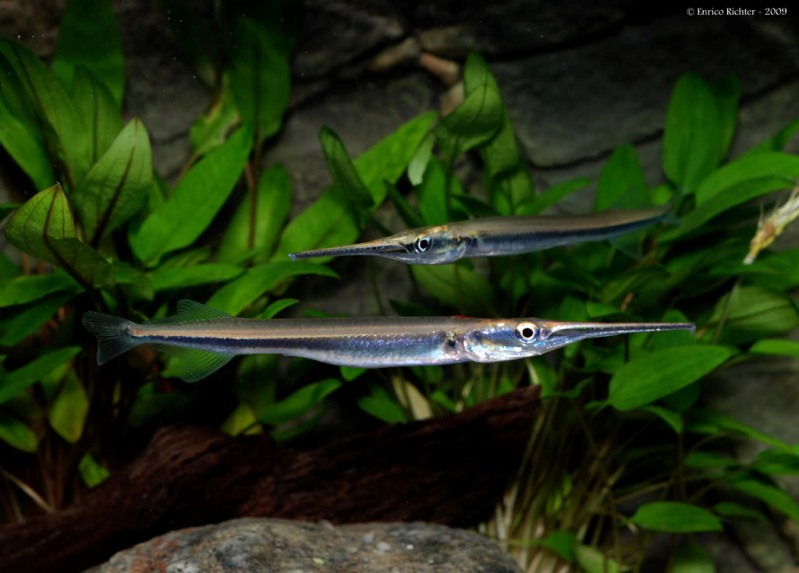
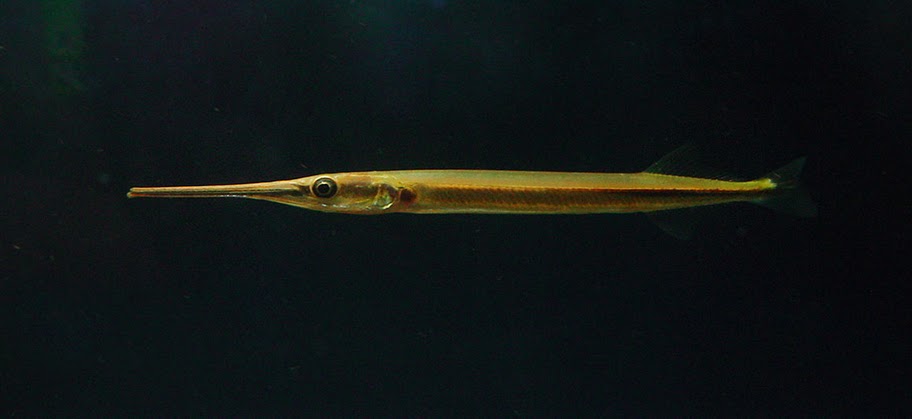
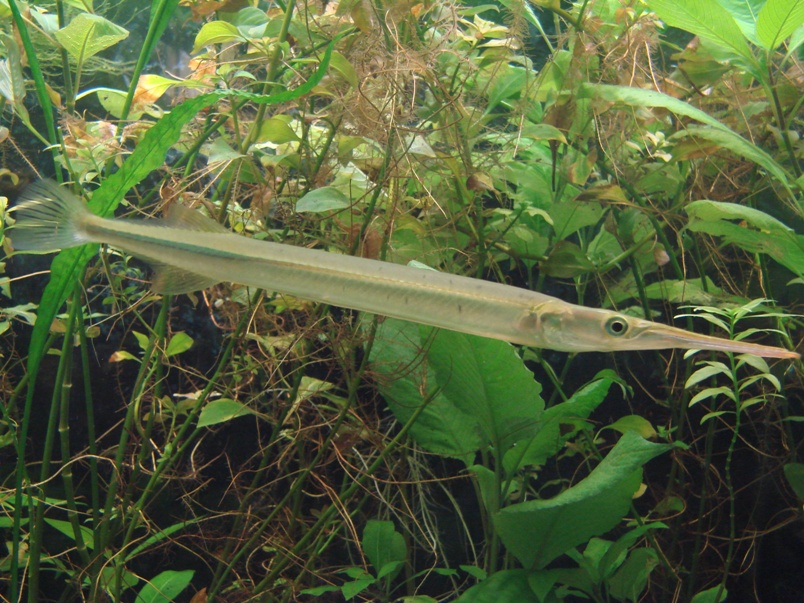
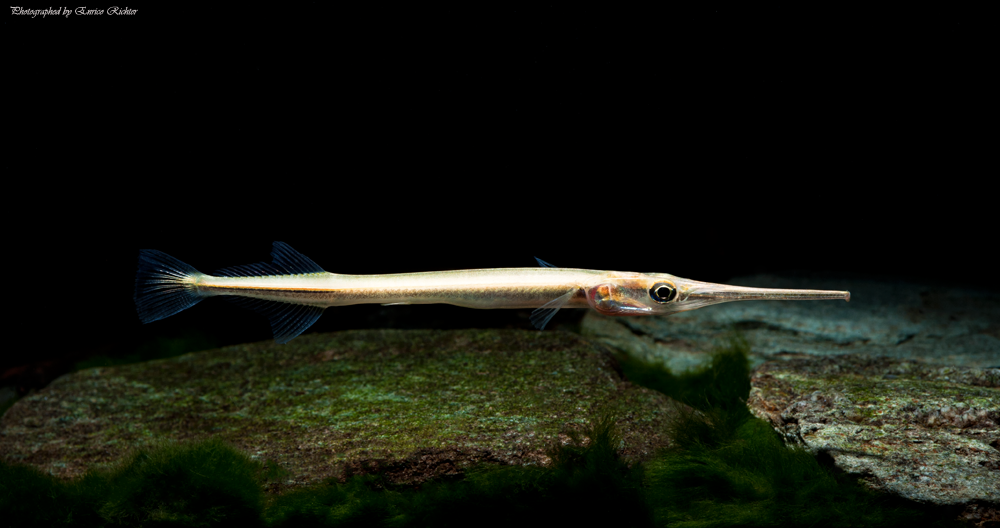
异齿颌针鱼(Xenentodon cancila)是一种细长、长嘴的上层捕食鱼,外形像雀鳝,却属于颌针鱼科。对吞不下的同伴通常温和,同种之间也不以攻击为主,适合在足够大的水面空间中成群饲养。
分布与栖息地
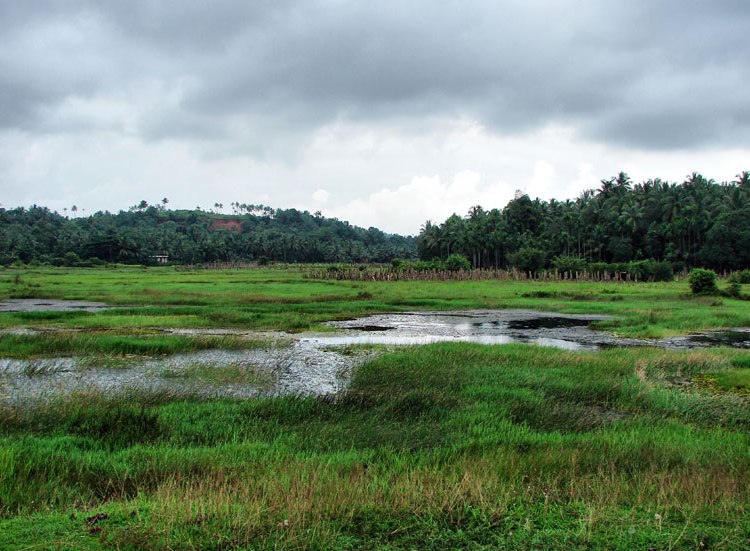
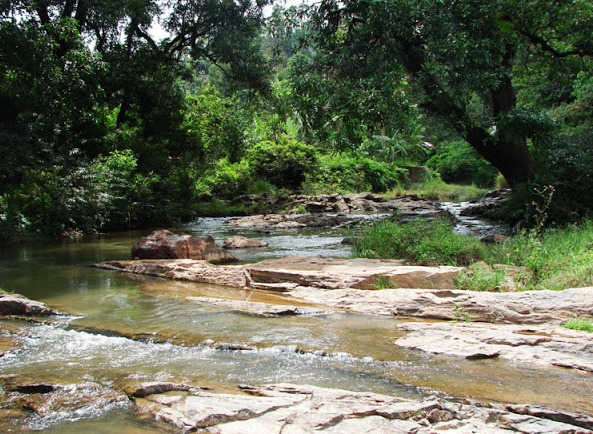
自然分布从巴基斯坦向东,经印度、孟加拉国、尼泊尔、斯里兰卡、缅甸至泰国;美国夏威夷属于人工引入范围。多见于缓流或静水河段、沼泽、牛轭湖和低地湿地,也能进入运河及灌溉渠。季风洪水期间常利用暂时淹没的平原,部分季节也有急流水域的记录。
饲养环境
重点是水面面积,缸底建议至少 180 × 60 cm,水深不低于 30 cm。它几乎总在上层活动,浮水植物和悬垂枝叶能提供安全感,底部可用细砂、落叶、沉木和根枝布置。深缸也可留出部分水上空间搭配挺水植物,但必须盖严,避免受惊跳出。
过滤能力应足够处理捕食鱼的排泄物,出水不要形成猛烈紊流。每周换水约 30–50%,使用成熟系统并避免水质大幅波动。它并非通常生活在咸淡水中的鱼,不需要为日常健康额外加入海盐。
食性与喂食
野外主要捕食小鱼和昆虫,转吃非活饵有时比较困难。小个体可尝试红虫、小蚯蚓和碎虾,成年可用鱼肉条、整虾、贝肉、活河虾及较大的蚯蚓。投喂蟋蟀等昆虫前,先让它们摄入鱼粮或植物性食物。它有过量吞食的倾向,需要控制投喂量。
不宜用牛心、鸡肉等哺乳或鸟类肉作常规食物,也不宜依赖未经检疫和调养的饲料鱼,以免引入寄生虫、疾病或造成营养失衡。
习性与混养
建议至少 4 尾,同种幼鱼尤其有明显群游倾向。它争食能力不强,混养对象既要大到不能被吞下,也应避免过强的食物竞争;体型较小的鱼和活虾属于猎物。
雌雄区分
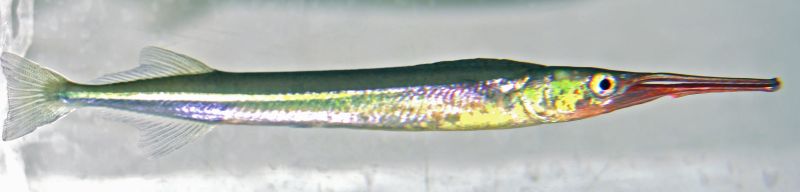
雄鱼背鳍、臀鳍通常带有黑边,雌鱼没有这一特点。繁殖状态下,雄鱼头后方背部隆起更明显,颌部和头部下方泛红,鳃盖及胸部带金黄色。
繁殖
野外繁殖多在 5–9 月,人工繁殖可以成功,但记录不多。温度处于较暖的 28–29 °C,再配合数次较凉的换水,可能有助于诱发产卵。雌鱼似乎会连续多日产出少量卵,也据称偏好水流较强的位置。
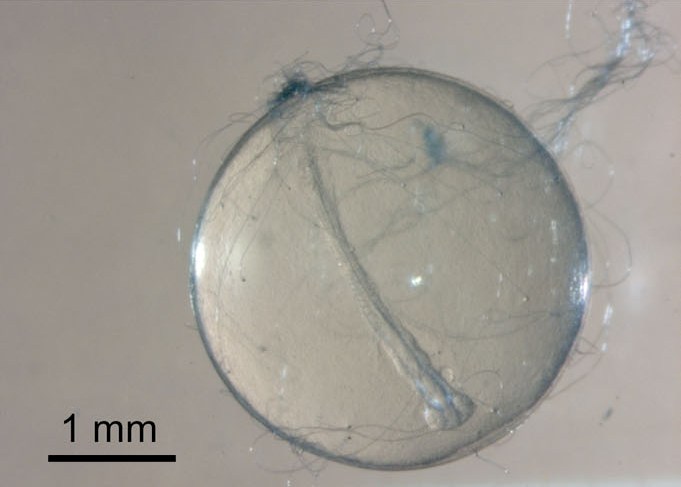
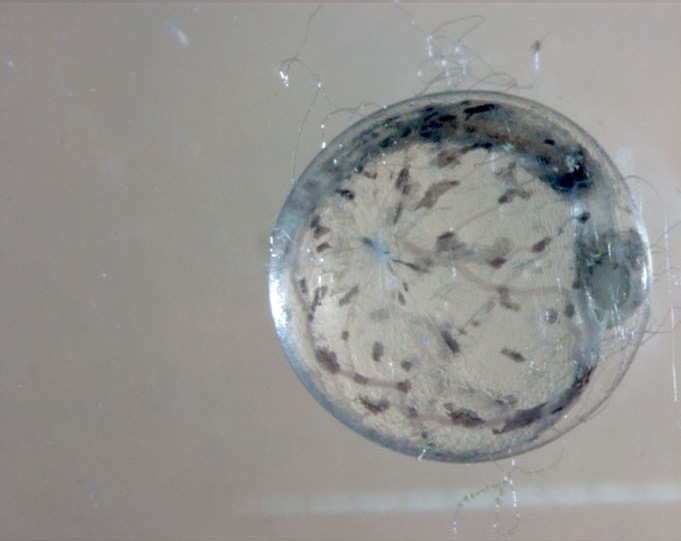
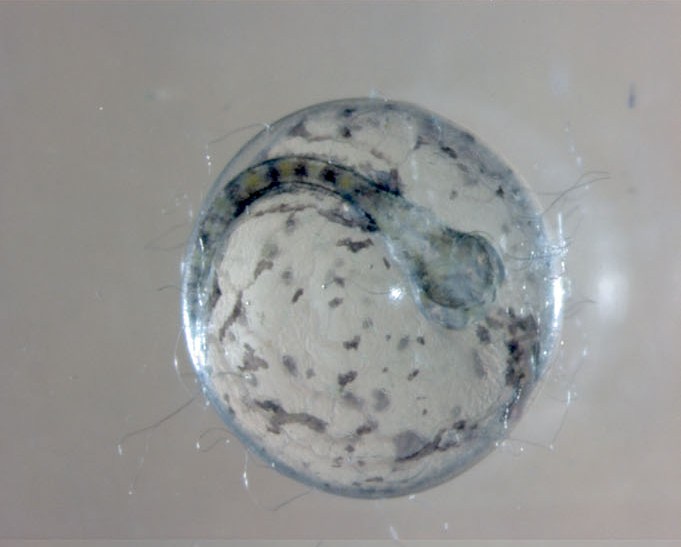
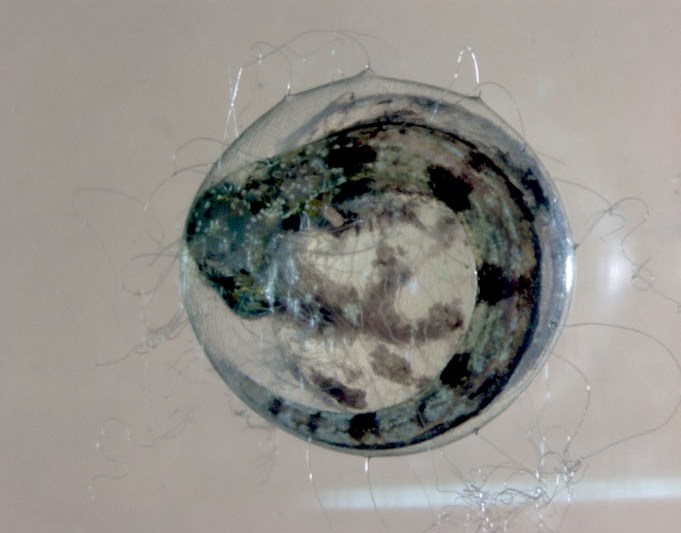
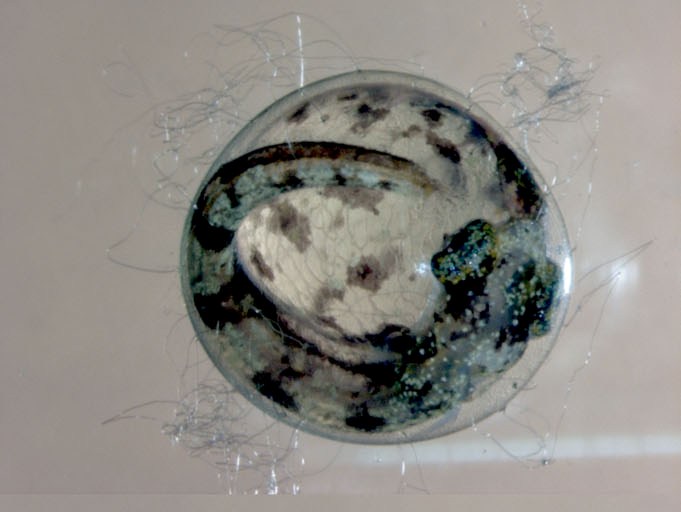
卵通过黏性丝附着在水下植物上,发现后可移入独立容器。孵化通常需约 7–10 天,鱼苗孵出数小时后就可摄食丰年虾无节幼体。随着生长,需要按大小分开,防止较大的鱼苗吃掉较小同胞。
补充说明
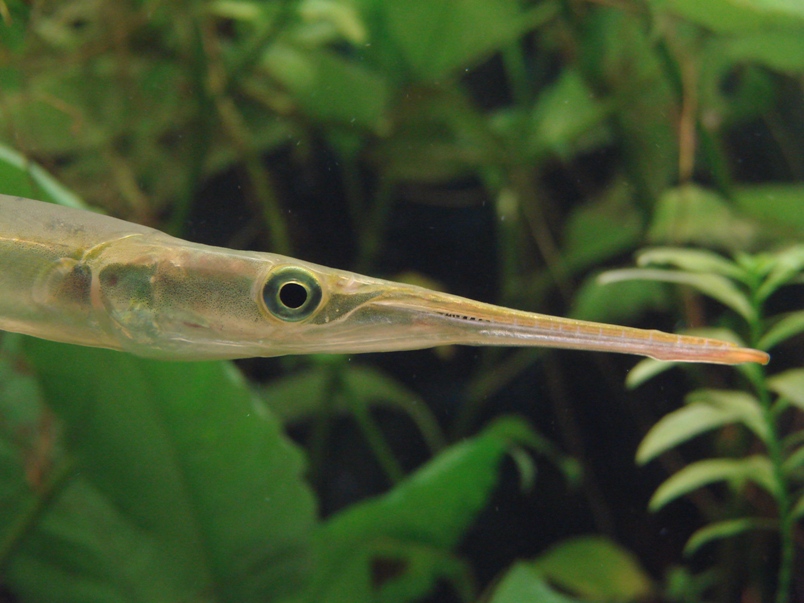
“淡水雀鳝”一类商品称呼容易造成误认;判断科属时不能仅凭细长的嘴。与近似种比较,本种颌部通常较粗壮,但属内可能还存在尚未厘清的多样性,不宜仅按一个商品标签确定身份。
图片
图片来自 SeriouslyFish,版权归各摄影者所有。




English
Overview
A long beak and slender outline can make Xenentodon cancila look like a gar, but it belongs to the needlefish family. It occupies the upper water column and generally tolerates fish beyond swallowing size. Generous surface area and a small conspecific group suit its behavior better than cramped solitary display.
Distribution & habitat
The natural range extends from Pakistan across India to Bangladesh, Nepal, Sri Lanka, Myanmar, and Thailand. Hawaii supports an introduced population rather than forming part of that native range.
Quiet river reaches, lowland marshes, oxbows, and swamps are typical, with records also from canals, irrigation channels, and seasonally faster water. Monsoon flooding opens additional habitat on inundated plains.
Aquarium setup
Provide a footprint of at least 180 by 60 cm and no less than 30 cm water depth. Surface shelter matters most: use floating plants or overhanging vegetation while leaving swimming space. Sand, leaves, wood, and roots can furnish the lower aquarium. A deeper enclosure may be partially filled for emergent growth, but must retain a secure cover against startled jumping.
Use mature, efficient filtration without a turbulent return. Weekly changes of roughly 30–50% help limit accumulated waste and instability. Avoid immature systems and sudden chemical shifts. Routine marine-salt additions are unnecessary, despite occasional coastal records in brackish water.
Diet & feeding
Natural prey consists chiefly of small fishes and insects. Conversion to dead foods can take effort. Scale offerings from bloodworms, small worms, and chopped shrimp to appropriate fish strips, whole shrimp, mussels, live river shrimp, and larger worms. Feed suitable insects with fish food or vegetable matter before offering them.
Control portions because the fish may gorge. Mammalian or avian meat is inappropriate, and unconditioned feeder fish present nutritional and pathogen risks.
Behaviour & compatibility
Keep at least four. Young fish in particular school readily, and aggression toward conspecifics is unusual. Select companions too large to swallow that will not overwhelm this relatively weak food competitor. Small fishes and live shrimp remain prey.
Sexual dimorphism
Black margins on the dorsal and anal fins tend to identify males. In breeding condition, a male develops a raised profile behind the head, red around the jaws and lower head, and yellow-gold across the gill-cover and chest region.
Breeding
Wild spawning occurs mainly from May through September. Captive reproduction is possible but uncommon. Conditions around 28–29 °C with several cooler water changes may help stimulate activity. Females appear to release small daily batches, reportedly favoring stronger local flow.
Adhesive threads fasten eggs to submerged plants. Transfer observed eggs to a separate container if desired. Hatching generally takes seven to ten days, and newly hatched brine shrimp can be accepted within hours. Sort growing offspring by size where necessary, since larger siblings may consume smaller ones.
Notes
A freshwater-garfish trade label is not a family identification. The species tends to have robust jaws relative to a similar congener, while unresolved diversity within the genus warrants care when assigning an identity from appearance alone.
来源
- https://www.seriouslyfish.com/species/xenentodon-cancila(抓取于 2026-10-10)
xenentodon-cancila · 文件: data/species/xenentodon-cancila.md · 状态: 草稿