狭头矛丽鱼 · Compressiceps Dwarf Pike Cichlid
概要
| 字段 | 值 |
|---|---|
| 类别 | 鱼 |
| 学名 | Wallaciia compressiceps |
| 别名 | 狹頭矛麗魚、Crenicichla compressiceps |
| 分类 | 慈鲷目 Cichliformes › 慈鲷科 Cichlidae › Wallaciia |
| 水体 | 淡水 |
| 原产地 | 巴西托坎廷斯河下游流域 |
| 成体体长 | 7.6 cm |
| 饲养难度 | 中等 |
| 最小水体 | 154 L |
| 最小缸长 | 90 cm |
| 外部数据 | seriouslyfish wallaciia-compressiceps;fishbase 46840 |
| 食性 | 肉食 |
| 性情 | 攻击性 |
| 特征 | 吃小鱼: 是 |
| 繁殖方式 | 附着产卵 |
水质参数
| 参数 | 耐受范围 | 最适范围 | 单位 |
|---|---|---|---|
| 水温 | 24–27 | — | °C |
| pH | 5–6.8 | — | — |
| 总硬度 | 2–8 | — | dGH |
概述
狭头矛丽鱼(Wallaciia compressiceps)虽是小型矛丽鱼,却游动频繁、冲刺迅速,攻击性可能很强,所需空间明显不能只按体长估算。野外很少吃其他鱼,但缸中小伙伴仍有被捕食风险。
分布与栖息地
仅知来自巴西托坎廷斯河下游流域。
饲养环境
用沉木、散落叶片等提供多个躲藏处,可以加入水草,它通常不会把植物掀起。保持规律部分换水,因为这类小型矛丽鱼对污染物较敏感。
食性与喂食
野外捕食昆虫和甲壳类,可静候后快速冲向猎物,在黑暗中也常能取食。人工繁殖鱼较容易接受多种饲料,野生鱼可能需要活饵,至少也需冷冻饵料。即使已经吃干粮,也应规律提供蚯蚓、适口昆虫或甲壳类等活饵和冷冻食物。单一或不足的营养与健康问题有相关报道,不宜靠一种饲料长期维持。
习性与混养
只宜考虑更大、健壮的伙伴,体型约其一半的小鱼会被视为食物。体小不代表温和,鱼对内部也可能有明显压力。
雌雄区分
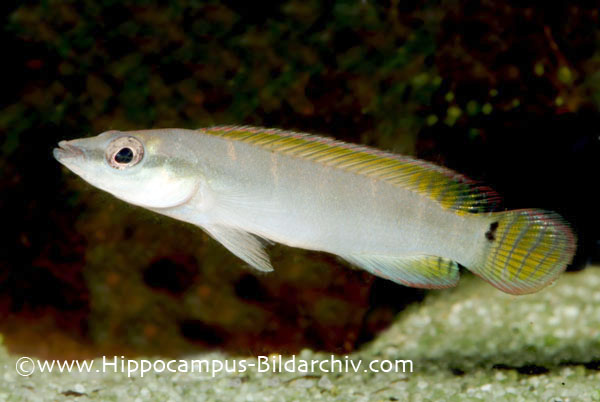
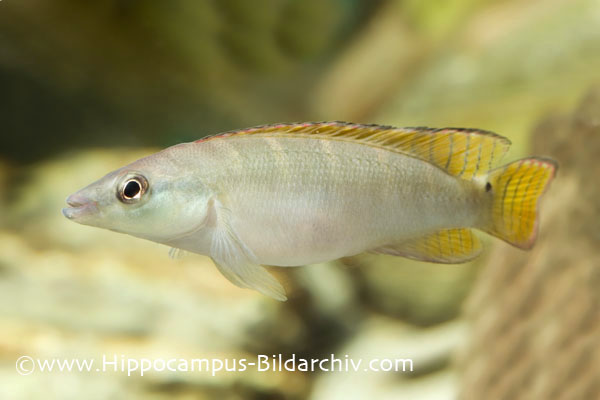
雄鱼的黄色鳍上带条纹;雌鱼成熟准备繁殖时腹部可能变红。
繁殖
有饲养者发现,存在其他鱼分散鱼对内部攻击时更易繁殖,但这并非一定成功的办法,伙伴仍需能承受压力。先以优质活饵或冷冻饵料养好亲鱼,求偶时会出现头朝下颤动的动作。
在木材曲折处、岩石下或架起的浅盘下产卵,卵借黏性丝悬在产卵处顶部,一窝通常约二十五至五十粒。约两三天孵化,再过约四天可能自由游动,具体速度受温度影响。幼鱼生长较快,亲鱼认真护幼,其他鱼在场时这种防卫可能更强。
补充说明
旧文献可能使用不同属名。良好夜间视力与暗处取食不等于只在夜间活动,因此仍应根据个体进食情况安排投喂。
图片
图片来自 SeriouslyFish,版权归各摄影者所有。
English
Overview
The dwarf pike cichlid Wallaciia compressiceps is small but highly active, fast, and potentially very aggressive. It needs more room than body length alone suggests. Rare consumption of other fishes in nature does not make small aquarium companions safe.
Distribution & habitat
It is known only from Brazil's lower Tocantins drainage.
Aquarium setup
Provide numerous retreats with wood and scattered leaves. Plants can be included and are unlikely to be uprooted. Regular partial water changes are important because dwarf pikes are sensitive to accumulated pollutants.
Diet & feeding
Wild prey includes insects and crustaceans. The fish may wait quietly before striking and can also feed effectively in darkness. Captive-bred individuals often accept varied foods; wild fish may insist on live, or at least frozen, items. Continue offering suitable worms, insects, or crustaceans even after dry food is accepted. Poor nutrition has been associated with health problems, favoring a varied rather than single-item diet.
Behaviour & compatibility
Only larger, robust fishes merit consideration as companions. Fish around half its size may be treated as prey. Aggression can also occur within a pair despite the species' small stature.
Sexual dimorphism
Males show striped yellow fins. Females approaching spawning may develop a reddish abdomen.
Breeding
Some aquarists report better spawning when other fishes divert aggression away from the pair. This is not a guaranteed method, and companions still need to withstand pressure. Condition adults with quality live or frozen foods. Courtship includes a head-down shaking display.
Eggs are concealed among wood, beneath rocks, or under a raised shallow dish, hanging from the upper surface by adhesive filaments. Broods usually contain around twenty-five to fifty eggs. Hatching takes two to three days, with free swimming potentially another four days later; temperature affects timing. Young grow rapidly and parents guard carefully, sometimes more intensely when other fishes are present.
Notes
Older accounts use a different genus. Good vision and feeding in darkness do not establish an exclusively nocturnal lifestyle.
来源
- https://www.seriouslyfish.com/species/wallaciia-compressiceps(抓取于 2026-10-10)
wallaciia-compressiceps · 文件: data/species/wallaciia-compressiceps.md · 状态: 草稿