点丽体鱼 · Blackbelt Cichlid
概要
| 字段 | 值 |
|---|---|
| 类别 | 鱼 |
| 学名 | Vieja maculicauda |
| 别名 | 斑尾维住丽鱼、點麗體魚、斑尾維住麗魚 |
| 分类 | 慈鲷目 Cichliformes › 慈鲷科 Cichlidae › Vieja |
| 水体 | 淡水 |
| 成体体长 | 25.4 cm |
| 饲养难度 | 入门 |
| 最小水体 | 205 L |
| 最小缸长 | 120 cm |
| 领地性 | 是 |
| 外部数据 | seriouslyfish vieja-maculicauda;fishbase 12208 |
| 原产地 | 危地马拉、洪都拉斯、尼加拉瓜、哥斯达黎加、巴拿马 |
| 食性 | 草食 |
| 特征 | 啃水草: 是;吃小鱼: 是 |
| 性情 | 攻击性 |
| 繁殖方式 | 附着产卵 |
水质参数
| 参数 | 耐受范围 | 最适范围 | 单位 |
|---|---|---|---|
| 水温 | 22–27 | — | °C |
| pH | 6–8 | — | — |
概述
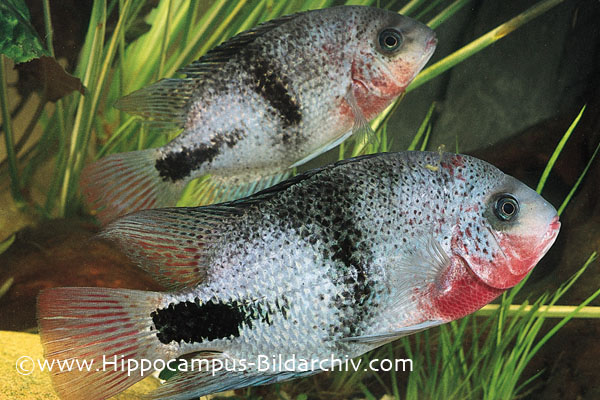
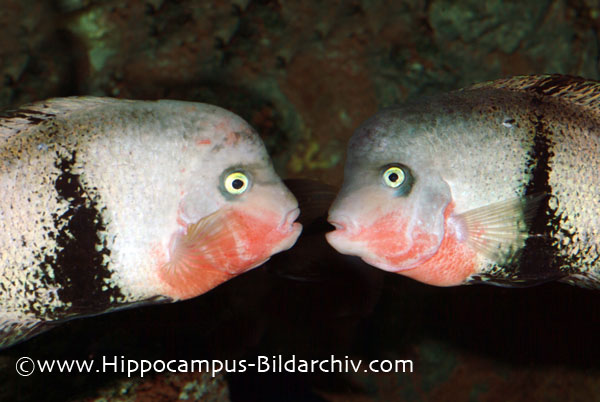
点丽体鱼(Vieja maculicauda)体侧有醒目的黑色竖带,是强健而凶猛的大型慈鲷。它的自然食性以植物为主,但仍可能吞食小鱼,护幼时攻击更强,混养不能只按食谱类别判断。
分布与栖息地
从危地马拉乌苏马辛塔河流域,经过洪都拉斯、尼加拉瓜和哥斯达黎加,延伸至巴拿马查格雷斯河。利用河流静水或缓水段及湖泊,常在泥砂底、浸水枝根和密集植被附近活动,部分种群也生活在半咸水甚至海水中。
饲养环境
可用砂或细砾底,搭配丰富沉木、树根等遮蔽。偏暗照明较适合,浮水植物可帮助柔化光线。规划成鱼空间时也要为个体避让和领域防卫留余地。
食性与喂食
野外几乎以植物性物质为主,包括藻类、碎屑、果实、坚果以及水陆植物。人工食谱应尊重这一基础,同时保留适量蛋白质食物,不宜因鱼体粗壮就长期只喂肉。
习性与混养
只宜考虑体型与攻击性相近的伙伴,小鱼会被视为食物。繁殖护幼时可能异常强势,即使此前相处尚可,也需要重新观察同缸关系。
雌雄区分
雄鱼更大、颜色更鲜明,成熟后额部形成隆起。
繁殖
通常达到一定体形并成熟后才开始繁殖。想获得鱼对,可从约六条幼鱼养起,形成稳定配对后移走其他个体。雌鱼在平石上产下约五六百粒卵,双方强烈守护并清理卵。约两三天孵化后,幼鱼被转移到事先准备的坑中,再过约一周自由游动。
补充说明
对不同盐度的耐受并不等于日常必须加盐,既有淡水饲养条件仍可使用。黑色体带是显著外观特征,但长期饲养更应重视成鱼力量和护幼期间的行为变化。
图片
图片来自 SeriouslyFish,版权归各摄影者所有。
English
Overview
A bold dark vertical flank band marks Vieja maculicauda, a robust and aggressive large cichlid. Its predominantly plant-based natural diet does not prevent it from swallowing small fishes. Brood defense can be particularly intense.
Distribution & habitat
The range extends from Guatemala's Usumacinta basin through Honduras, Nicaragua, and Costa Rica to Panama's Chagres River. Still or slow river areas and lakes provide mud or sand, submerged roots and branches, and dense vegetation. Some populations also occupy brackish or fully marine water.
Aquarium setup
Use sand or fine gravel with substantial wood and root cover. Subdued illumination is suitable, and floating vegetation can soften the light. Adult housing must leave room for avoidance as well as territorial behavior.
Diet & feeding
Wild food is almost entirely plant-derived: algae, detritus, fruit, nuts, and aquatic or terrestrial vegetation. Maintain that basis in captivity while including some protein. A heavy-bodied appearance is not a reason to feed an exclusively meaty diet.
Behaviour & compatibility
Only similarly sized, comparably aggressive fishes merit consideration as companions. Small fish are potential food. Defending parents can become exceptionally aggressive, so earlier coexistence does not assure safety during brood care.
Sexual dimorphism
Males are larger and more vividly colored and develop a forehead hump at maturity.
Breeding
Breeding begins only after sufficient growth and maturity. Raising about six juveniles allows a pair to form naturally, after which other fish should be removed. Approximately five to six hundred eggs are laid on a flat stone and vigorously defended and cleaned by both parents. Hatching takes two to three days. Young are moved to prepared pits and become free-swimming roughly a week later.
Notes
Tolerance of saline habitats does not establish a need to add salt during ordinary freshwater care. The conspicuous body band is useful visually, but adult strength and changing brood-defense behavior are more important to long-term management.
来源
- https://www.seriouslyfish.com/species/vieja-maculicauda(抓取于 2026-10-10)
vieja-maculicauda · 文件: data/species/vieja-maculicauda.md · 状态: 草稿