墨西哥丽体鱼
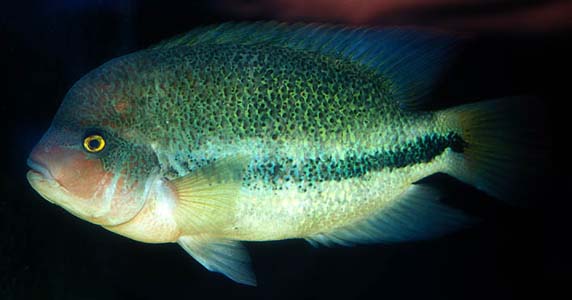
概要
| 字段 | 值 |
|---|---|
| 类别 | 鱼 |
| 学名 | Vieja fenestrata |
| 别名 | 墨西哥麗體魚 |
| 分类 | 慈鲷目 Cichliformes › 慈鲷科 Cichlidae › Vieja |
| 水体 | 淡水 |
| 成体体长 | 30 cm |
| 饲养难度 | 中等 |
| 最小水体 | 205 L |
| 最小缸长 | 120 cm |
| 外部数据 | seriouslyfish vieja-fenestrata;fishbase 26784 |
| 原产地 | 墨西哥帕帕洛阿潘河至查查拉卡斯河之间 |
| 食性 | 草食 |
| 性情 | 半攻击性 |
| 繁殖方式 | 附着产卵 |
水质参数
| 参数 | 耐受范围 | 最适范围 | 单位 |
|---|---|---|---|
| 水温 | 23–30 | — | °C |
| pH | 7 | — | — |
| 总硬度 | 0–15 | — | dGH |
概述
墨西哥丽体鱼(Vieja fenestrata)是会自行调整造景的大型慈鲷,攻击性中等,稳定鱼对也需要观察雌鱼是否受到压迫。它与近缘种常被混淆,购买时不要只依赖相似体色。
分布与栖息地
墨西哥特有,见于帕帕洛阿潘河、查查拉卡斯河及两者之间水域。主要生活在清澈湖泊,底部为砂或泥并有水草带,也见于河流缓水段。
饲养环境
砂或细砾可用,岩石、沉木和枝条必须安置牢固,避免鱼移动造景时撞伤或损坏缸体。光照并不苛刻,重点是足够的过滤与可划分领域的结构。
食性与喂食
自然食物以植物为主,胃含物也见昆虫及其他无脊椎动物。缸中不挑食,可用优质慈鲷颗粒配合虾肉、贝肉、白肉鱼等,螺旋藻或藻片等植物成分应占重要地位。
习性与混养
大型健壮中美洲慈鲷群落有可能兼容,但各鱼需要足够木石遮挡和领域,成功并无保证。鱼对通常可以共同生活,仍要警惕雌鱼受欺负,尤其在产卵期间。
雌雄区分
雄鱼更大、颜色更强,成年后可出现额瘤,背鳍及臀鳍也延长。
繁殖
亲鱼清理大石面,有时使用洞穴,移除碎屑后产卵。雄鱼在过程中可能追逐雌鱼,若攻击过度应分开保护。卵约两三天孵化,再过约四天鱼苗自由游动,可从丰年虾无节幼体开始,再转为微虫、鱼苗粮和碎颗粒。
亲鱼护幼能力好,但准备再次繁殖时可能转而攻击旧鱼苗,此时应移出幼鱼。
补充说明
缸内短暂的相互容忍不能替代持续观察;成年发色与体形都可能使它被误认成其他同属鱼,完整来源记录有助于避免混繁。
图片
图片来自 SeriouslyFish,版权归各摄影者所有。
English
Overview
Vieja fenestrata is a large, moderately aggressive cichlid that rearranges aquarium furnishings. Even a bonded pair needs observation for pressure on the female. Similar coloration can also lead to confusion with related species.
Distribution & habitat
It is endemic to Mexico in and between the Papaloapán and Chachalacas rivers. Clear lakes with mud or sand and beds of plants are typical, with slower river sections also occupied.
Aquarium setup
Sand or fine gravel can be used. Secure rocks, roots, and branches so moving fish cannot dislodge them against the glass. Lighting is flexible; effective filtration and structures allowing territories are more important.
Diet & feeding
Plant material predominates naturally, though insects and other invertebrates also occur in stomach contents. Captive fish are unfussy. Quality cichlid pellets can be supplemented with shrimp, mussel, or white fish, while spirulina or algae-based foods remain a substantial component.
Behaviour & compatibility
A community of robust Central American cichlids may work when each has sufficient territory and screening, but there is no guarantee. Pairs often coexist successfully, though female harassment requires attention, particularly during spawning.
Sexual dimorphism
Males become larger and more colorful, develop a forehead hump, and have longer dorsal and anal fins.
Breeding
A large stone or sometimes a cave is cleared of debris before laying. Males may pursue females during the process; separate them if violence becomes excessive. Eggs hatch in two to three days, followed by roughly four days before free swimming. Start young on Artemia nauplii and progress to microworms, fry foods, and crushed pellets.
Adults provide strong care but may turn against earlier offspring when preparing another spawn. Remove the juveniles at that point.
Notes
Brief tolerance is not a substitute for continued observation. Preserve identity and origin information to reduce confusion and accidental mixed breeding with similar relatives.
来源
- https://www.seriouslyfish.com/species/vieja-fenestrata(抓取于 2026-10-10)
vieja-fenestrata · 文件: data/species/vieja-fenestrata.md · 状态: 草稿