双带丽体鱼 · Red-spotted Cichlid
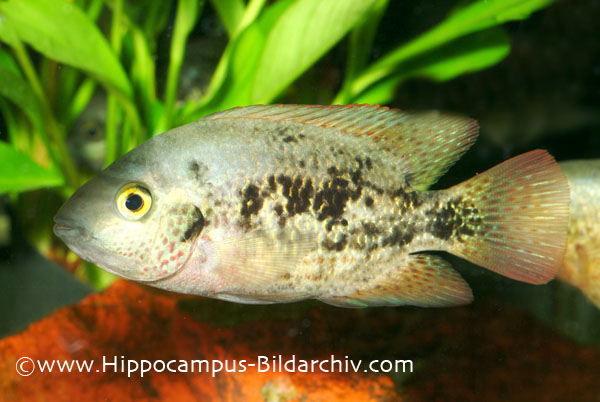
概要
| 字段 | 值 |
|---|---|
| 类别 | 鱼 |
| 学名 | Vieja bifasciata |
| 别名 | 雙帶麗體魚 |
| 分类 | 慈鲷目 Cichliformes › 慈鲷科 Cichlidae › Vieja |
| 水体 | 淡水 |
| 成体体长 | 30 cm |
| 饲养难度 | 困难 |
| 外部数据 | seriouslyfish vieja-bifasciata;fishbase 26782 |
| 原产地 | 墨西哥、危地马拉的格里哈尔瓦河与乌苏马辛塔河流域 |
| 食性 | 草食 |
| 特征 | 翻底砂: 是;啃水草: 是 |
| 性情 | 攻击性 |
| 繁殖方式 | 附着产卵 |
水质参数
| 参数 | 耐受范围 | 最适范围 | 单位 |
|---|---|---|---|
| 水温 | 27–29 | — | °C |
| pH | 7–8.5 | — | — |
概述
双带丽体鱼(Vieja bifasciata)是颜色鲜明的大型慈鲷,个体攻击性从中等到很强都有,部分雄鱼最终只能单养。两眼之间的两条明显横线可帮助区别近似鱼,但外观再漂亮,也需要按成鱼体形和个体关系规划空间。
分布与栖息地
来自墨西哥和危地马拉的格里哈尔瓦河、乌苏马辛塔河流域,常生活在静水或缓流、植被与藻类丰富的湖泊、沿海潟湖及河段。
饲养环境
喜欢挖掘和底部觅食,柔软砂底更合适,粗砾有损伤或卡住口鳃的风险。用稳固圆石、木根、沉木或大型洞状物提供躲藏处,并保持高效过滤。加热设备宜受到保护,防止大鱼碰撞。多数活体水草可能被挖起或取食,浮水植物既可遮光也可能成为食物。
食性与喂食
以植物及碎屑为主,野外啄食藻类、水陆植物和有机碎屑,可能顺带摄入小型底栖无脊椎动物。以优质植物配方饲料为基础,配合焯软豌豆、菠菜等蔬菜,少量搭配红虫、小蚯蚓或切碎虾肉。避免牛心、鸡肉等不适合其代谢的动物肉类。
习性与混养
大型健壮慈鲷混养有成功案例,但不能保证。即使已经成对,雄鱼求偶而雌鱼未准备好时也可能猛烈攻击,必须有让雌鱼逃开的空间和遮蔽,必要时能及时隔开。
雌雄区分
雄鱼较大且鲜艳,面部和喉部发红,体侧可呈金、黄及蓝色;雌鱼相对素淡。
繁殖
双亲基质产卵。可从六条以上幼鱼开始自然配对,发现两鱼共同防守区域后移走其余个体。产卵通常在平石、木材或被挖空露出的缸底,鱼对还会挖多个育幼坑。雌鱼分行产卵、雄鱼随后受精,大型亲鱼一窝可能超过两千粒,必须提前考虑育苗空间。
雌鱼照卵、扇水及清理坏卵,雄鱼守外围。约三天孵化,鱼苗还需约一周才自由游动,亲鱼会在多个坑之间转移后代。自由游动后每日少量多次喂丰年虾无节幼体或微虫。
补充说明
鱼对关系会随状态改变,曾经和平并不保证一直安全。繁殖前准备可用隔板及多余个体的安置空间,比只等待配对更重要。
图片
图片来自 SeriouslyFish,版权归各摄影者所有。
English
Overview
Individual Vieja bifasciata range from moderately to strongly aggressive, and some males ultimately require solitary housing. Two conspicuous lines between the eyes help distinguish this colorful large cichlid from lookalikes. Adult space and actual relationships matter as much as appearance.
Distribution & habitat
It occurs in the Grijalva and Usumacinta drainages of Mexico and Guatemala. Still or slow habitats with abundant plants and algae include lakes, coastal lagoons, and quieter river reaches.
Aquarium setup
Soft sand suits digging and bottom foraging; coarse gravel risks mouth or gill injury. Provide sturdy rounded rocks, wood, or large shelters and efficient filtration. Protect heaters from impacts. Most rooted plants are likely to be uprooted or eaten, while floating growth can supply both shade and supplementary food.
Diet & feeding
Algae, detritus, and aquatic and terrestrial plants dominate the natural diet, with small bottom invertebrates probably taken incidentally. Base feeding on quality vegetable-rich products with softened peas, spinach, and similar foods. Smaller amounts of bloodworms, earthworms, or chopped shrimp add variety. Avoid mammal or poultry meat.
Behaviour & compatibility
Large robust cichlid communities sometimes work, but outcomes are uncertain. Even a bonded male can attack an unready female during courtship. Provide escape space and shelter and be prepared to separate partners.
Sexual dimorphism
Males are larger and brighter, with red around the face and throat and gold, yellow, and blue on the flanks. Females are comparatively subdued.
Breeding
Both parents care for substrate-spawned young. Raise six or more juveniles for natural pairing and remove extras once two fish jointly defend a site. Eggs are laid on stone, wood, or exposed tank floor, with several nursery pits often excavated nearby. Females deposit rows that males fertilize afterward. Large pairs can produce over two thousand eggs, making rearing capacity a serious planning issue.
The female fans and cleans eggs while the male guards outside. Hatching takes around three days, followed by roughly a week before free swimming. Parents move young between pits. Begin several small daily meals of Artemia nauplii or microworms once fry swim freely.
Notes
Compatibility can change with reproductive condition. A usable divider and plans for surplus fish are valuable preparations before attempting breeding.
来源
- https://www.seriouslyfish.com/species/vieja-bifasciata(抓取于 2026-10-10)
vieja-bifasciata · 文件: data/species/vieja-bifasciata.md · 状态: 草稿