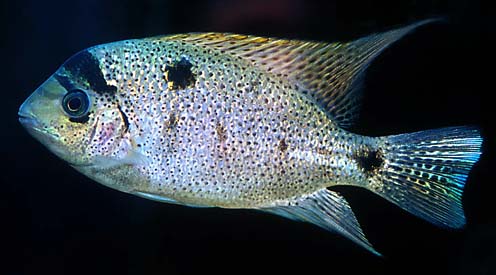
Vieja argentea · Silver Cichlid
概要
| 字段 | 值 |
|---|---|
| 类别 | 鱼 |
| 学名 | Vieja argentea |
| 分类 | 慈鲷目 Cichliformes › 慈鲷科 Cichlidae › Vieja |
| 水体 | 淡水 |
| 成体体长 | 30 cm |
| 饲养难度 | 中等 |
| 最小水体 | 205 L |
| 最小缸长 | 120 cm |
| 领地性 | 是 |
| 外部数据 | seriouslyfish vieja-argentea;fishbase 28227 |
| 原产地 | 墨西哥乌苏马辛塔河流域,似为该水系特有 |
| 食性 | 草食 |
| 性情 | 攻击性 |
| 繁殖方式 | 附着产卵 |
水质参数
| 参数 | 耐受范围 | 最适范围 | 单位 |
|---|---|---|---|
| 水温 | 26–30 | — | °C |
| pH | 7 | — | — |
| 总硬度 | 10–15 | — | dGH |
概述
Vieja argentea 是大型中美洲慈鲷,尤其容易攻击同种。配偶能否和平相处常比产卵本身更难,已经形成配对也要继续观察雌鱼是否受压,不能把短期相安当作长期安全。
分布与栖息地
似乎特有于墨西哥乌苏马辛塔河流域。
饲养环境
以石块和沉木构成领地与藏处,所有重物都要稳固,因为它会按自己的方式重新移动布置。植物可以尝试,但容易被拔起。照明强弱并非关键,摄食时碎屑和排泄较多,过滤应充分。
食性与喂食
天然主要植食,缸中却不挑食。优质慈鲷颗粒可作基础,螺旋藻或藻片应占重要部分,虾、贻贝和白肉鱼等动物饵料作为补充,避免只因爱吃肉就忽略植物性食物。
习性与混养
与其他强健的中美洲慈鲷混养只是可能方案,必须有足够石木结构让各鱼占据领地,仍无法保证成功。同种冲突更突出,配对缸也应准备在雌鱼受伤或持续被追时及时分隔。
雌雄区分
雄鱼更大,可形成额隆,背鳍与臀鳍也较延长。
繁殖
相容配对一般可产卵,常清理大石表面,有时在洞内选择位置,移走碎屑后产卵。雄鱼可能在过程中攻击雌鱼,一旦过度就需分隔,不能以繁殖行为为由放任伤害。
卵约两至三天孵化,再约四天起游。先喂新孵丰年虾,随后加入微虫、幼鱼饲料和压碎的薄片颗粒。亲鱼会照料后代,但准备再次繁殖时可能转而攻击旧一窝,应及时把幼鱼移开。
图片
图片来自 SeriouslyFish,版权归各摄影者所有。
English
Overview
A large Central American cichlid, Vieja argentea can be particularly aggressive toward its own kind. Establishing peaceful coexistence within a pair is often harder than obtaining eggs. A bonded pair still needs monitoring for persistent harassment of the female.
Distribution & habitat
It appears to be endemic to Mexico’s Usumacinta drainage.
Aquarium setup
Build territories and retreats with rocks and wood, securing heavy décor because the fish rearrange their surroundings. Plants may be tried but are easily uprooted. Lighting intensity is not critical, while effective filtration matters for this messy feeder.
Diet & feeding
Although primarily herbivorous in nature, it readily accepts varied captive food. Use quality cichlid pellets with a significant contribution from spirulina or algae wafers. Prawn, mussel, and white fish provide supplementary animal foods without displacing the vegetable component.
Behaviour & compatibility
A community of robust Central American cichlids is only a possibility, requiring enough rock and wood for separate territories without guaranteeing success. Conspecific aggression is particularly important. Even paired fish need a means of separation if the female is injured or continually pursued.
Sexual dimorphism
Males grow larger, develop a nuchal hump, and have more extended dorsal and anal fins.
Breeding
Compatible pairs usually spawn after cleaning a large rock or, sometimes, a site inside a cave. Male aggression can intensify during spawning; separate the female if it becomes excessive.
Eggs hatch in about two to three days, followed by free swimming roughly four days later. Begin with newly hatched Artemia and progress to microworms, fry foods, and finely crushed adult products. Parents care for their offspring but may attack an earlier brood as they prepare to spawn again, when the young should be moved.
来源
- https://www.seriouslyfish.com/species/vieja-argentea(抓取于 2026-10-10)
vieja-argentea · 文件: data/species/vieja-argentea.md · 状态: 草稿