马氏梵条鳅 · Fork-tailed Loach
概要
| 字段 | 值 |
|---|---|
| 类别 | 鱼 |
| 学名 | Vaillantella maassi |
| 别名 | 馬氏梵條鰍、Vaillantella flavofasciata |
| 分类 | 鲤形目 Cypriniformes › 梵条鳅科 Vaillantellidae › Vaillantella |
| 水体 | 淡水 |
| 原产地 | 印度尼西亚、马来西亚、泰国 |
| 成体体长 | 12.5 cm |
| 饲养难度 | 入门 |
| 最小水体 | 108 L |
| 最小缸长 | 120 cm |
| 群居方式 | 群游 |
| 特征 | 会跳缸: 是;翻底砂: 是 |
| 外部数据 | seriouslyfish vaillantella-maassi;fishbase 23000 |
| 食性 | 肉食 |
| 领地性 | 是 |
水质参数
| 参数 | 耐受范围 | 最适范围 | 单位 |
|---|---|---|---|
| 水温 | 23–29 | — | °C |
| pH | 3.5–7.2 | — | — |
| 总硬度 | 1–12 | — | dGH |
概述
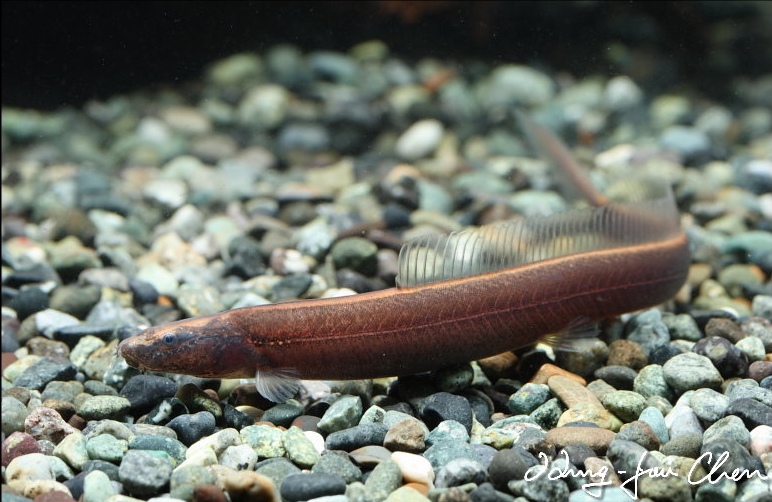
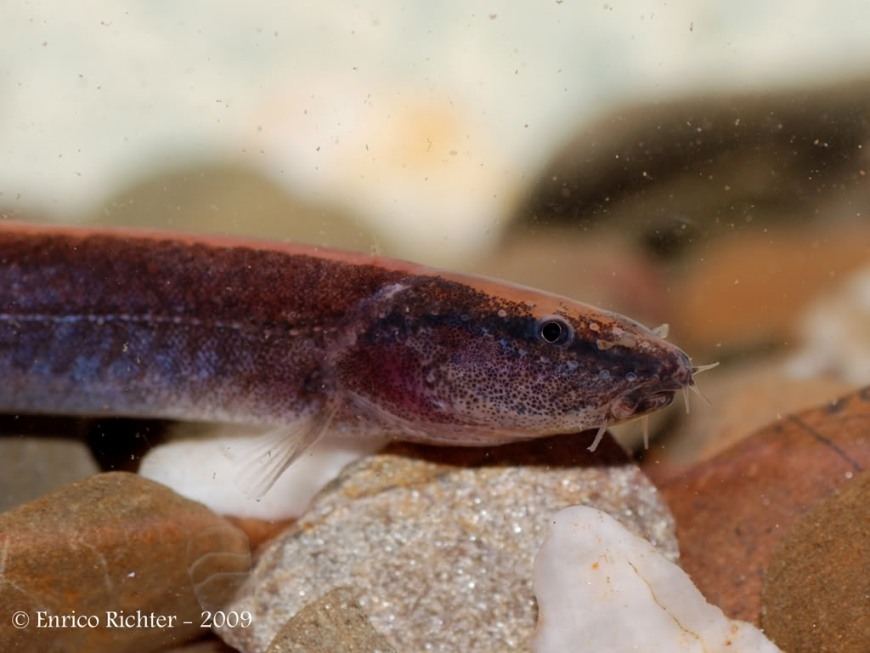
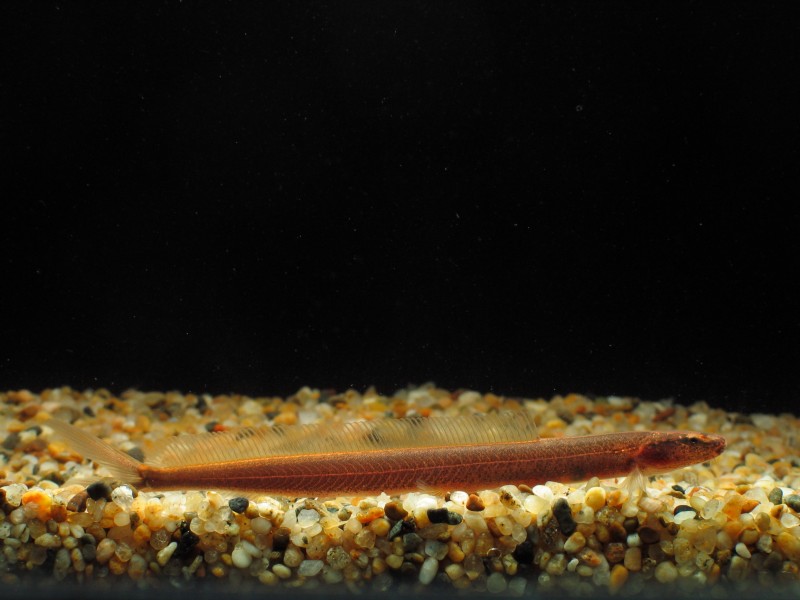
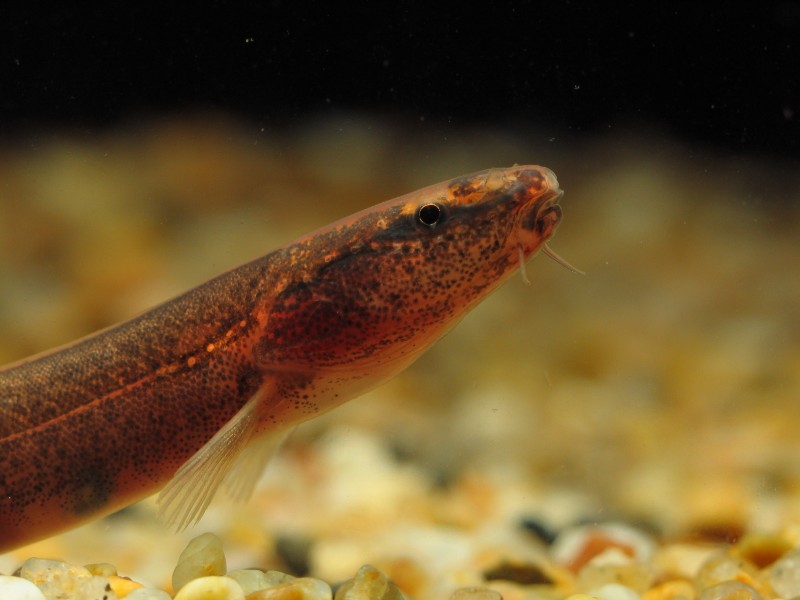
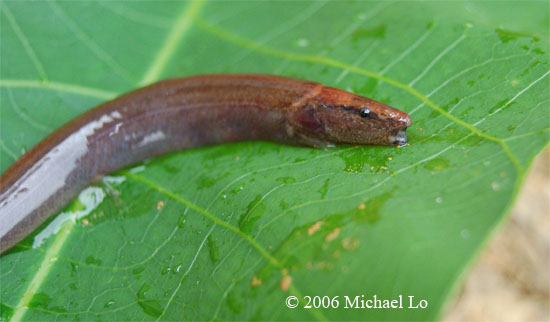
马氏梵条鳅(Vaillantella maassi)体色蓝褐,背部从吻端至尾鳍基部有清楚的橙黄条纹,性格隐蔽,白天很少露面。它并非可以随意挤在一起的群游鳅,多条饲养要让每条都拥有独立藏身处与地盘。
分布与栖息地
见于苏门答腊、婆罗洲、马来半岛及泰国南部。苏门答腊包括甘巴尔基里河和巴塘哈里河流域,婆罗洲记录涉及卡普阿斯河及从砂拉越流入加里曼丹的溪流,马来半岛有恩道、登嘉楼等水系。
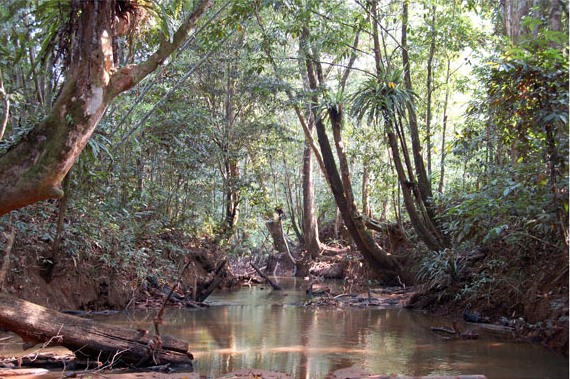
常在森林溪流浅水岸边、落叶堆中生活,部分地点与泥炭沼泽和黑水有关,也能出现在较清或浑浊的水体。浓密岸边植物与树冠遮阴,水通常矿物含量低、缓冲能力弱,可呈强酸性。底质依地点为泥炭、泥或砂,雨季水流可能明显增强。
饲养环境
若养多条,先用硬质布景分开藏身处,使各鱼能建立独立领地。软砂底较合适,它喜欢挖掘,有时会完全埋入;细砾也可作为替代。
沉木根与枝条形成阴暗角落,落叶既提供遮蔽,也让分解中的微生物成为补充食物。照明偏暗,可选能适应弱光的水草,并用浮水植物进一步散射光线。
避免强水流,温和过滤及轻微水面扰动即可。保护进水口,防止小个体钻入,缸盖也应封严,尤其刚入缸时注意防跳。
食性与喂食
主要从底质中取食昆虫幼虫、小型甲壳类等微小动物。刚进口或新入缸时,可能暂时对沉底颗粒和薄片无兴趣,可先用水蚤、丰年虾、红虫等活饵或冷冻饵,安定后再引入干粮。
长期应将多种食物搭配,不能把转吃颗粒理解成可以永远只喂单一饲料;以多种天然食材制作的凝胶饵也可加入变化。
习性与混养
隐蔽性强,白天很少看到不等于缸中没有鱼或已经死亡。适应相近水质、主要在较高水层活动的小型鱼可作为伙伴,但底层同伴须谨慎挑选。
同属可能攻击彼此或其他鱼,也可能吃卵与鱼苗。个体通常围绕藏身处守卫一小块地盘,其他鱼若能避开,冲突可减少;过于柔弱的底栖鱼不适合。
雌雄区分
成年雌鱼可能明显更厚实,也可能比雄鱼大,不能把这些倾向当成可靠的外观配对标准。
繁殖
水族箱内繁殖尚未有记录,不能直接把其他鳅类的繁殖办法用于本种。
补充说明
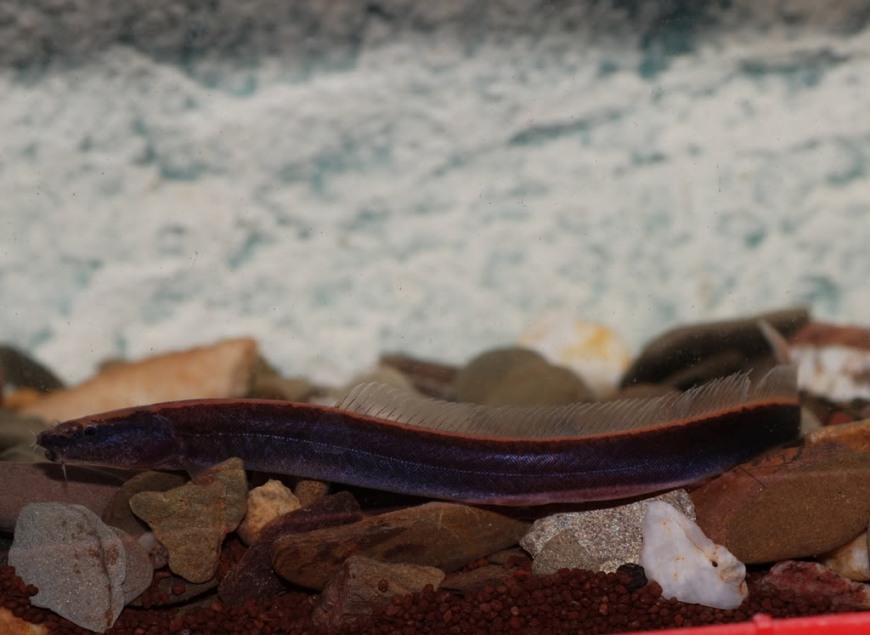
商品名可能涉及“巧克力鳅”“龙鳅”等称呼,辨认时应看完整学名和背部条纹。近缘 Vaillantella euepiptera 的背纹通常更浅、断成不规则斑块,Vaillantella cinnamomea 则较均匀褐色,没有明显背纹。
这一类群有特别长的背鳍,不能仅凭细长体形就与其他鳅混同。
图片
图片来自 SeriouslyFish,版权归各摄影者所有。
English
Overview
Vaillantella maassi has a blue-brown body marked by a clear orange-yellow stripe along the back from snout to tail base. It is notably secretive and seldom visible by day. Several fish should not simply be crowded together as a shoal; each needs its own retreat and defensible space.
Distribution & habitat
Its range includes Sumatra, Borneo, Peninsular Malaysia, and southern Thailand. Records encompass Sumatra's Kampar Kiri and Batang Hari systems, the Kapuas drainage and streams crossing from Sarawak into Kalimantan, and peninsular rivers including the Endau and Terengganu.
Shallow forest-stream margins and accumulations of leaves are typical. Some sites are associated with peat swamps and blackwater, but clearer or turbid habitats also occur. Dense bank vegetation and tree cover provide shade. Water is generally low in minerals and buffering capacity and may be strongly acidic. Peat, mud, or sand forms the bottom, and flow can increase substantially during rainy periods.
Aquarium setup
For multiple specimens, arrange hardscape to separate hiding places and let each fish establish its own territory. Soft sand is preferable because the fish digs and sometimes buries itself completely, though fine gravel is an alternative.
Roots and branches create shaded corners. Leaves offer cover and support microbial growth during decomposition, providing supplementary food. Keep lighting subdued, use plants suited to low light, and add floating vegetation to diffuse illumination.
Avoid powerful currents. Gentle filtration with slight surface movement is sufficient. Protect intakes against entry by small fish and secure the cover, particularly during the settling-in period.
Diet & feeding
It extracts small animal prey, chiefly insect larvae and crustaceans, from the substrate. Newly imported or recently introduced fish may ignore sinking pellets and flakes. Begin with live or frozen Daphnia, brine shrimp, or bloodworms, then introduce dry foods after the fish settles.
Maintain variety over the long term. Learning to eat pellets is not a reason to abandon other foods. Gel preparations incorporating varied natural ingredients can also contribute to the menu.
Behaviour & compatibility
Daytime concealment is normal, so failure to see a fish does not by itself establish its absence or death. Small companions occupying higher water levels and sharing its environmental needs can work, whereas bottom-dwelling partners require particular care.
Members of the genus can attack one another or other fishes and may consume eggs and fry. Individuals typically defend a small area around a chosen shelter. Once companions avoid that space, conflict often lessens; delicate bottom dwellers are poor choices.
Sexual dimorphism
Mature females may be distinctly fuller-bodied and possibly larger than males. These tentative tendencies should not be treated as a dependable external sexing method.
Breeding
Aquarium reproduction is unreported. Breeding methods for other loaches should not automatically be transferred to this species.
Notes
Varied chocolate-loach and dragon-loach labels can obscure identity. Check the scientific name and dorsal pattern. In the related Vaillantella euepiptera, the stripe is generally paler and broken into irregular patches, while Vaillantella cinnamomea is more uniformly brown without a prominent dorsal marking.
An exceptionally extended dorsal fin helps distinguish this group from other superficially similar elongated loaches.
来源
- https://www.seriouslyfish.com/species/vaillantella-maassi(抓取于 2026-10-10)
vaillantella-maassi · 文件: data/species/vaillantella-maassi.md · 状态: 草稿