Tyrannochromis macrostoma · Big-Mouth Hap
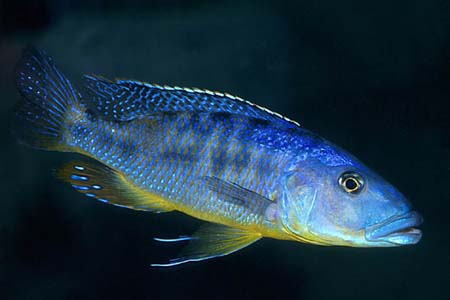
概要
| 字段 | 值 |
|---|---|
| 类别 | 鱼 |
| 学名 | Tyrannochromis macrostoma |
| 分类 | 慈鲷目 Cichliformes › 慈鲷科 Cichlidae › Tyrannochromis |
| 水体 | 淡水 |
| 成体体长 | 35 cm |
| 饲养难度 | 困难 |
| 最小水体 | 486 L |
| 最小缸长 | 180 cm |
| 特征 | 吃小鱼: 是;翻底砂: 是 |
| 外部数据 | seriouslyfish tyrannochromis-macrostoma;fishbase 2138 |
| 原产地 | 马拉维湖特有 |
| 食性 | 肉食 |
| 繁殖方式 | 口孵 |
| 领地性 | 是 |
水质参数
| 参数 | 耐受范围 | 最适范围 | 单位 |
|---|---|---|---|
| 水温 | 24–28 | — | °C |
| pH | 7.6–8.8 | — | — |
| 总硬度 | 10–25 | — | dGH |
概述
Tyrannochromis macrostoma 是大嘴伏击型捕食慈鲷,常借岩石和缝隙接近猎物,有时倒身出击。腹部比背部深的反向保护色可能有助于这种猎法,但它对吞不下的大鱼可以相对平静。
分布与栖息地
马拉维湖特有,生活在较浅的岩石水域,利用岩石遮蔽伏击其他鱼。
饲养环境
无需布置密集景观,但要有大石块可供遮蔽,底砂以细砂为宜,同时保留体型较大的鱼能顺畅活动的空间。捕食性大鱼产生的排泄负荷高,过滤必须足够强。
食性与喂食
天然食鱼,但通常可以适应死饵,不必长期依靠活鱼。虾、贻贝、蛤肉及适当小鱼等水生动物食物可轮换,颗粒虽可接受,却不宜成为唯一或主要基础。
习性与混养
小于约十三厘米的鱼可能被吞,尤其不能把岩栖小慈鲷当安全伙伴,因为它们本就是天然猎物。可考虑吞不下的大型非岩栖慈鲷,但避免与需要植物性主食的鱼混养。雄鱼繁殖时守域,通常一雄配数雌,多雄仅适合极大的空间。
雌雄区分
成年雄鱼比雌鱼鲜艳,幼鱼则可能与近似种混淆。
繁殖
已知天然方式为母系口孵,但缸中产卵尚无确认记录。野外雄鱼挖大漏斗状沙坑,并驱逐其他雄鱼,雌鱼在坑内产卵后口孵育幼,母鱼照料会持续一段时间。不能据此假定已有成熟的人工繁殖日程。
补充说明
成年鱼深色腹部是与某些相似种区分的线索。幼鱼的外观差异较小,选购时不能仅靠成鱼照片认定身份。
图片
图片来自 SeriouslyFish,版权归各摄影者所有。
English
Overview
A large ambush predator, Tyrannochromis macrostoma stalks prey from rocks and crevices and sometimes strikes upside down. Its darker belly may assist that hunting method. Predation risk is substantial even though companions too large to swallow may be treated peacefully.
Distribution & habitat
It is endemic to Lake Malawi, occupying shallow rocky water where cover supports ambush hunting.
Aquarium setup
Décor can be sparse, provided large rocks offer cover and the layout leaves room for a bulky fish to maneuver. Sand is preferable. Strong filtration is necessary to manage the considerable waste load of a large predator.
Diet & feeding
Naturally piscivorous, it can usually be accustomed to nonliving foods rather than relying on live fish. Rotate aquatic foods such as prawns, mussels, cockles, and suitable small fish. Pellets are accepted but should not dominate the menu.
Behaviour & compatibility
Fishes shorter than roughly thirteen centimeters may be swallowed, particularly small mbuna that resemble natural prey. Large haps beyond swallowing size may work, but companions needing a vegetable-based diet are unsuitable. Breeding males become territorial; keep several females per male and avoid multiple males except in an enormous aquarium.
Sexual dimorphism
Adult males are more colorful than females. Juveniles can be confused with a similar congener.
Breeding
The natural strategy is maternal mouthbrooding, although aquarium spawning is unconfirmed. Males excavate large craterlike pits and defend them against rivals. Spawning occurs within the pit, and females continue brood care for some time. This establishes the method without providing a validated captive timetable.
Notes
The dark adult belly helps distinguish it from certain similar fishes. Juvenile similarity makes identification more difficult than comparison of adult photographs suggests.
来源
- https://www.seriouslyfish.com/species/tyrannochromis-macrostoma(抓取于 2026-10-10)
tyrannochromis-macrostoma · 文件: data/species/tyrannochromis-macrostoma.md · 状态: 草稿