Tucanoichthys tucano
概要
| 字段 | 值 |
|---|---|
| 类别 | 鱼 |
| 学名 | Tucanoichthys tucano |
| 分类 | 脂鲤目 Characiformes › 脂鲤科 Characidae › Tucanoichthys |
| 水体 | 淡水 |
| 原产地 | 巴西 |
| 成体体长 | 1.7 cm |
| 饲养难度 | 中等 |
| 最小水体 | 41 L |
| 最小缸长 | 45 cm |
| 群居方式 | 群游 |
| 性情 | 温和 |
| 外部数据 | seriouslyfish tucanoichthys-tucano;fishbase 54775 |
| 游动层 | 中层、上层 |
| 繁殖方式 | 附着产卵 |
水质参数
| 参数 | 耐受范围 | 最适范围 | 单位 |
|---|---|---|---|
| 水温 | 20–28 | — | °C |
| pH | 4–6.5 | — | — |
| 总硬度 | 1–8 | — | dGH |
概述
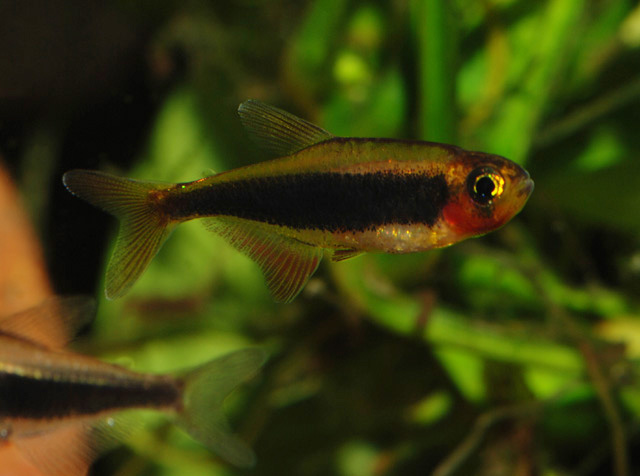
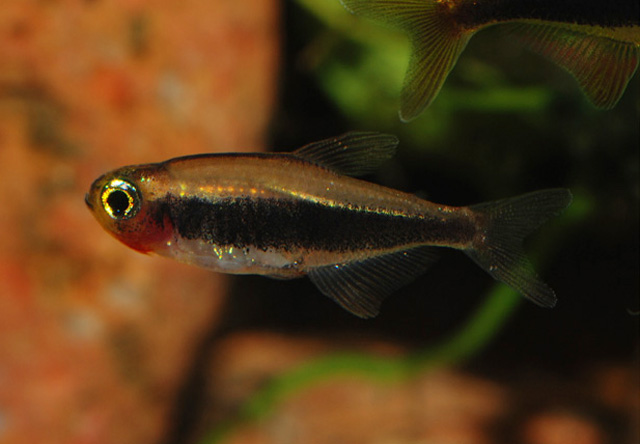
Tucanoichthys tucano 是尼格罗河上游黑水环境的微型脂鲤,体侧有醒目黑色纵纹。它对其他鱼通常温和,却不适合普通社区缸随意混养;成熟酸软水、微小饵料和足够遮蔽更重要。
分布与栖息地
仅知巴西 Uaupés 河水系,模式产地是一条流入 Yavuari 支流的小溪,完整分布范围仍可能比目前记录更广。
1994 年旱季末的采点在浓密森林内,水虽清澈,却受有机物染得很深。无水草,落枝与落叶丰富,局部落叶层很厚,岸边悬垂植被提供遮蔽。
当时水流较快,测得水温约 24~26 °C、pH 4.09、电导率约 24 μS/cm,显示酸性、低矿物质但仍富氧的环境。这些是特定时间地点的读数,不应把温和小型鱼一概理解为只住静水。
饲养环境
用沙底、沉木根枝和干落叶形成丰富结构,桤木果也可辅助营造黑水条件。落叶上的微生物群能为鱼苗提供补充食物。
较暗光照似乎更合适,可用耐阴蕨类、莫丝、椒草和浮水水蕨。只应放入生物过滤成熟的缸,对有机废物波动敏感。
繁殖需要酸性、低碳酸盐硬度和偏低总硬度的水,必要时利用反渗透等方式制备,并维持在适宜范围。天然泥炭并不是必须材料。
食性与喂食
天然可能是微型捕食者,摄食很小的无脊椎动物和浮游动物。缸中可接受适口干粮,但应每天搭配丰年虾无节幼体、小水蚤、微型白虫等小活饵或冷冻饵。
习性与混养
单养或与极小、温和的鱼混养较合适。它多在中上层活动,也能在合适的短鲷缸担当陪游鱼,但要避免伙伴对其微小体形构成威胁。
至少八至十条有助于减少胆怯。群体较松散,雄鱼会进行较量,不能把群居理解成始终紧密同步群游。
雌雄区分
成年雄鱼色彩更浓,背鳍、尾鳍和臀鳍有红色。成熟雌鱼可能更圆,抱卵时尤其明显。
繁殖
人工繁殖已经实现,成熟且结构丰富的缸中有时会自行出现少量鱼苗。繁殖雄鱼围绕叶片或木块等固体表面建立临时领域,野外观察到它们不仅驱赶同种雄鱼,也会排斥靠近的其他鱼。
产卵后雄鱼留在卵旁守护,约 24 小时孵化。刚能自由游动的鱼苗带蓝绿色虹彩,与成鱼花纹不同。
补充说明
本种属于成体也极微小的鱼类,不能把所有小个体当成尚未长大的普通脂鲤。完整侧线等部分结构退化,但没有背前鳞片不等于全身无鳞。
体側深色纵纹很突出,分类和亲缘关系仍需进一步研究,不能仅凭外观套入其他有黑线的小型脂鲤。
图片
图片来自 SeriouslyFish,版权归各摄影者所有。
English
Overview
The miniature Tucanoichthys tucano carries a conspicuous dark lateral stripe and comes from upper-Negro blackwater. Generally peaceful behavior does not make it a casual community addition. Mature acidic soft water, tiny foods, and generous shelter are central to its care.
Distribution & habitat
Known records are restricted to Brazil's Uaupés system. The type locality is a small creek entering the Yavuari tributary, while the full range may include populations not yet documented.
At the end of the dry season in 1994, the collecting stream ran through dense forest. Clear but heavily stained water contained branches and abundant leaf litter, locally deep, with overhanging vegetation providing cover and no aquatic plants present.
The stream was flowing relatively quickly. Measurements included approximately 24–26 °C, pH 4.09, and conductivity around 24 μS/cm, demonstrating acidic, mineral-poor yet oxygenated water. These are site observations rather than a reason to assume that all miniature fishes inhabit still water.
Aquarium setup
Use sand, woody roots and branches, and dried leaves to create structure. Alder cones can also help reproduce blackwater conditions. Leaf-associated microbes provide supplementary food for fry.
Dim light seems preferable, with shade-tolerant ferns, mosses, Cryptocoryne, and floating water sprite as cover. The aquarium must be biologically mature because fluctuations in organic waste are poorly tolerated.
Breeding requires acidic water with very low carbonate hardness and low general hardness. Reverse osmosis or another soft-water method may be needed, while maintaining the appropriate range. Natural peat is not a necessary ingredient.
Diet & feeding
Tiny invertebrates and zooplankton are presumed natural prey. Appropriately sized dry food is accepted, but daily small live or frozen meals such as Artemia nauplii, small water fleas, and grindal worms should also be supplied.
Behaviour & compatibility
A dedicated aquarium or carefully chosen tiny, peaceful companions is preferable. It generally occupies middle and upper water and may serve as a dither fish with suitable dwarf cichlids, provided its small size does not expose it to danger.
Keep at least eight to ten to reduce nervousness. The group is loose rather than tightly synchronized, and males may spar.
Sexual dimorphism
Adult males have stronger color, including red in the dorsal, caudal, and anal fins. Mature females may be rounder-bodied, particularly when gravid.
Breeding
Captive reproduction has succeeded, with occasional fry appearing in mature, well-structured aquaria. Breeding males establish temporary territories around a solid surface such as a leaf or piece of wood. In nature they defend these against both male rivals and other nearby fishes.
The male stays with the eggs after spawning until hatching, which takes around 24 hours. Newly free-swimming fry show an iridescent blue-green pattern unlike the adult appearance.
Notes
This is a miniature adult fish, not simply the juvenile stage of a larger tetra. Some structures, including much of the lateral-line system, are reduced. Absence of predorsal scales does not mean that the whole body is scaleless.
Its dark flank stripe is prominent, but closer relationships remain unresolved and should not be inferred from resemblance to other striped tetras alone.
来源
- https://www.seriouslyfish.com/species/tucanoichthys-tucano(抓取于 2026-10-10)
tucanoichthys-tucano · 文件: data/species/tucanoichthys-tucano.md · 状态: 草稿