灰体蓝首鱼 · White-Spotted Cichlid
概要
| 字段 | 值 |
|---|---|
| 类别 | 鱼 |
| 学名 | Tropheus duboisi |
| 别名 | 灰體藍首魚 |
| 分类 | 慈鲷目 Cichliformes › 慈鲷科 Cichlidae › Tropheus |
| 水体 | 淡水 |
| 成体体长 | 12 cm |
| 饲养难度 | 中等 |
| 群居方式 | 群游 |
| 性情 | 温和 |
| 外部数据 | seriouslyfish tropheus-duboisi;fishbase 8980 |
| 原产地 | 坦噶尼喀湖 |
| 领地性 | 是 |
| 繁殖方式 | 口孵 |
水质参数
| 参数 | 耐受范围 | 最适范围 | 单位 |
|---|---|---|---|
| 水温 | 23–27 | — | °C |
| pH | 8–9.5 | — | — |
| 总硬度 | 8–25 | — | dGH |
概述
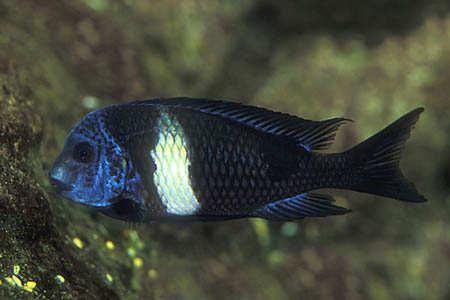
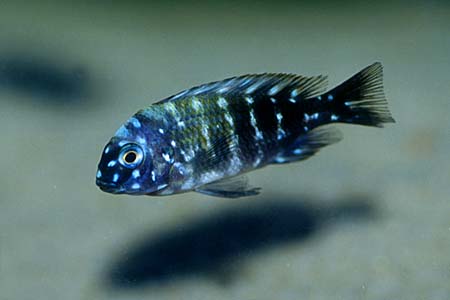
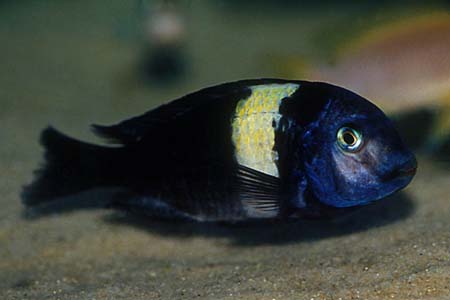
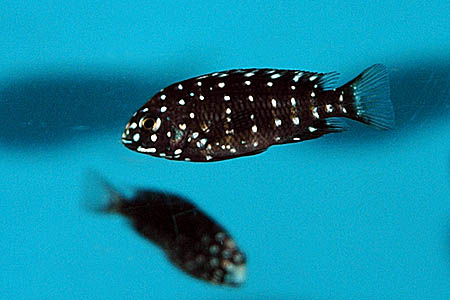
灰体蓝首鱼(Tropheus duboisi)幼鱼黑底布满白色或浅蓝斑点,长大后会转为蓝黑体色配黄色或白色竖带。漂亮幼鱼并不意味着容易饲养;它容易腹胀,对水质和饮食管理要求高,也需要仔细处理群体等级关系。
分布与栖息地
坦噶尼喀湖特有种,生活于岩石区,水深通常比其他同属鱼更大。
饲养环境
铺沙、充分供氧,可采用简化布景,或用石块构成多个洞穴并保留开放游泳区。单条的参考缸约 120 × 30 × 30 cm,整群则至少约 152 × 46 × 46 cm。保持高水质是长期饲养的关键,不能只依靠大缸缓解问题。
食性与喂食
虽然接受多种食物,仍应以螺旋藻饲料、焯菠菜和紫菜等植物性食物为主,少量活饵或冻饵补充。牛心与其他陆生动物肉会干扰消化,不宜使用。
习性与混养
对异种相对温和,但活跃程度高,不适合胆小同伴。同种会通过争斗建立等级;约 15~20 条的群体较常用于分散冲突,只有 5~6 条时反而可能持续争斗至死亡。小群或成对平静生活虽有个例,不宜视为可靠常规。
成群所需空间和数量要一起规划,稳定后不要再加入陌生同种。混养也需考虑双方食物组成是否相容。
雌雄区分
生长速度与体形的细微差别不足以可靠分辨。较可靠的是由熟练者检查生殖乳突,雄尖雌圆。
繁殖
可从约 20~30 条幼鱼养起,让群体逐渐稳定。人工繁殖个体通常比野生个体更适应水族环境,弱势雄鱼仍可能受到攻击。每雄约配 6~10 雌,多雄时让每条雄鱼拥有约 60 cm 宽的独立石堆区域,避免一片连续石景全部被优势雄鱼控制。
鱼在岩石上方产卵,雌鱼可在卵落底前接入口中,也可能等卵落入石缝后捡起,再靠近雄鱼生殖口接收精液。每窝约 5~15 枚,雌鱼口孵可超过 4 周,期间通常继续摄食。
转移含卵雌鱼可能诱发吐卵或吞卵,隔离过久还会使她回缸后失去原等级、遭受攻击;留在群中又可能因骚扰损失鱼苗。必要的回缸操作可结合熄灯遮暗数小时。约两周人工取苗是熟练繁殖者的选择,不是日常必需步骤。
鱼苗自由游动时能吃丰年虾无节幼体、微虫和粉状饲料;留在母鱼身边的幼鱼受惊后仍可躲回她口内。
补充说明
不同地理型应分开饲养繁殖,因为它们容易相互杂交。幼体斑点随成长消退属于正常体色变化。
图片
图片来自 SeriouslyFish,版权归各摄影者所有。
English
Overview
Juvenile Tropheus duboisi display pale spots against deep black, but adults develop a blue-black body crossed by a yellow or white band. The attractive young should not be mistaken for an easy purchase. Bloat susceptibility and difficult colony dynamics demand experienced care.
Distribution & habitat
This Lake Tanganyika endemic occupies rocky habitats, generally at greater depths than its congeners.
Aquarium setup
Use sand and keep oxygen levels high. Either a sparsely furnished arrangement or a layout with numerous rock shelters and open spaces can be used. Approximately 120 × 30 × 30 cm is a single-fish setup; a colony needs at least about 152 × 46 × 46 cm. Water quality remains critical regardless of tank size.
Diet & feeding
Despite readily accepting many foods, the fish should receive mainly plant-based items. Spirulina products, blanched spinach, and nori can be supplemented with small live or frozen portions. Avoid beefheart and other terrestrial animal meat because of digestive problems.
Behaviour & compatibility
Relative tolerance of other species does not extend to conspecifics. These active fish also make poor companions for shy species. Hierarchies form through disputes, and groups of around 15–20 are often used to distribute aggression. Groups of only five or six may fail to settle and suffer fatal fighting; peaceful smaller groups or pairs are exceptions.
Plan group size and available space together, and do not introduce unfamiliar conspecifics after the colony has settled. Feeding compatibility matters when considering other species.
Sexual dimorphism
Minor differences in growth and shape are unreliable guides. An experienced keeper can examine the genital papilla, which is pointed in males and more rounded in females.
Breeding
A starting group of roughly 20–30 juveniles can develop into a breeding colony. Captive-bred stock is generally more manageable than wild fish, although subordinate males remain vulnerable. Provide around six to ten females per male. Separate rock piles, each with approximately 60 cm of territory, help divide males; one continuous rocky area may be monopolized by a dominant male.
Eggs are released above rocks. The female either catches them before they settle or retrieves them from crevices, then receives sperm directly into her mouth from the male's vent. Broods contain around 5–15 eggs and may be incubated for more than four weeks. Feeding usually continues.
Moving a brooding female can trigger brood loss. Long isolation also removes her place in the hierarchy, risking attacks on return, while leaving her in the colony can expose the brood to harassment. If she must be returned, keep the aquarium dark for several hours. Artificial extraction at approximately two weeks is a technique for skilled breeders.
Young can take Artemia nauplii, microworms, and powdered foods at free swimming. Those remaining with their mother may shelter in her mouth when threatened.
Notes
Keep geographical forms separate because they hybridize readily. Loss of juvenile spotting during maturation is normal.
来源
- https://www.seriouslyfish.com/species/tropheus-duboisi(抓取于 2026-10-10)
tropheus-duboisi · 文件: data/species/tropheus-duboisi.md · 状态: 草稿