布氏蓝首鱼
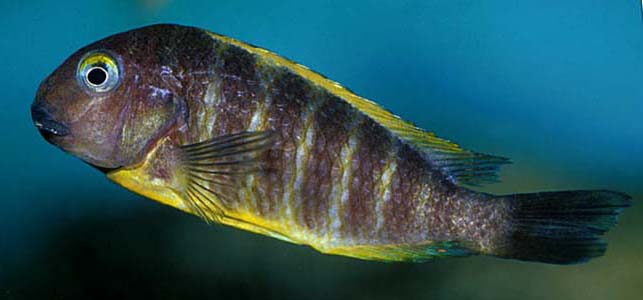
概要
| 字段 | 值 |
|---|---|
| 类别 | 鱼 |
| 学名 | Tropheus brichardi |
| 别名 | 布氏藍首魚 |
| 分类 | 慈鲷目 Cichliformes › 慈鲷科 Cichlidae › Tropheus |
| 水体 | 淡水 |
| 成体体长 | 11.5 cm |
| 饲养难度 | 中等 |
| 群居方式 | 群游 |
| 性情 | 温和 |
| 外部数据 | seriouslyfish tropheus-brichardi;fishbase 8979 |
| 原产地 | 坦噶尼喀湖北端 |
| 领地性 | 是 |
| 繁殖方式 | 口孵 |
水质参数
| 参数 | 耐受范围 | 最适范围 | 单位 |
|---|---|---|---|
| 水温 | 23–27 | — | °C |
| pH | 8–9.5 | — | — |
| 总硬度 | 8–25 | — | dGH |
概述
布氏蓝首鱼(Tropheus brichardi)活跃,群体中的等级互动十分明显,但建立稳定群体并不容易。它易出现腹胀问题,清洁水质和以植物为主的饮食尤其重要,不宜作为新手的入门鱼。
分布与栖息地
坦噶尼喀湖北端特有,生活于岩石岸边的浅水区。
饲养环境
可采用简化布景减少领地争夺,也可用岩石形成大量洞穴和遮蔽,并穿插开放游泳区;两种方式都宜铺沙和充分供氧。单条可用约 120 × 30 × 30 cm 的缸,而群体至少需要约 152 × 46 × 46 cm 的空间,不能混淆两者。
食性与喂食
以螺旋藻薄片、焯菠菜、紫菜等植物性食物为基础,少量低蛋白活饵或冻饵作补充。不要喂牛心或其他陆生动物肉,以免影响消化。
习性与混养
对其他种类相对温和,但非常活跃,不适合搭配胆小鱼。同种间会争斗直至形成等级,并非天然紧密群游。常建议一次建立约 15~20 条的群体来分散冲突;只有 5~6 条时可能难以稳定,甚至发生致死攻击。少量个体和平共处确有例外,但不能当作通则。
稳定群体不应再随意加入新鱼,原有成员通常不容纳外来者。混养时也应选择食物需求相容的鱼。
雌雄区分
可靠分辨较困难。有经验者可观察生殖乳突,雄鱼偏尖、雌鱼偏圆,不能只靠体色判断。
繁殖
雌鱼口孵,可从约 20~30 条幼鱼逐渐建立繁殖群,人工繁殖个体通常比野生鱼更容易适应。需要关注弱势雄鱼可能受伤或死亡,并适时调整雄鱼数量。每雄配约 6~10 雌;多雄时分别提供约 60 cm 的领地和独立石堆,连续的一整片石景往往只让一条雄鱼占据优势。
产卵地点常在平石或开放沙地上方。卵尚未落底便由雌鱼接入口中,随后她靠近雄鱼生殖口,让精液直接进入口内受精。一窝约 5~12 枚,口孵可能超过 4 周,雌鱼通常仍会进食。
隔离含卵雌鱼有两难:留在群中可能受骚扰而损失鱼苗,离群过久又可能失去等级地位,回缸时被猛烈攻击;移动压力本身也会使她吐卵或吞卵。确需回缸时,可熄灯并遮暗数小时。约两周人工取苗仅适合熟练者。
自由游动的鱼苗能吃丰年虾无节幼体、微虫和粉状干粮。若随母鱼生活,遇险时仍可能躲回口中。
补充说明
有多种体色类型,不同类型会自由杂交,应分开保持。部分类型未来可能被划为独立物种,不能把尚未确定的分类当作定论。
图片
图片来自 SeriouslyFish,版权归各摄影者所有。
English
Overview
Building a settled group of Tropheus brichardi is a substantial part of the challenge of keeping it. Social interactions are conspicuous, but conflict can be severe. Susceptibility to bloat makes water quality and a plant-based diet priorities, and this is not an appropriate beginner species.
Distribution & habitat
It is endemic to the northern end of Lake Tanganyika, occupying shallow rocky shoreline habitats.
Aquarium setup
Minimal furnishing is sometimes used to limit territorial behavior. Alternatively, arrange numerous rocky retreats with open swimming spaces between them. Both approaches need sand and excellent oxygenation. A single specimen can use an aquarium around 120 × 30 × 30 cm; a group requires at least approximately 152 × 46 × 46 cm.
Diet & feeding
Base meals on plant foods such as spirulina flakes, blanched spinach, and nori. Small supplements of low-protein live or frozen foods are possible. Beefheart and other terrestrial animal meat are unsuitable for its digestive system.
Behaviour & compatibility
Other species are treated relatively peacefully, but shy companions can be overwhelmed by its activity. Conspecifics establish a hierarchy through disputes rather than forming a natural tight school. Groups of about 15–20 are commonly recommended to spread conflict. Five or six individuals may remain unsettled and fight fatally; successful pairs or small groups are exceptions.
Do not add newcomers casually to a settled colony, which is unlikely to accept them. Any companions should also have compatible feeding requirements.
Sexual dimorphism
Reliable external sexing is difficult. Experienced examination of the genital papilla distinguishes the pointed male form from the rounder female form.
Breeding
Females incubate the brood in the mouth. Starting with approximately 20–30 juveniles allows a breeding colony to develop; captive-bred fish are generally easier than wild imports. Subordinate males can be injured or lost, making adjustment of male numbers necessary. Aim for roughly six to ten females per male. Multiple males need separate rock piles and about 60 cm of territory each; continuous rockwork tends to favor a single dominant breeder.
Spawning occurs above a selected flat stone or open bottom. The female catches eggs before they settle, then approaches the male's vent to receive sperm directly into her mouth. A brood contains around 5–12 eggs and may be carried for more than four weeks. She normally continues eating.
Isolation poses competing risks: remaining in the colony exposes the brood to harassment, while prolonged removal can cost the female her social position and provoke attacks on return. Handling stress can also cause brood loss. If reintroduction is necessary, darkening the tank for several hours may help. Artificial brood removal at around two weeks is for experienced breeders.
Free-swimming young accept Artemia nauplii, microworms, and powdered dry food. Those left with their mother may still retreat into her mouth when alarmed.
Notes
Numerous color forms exist and interbreed readily, so keep them separate. Some may eventually receive species status, but this remains uncertain.
来源
- https://www.seriouslyfish.com/species/tropheus-brichardi(抓取于 2026-10-10)
tropheus-brichardi · 文件: data/species/tropheus-brichardi.md · 状态: 草稿