蓝曼龙 · Three-spot Gourami
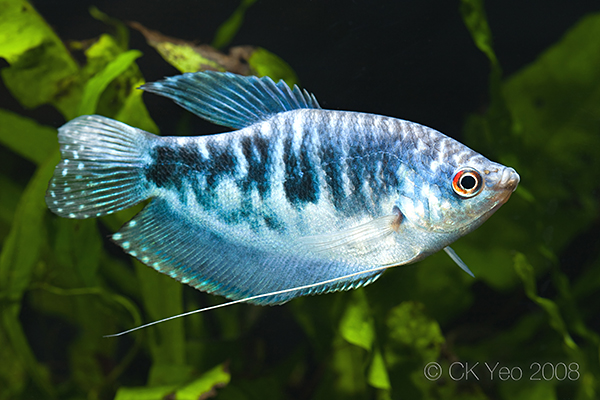
概要
| 字段 | 值 |
|---|---|
| 类别 | 鱼 |
| 学名 | Trichopodus trichopterus |
| 别名 | 丝鳍毛腹鱼、絲鰭毛足鱸、絲鰭毛腹魚(台湾)、丝鳍毛足鲈 |
| 分类 | 攀鲈目 Anabantiformes › 丝足鲈科 Osphronemidae › Trichopodus |
| 水体 | 淡水 |
| 成体体长 | 15 cm |
| 饲养难度 | 入门 |
| 最小水体 | 81 L |
| 最小缸长 | 90 cm |
| 领地性 | 是 |
| 外部数据 | seriouslyfish trichopodus-trichopterus;fishbase 4675 |
| 原产地 | 中国南部、越南、老挝、柬埔寨、泰国、缅甸、马来西亚及印度尼西亚北部 |
| 食性 | 杂食 |
| 特征 | 啃水草: 是 |
| 繁殖方式 | 吐泡筑巢 |
水质参数
| 参数 | 耐受范围 | 最适范围 | 单位 |
|---|---|---|---|
| 水温 | 24–30 | — | °C |
| pH | 5.5–8.5 | — | — |
| 总硬度 | 3–35 | — | dGH |
概述
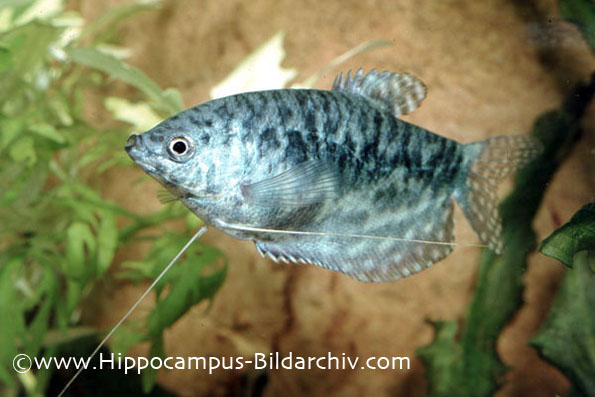
蓝曼龙(Trichopodus trichopterus)是常见而适应力较强的迷鳃鱼,金色、大理石纹等人工品系也属于同一种。个体脾气差异很大,有些成鱼明显强势,不能仅凭耐养就认为适合任何混养缸。
分布与栖息地
原生范围涉及中国南部及越南、老挝、柬埔寨、泰国、缅甸、马来西亚和印度尼西亚北部,另被引入许多地区。多见于低地缓静水、池塘、沟渠及沼泽,植被丰富。湄公河部分种群雨季进入淹水森林和草地,退水后返回常年水体。市售以人工繁殖鱼为主。
饲养环境
用水草和浮水遮蔽形成安全感,同时保留开放游动区。繁殖缸采用温和过滤,水面不宜被强流扰乱,浮水植物可支撑泡巢。
食性与喂食
野外杂食,摄取水陆植物、藻类、小型无脊椎动物、浮游动物和有机碎屑。人工饲养通常不挑食,以多样、适口的食物搭配。
习性与混养
有些个体长期温和,有些随成熟变得很凶。雄鱼会守领域、彼此争斗,繁殖时尤其强势。伙伴应较强健、体型相容,并持续观察成鱼相处情况,不能把幼鱼时期的和平视为永久保证。
雌雄区分
雄鱼较大,背鳍末端较尖;雌鱼较小,腹部更圆。
繁殖
泡巢型,繁殖较容易。繁殖水深约 15~20 cm,放较多浮水植物,用活饵调养。可一雄配两至三雌以分散追迫,但不愿产卵的雌鱼仍可能被攻击。
雄鱼把植物碎片加入泡巢,求偶时双方用丝状腹鳍触碰,随后在巢下相拥产卵。卵上浮后由雄鱼集中入巢,一窝约五百至一千二百粒。产后移开雌鱼,雄鱼单独守巢。
卵约二十至三十小时孵化,再过四至五天鱼苗自由游动,此时移走雄鱼。首周用极小微生物饵或适合鱼苗的液体饵,之后转为丰年虾无节幼体、微虫和粉粮。幼鱼生长差异明显时应按大小分养,否则容易互相吞食。
补充说明
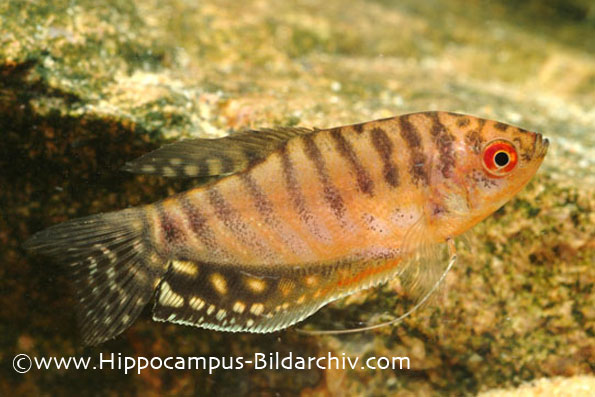
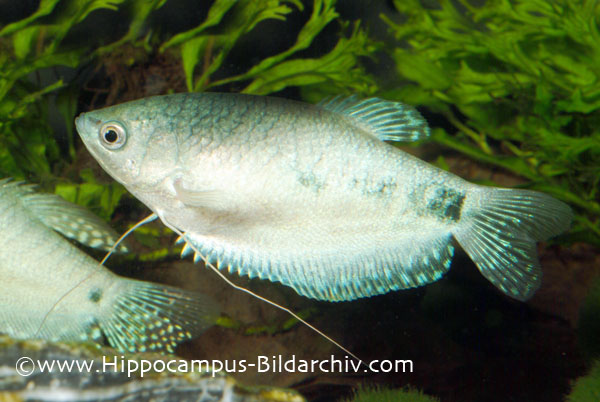
蓝灰自然型之外,金色、银色和大理石纹等是人工选育品系。颜色变化并不保证性情更温和,选择个体时仍需看行为。
图片
图片来自 SeriouslyFish,版权归各摄影者所有。
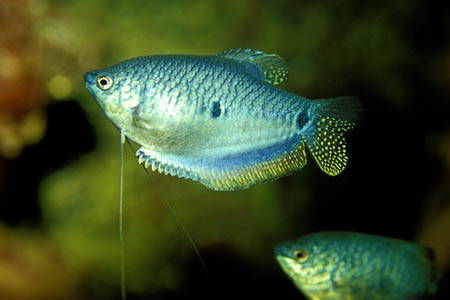
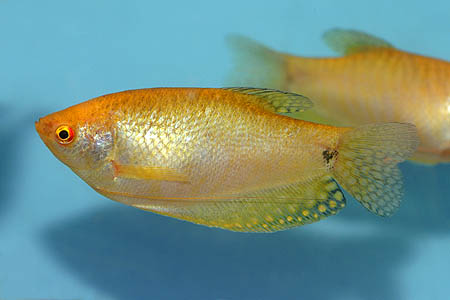
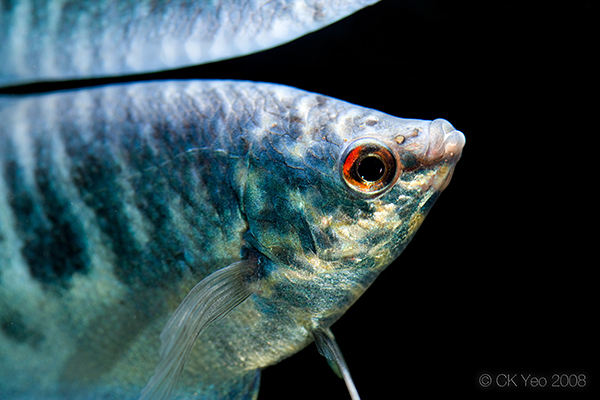
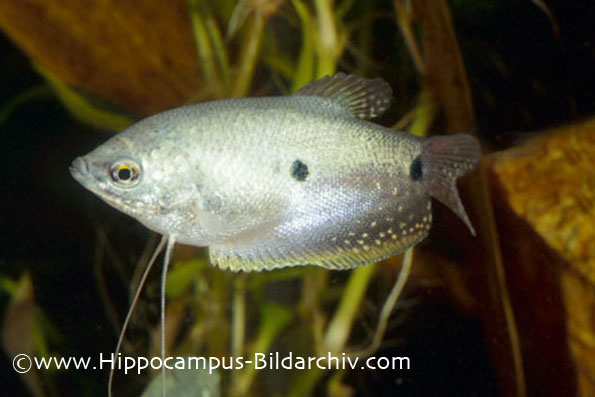
English
Overview
Trichopodus trichopterus is a familiar, adaptable labyrinth fish represented by numerous selectively bred forms. Gold and marbled varieties belong to the same species as the blue-gray natural form. Temperament varies markedly, and hardiness does not guarantee community suitability.
Distribution & habitat
Its native range includes southern China and parts of mainland Southeast Asia, Malaysia, and northern Indonesia, with many introductions elsewhere. It favors lowland ponds, ditches, swamps, and other sluggish, heavily vegetated waters. Some Mekong populations enter seasonally flooded forest or grassland and return as water recedes. Aquarium stock is predominantly farmed.
Aquarium setup
Combine plants and floating cover with open swimming space. A breeding aquarium needs gentle filtration and a calm surface where vegetation supports the nest.
Diet & feeding
Wild fish are broad omnivores, eating aquatic and terrestrial plants, algae, small invertebrates, zooplankton, and detritus. Captive fish generally accept a wide variety of appropriately sized foods.
Behaviour & compatibility
Some remain peaceful, while others become aggressive with maturity. Males defend territories and fight, especially during breeding. Choose robust, compatible-sized companions and reassess relationships as fish grow. Peaceful juvenile behavior is not a long-term guarantee.
Sexual dimorphism
Males become larger and develop a pointed dorsal fin. Females are smaller with a rounder abdomen.
Breeding
This bubble nester breeds readily. Use roughly 15–20 cm of water, ample floating plants, and live foods for conditioning. Two or three females per male may spread pursuit, but unreceptive females still require protection.
The male incorporates plant fragments into his nest. Pelvic-fin contact accompanies courtship, followed by embraces beneath the nest. Floating eggs are collected into it, with a clutch commonly containing around 500–1,200. Remove females after spawning so the male can guard alone.
Hatching takes approximately 20–30 hours, and free swimming follows another four or five days later. Remove the male then. Feed infusoria-sized or suitable liquid fry foods initially, progressing after the first week to brine shrimp nauplii, microworms, and powdered foods. Sort growing fry by size when growth differences become apparent to reduce cannibalism.
Notes
Gold, silver, and marbled forms reflect selective breeding. Color does not establish a milder temperament; assess the individual fish's behavior.
来源
- https://www.seriouslyfish.com/species/trichopodus-trichopterus(抓取于 2026-10-10)
trichopodus-trichopterus · 文件: data/species/trichopodus-trichopterus.md · 状态: 草稿