银曼龙 · Moonlight Gourami
概要
| 字段 | 值 |
|---|---|
| 类别 | 鱼 |
| 学名 | Trichopodus microlepis |
| 别名 | 小鱗毛足鱸、小鳞毛足鲈 |
| 分类 | 攀鲈目 Anabantiformes › 丝足鲈科 Osphronemidae › Trichopodus |
| 水体 | 淡水 |
| 成体体长 | 15 cm |
| 饲养难度 | 入门 |
| 最小水体 | 81 L |
| 最小缸长 | 90 cm |
| 外部数据 | seriouslyfish trichopodus-microlepis;fishbase 4729 |
| 原产地 | 越南、柬埔寨、泰国 |
| 食性 | 杂食 |
| 繁殖方式 | 吐泡筑巢 |
水质参数
| 参数 | 耐受范围 | 最适范围 | 单位 |
|---|---|---|---|
| 水温 | 25–30 | — | °C |
| pH | 6–7.5 | — | — |
| 总硬度 | 2–25 | — | dGH |
概述
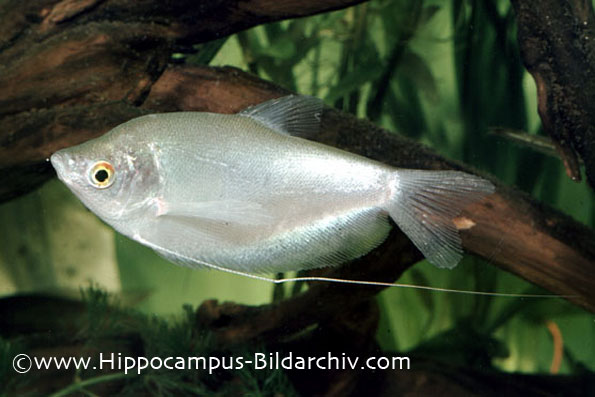
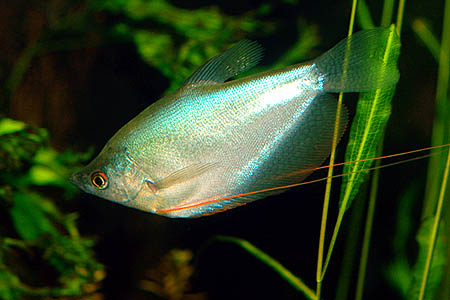
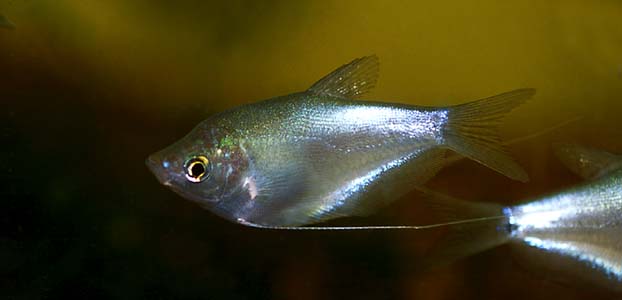
银曼龙(Trichopodus microlepis)身体色彩较素,但长长的丝状腹鳍很醒目。它较容易受惊,适合有水草、缓流和游动空间的环境,不能与过于活跃或小到会被吞食的鱼混养。
分布与栖息地
原产越南、柬埔寨和泰国,生活在低地池塘、沼泽及水生、岸边植被茂密的区域。新加坡和哥伦比亚另有逸生种群,与原生分布需分开理解。市售多为人工繁殖鱼。
饲养环境
水草缸中保留开放游动区,避免强劲水流。繁殖时增加浮水植物,为松散泡巢提供依托。
食性与喂食
杂食,通常接受多数商品饲料,并应搭配活饵和冷冻饵料保持多样。
习性与混养
避免过于活跃、容易使它受惊的伙伴,也避开小到可能成为食物的鱼。雄鱼可能对其他雄鱼及近似丝足鲈类守领域,不能把平时较安静视为繁殖期也不会冲突。
雌雄区分
雄鱼腹鳍偏橙或红色,雌鱼则偏黄。
繁殖
繁殖并不容易,宜用独立缸,密植水草并配浮水植物,水位约 15~20 cm,以丰富活饵调养。雄鱼在水面植物间筑松散泡巢,双方在巢下相拥排卵,过程可能持续约两小时,一窝可达约两千粒。
产后移走雌鱼,约一至两天孵化,再过约两天鱼苗自由游动,此时可移走雄鱼。前两周每天分三至四次喂极小的微生物饵,随后逐步转为丰年虾无节幼体及粉状饲料。
鱼苗对水质变化很敏感,维护需避免突然改变水况。原有环境的稳定尤其重要,不能把幼鱼开始吃较大饵料当作可以大幅调整水质的信号。
补充说明
它的丝状腹鳍比许多近缘鱼更长。市售人工繁殖个体普遍,并不意味着配对和幼鱼管理同样简单。
图片
图片来自 SeriouslyFish,版权归各摄影者所有。
English
Overview
Trichopodus microlepis, the moonlight gourami, combines subdued coloration with unusually long threadlike pelvic fins. It is easily startled and benefits from plants, gentle flow, and clear swimming space. Companions must be neither overwhelming nor small enough to swallow.
Distribution & habitat
Native to Vietnam, Cambodia, and Thailand, it inhabits lowland ponds and swamps with dense aquatic and marginal vegetation. Feral populations occur in Singapore and Colombia. Most aquarium stock is farmed rather than wild-caught.
Aquarium setup
Provide a planted layout with open swimming areas and slow water movement. Floating vegetation is especially useful when breeding because it supports the male's loose bubble nest.
Diet & feeding
An omnivore, it generally accepts prepared foods. Supplement them with varied live and frozen items.
Behaviour & compatibility
Avoid vigorous companions that intimidate it and very small fishes that could become food. Males may defend space against other males or gouramis, so a quiet everyday demeanor does not guarantee peaceful breeding interactions.
Sexual dimorphism
Male pelvic fins are orange or red; those of females are yellow.
Breeding
Breeding is challenging. Use a dedicated, densely planted aquarium with floating plants and water around 15–20 cm deep. Condition the pair with live food. The male builds among surface vegetation, and spawning embraces occur beneath the nest. Spawning can last around two hours and produce up to roughly 2,000 eggs.
Remove the female afterward. Eggs hatch in about one or two days, with free swimming another two days later. The male can then be removed. For approximately the first two weeks, feed tiny infusoria-sized foods three or four times daily before introducing brine shrimp nauplii and powdered foods.
Fry are very sensitive to changes in water chemistry. Keep maintenance gentle and avoid abrupt shifts as they grow; accepting larger food does not imply immediate tolerance of major environmental changes.
Notes
The elongated pelvic feelers are a characteristic feature. Readily available farmed adults should not be mistaken for proof that pairing and fry rearing are equally straightforward.
来源
- https://www.seriouslyfish.com/species/trichopodus-microlepis(抓取于 2026-10-10)
trichopodus-microlepis · 文件: data/species/trichopodus-microlepis.md · 状态: 草稿