丽丽鱼 · Dwarf Gourami
概要
| 字段 | 值 |
|---|---|
| 类别 | 鱼 |
| 学名 | Trichogaster lalius |
| 别名 | 小密鲈、拉利毛足鱸、小密鱸、拉利毛足鲈 |
| 分类 | 攀鲈目 Anabantiformes › 丝足鲈科 Osphronemidae › Trichogaster |
| 水体 | 淡水 |
| 成体体长 | 8.8 cm |
| 饲养难度 | 入门 |
| 外部数据 | seriouslyfish trichogaster-lalius;fishbase 4774 |
| 原产地 | 巴基斯坦、印度、孟加拉国 |
| 领地性 | 是 |
| 繁殖方式 | 吐泡筑巢 |
水质参数
| 参数 | 耐受范围 | 最适范围 | 单位 |
|---|---|---|---|
| 水温 | 22–27 | — | °C |
| pH | 6–7.5 | — | — |
| 总硬度 | 2–18 | — | dGH |
概述
丽丽鱼(Trichogaster lalius)虽然色彩鲜明,却兼有胆怯和领地行为,不能只凭体形小就随意混养。雄鱼可能强烈追赶同类或雌鱼,充分遮蔽与可靠健康来源同样重要。
分布与栖息地
原生巴基斯坦、印度北部和孟加拉国,尼泊尔及缅甸记录被认为可能是误认。新加坡、美国和哥伦比亚等地有引入种群。天然环境多为长草的缓流池塘、沼泽、沟渠、小溪及灌溉渠道,贸易个体主要人工繁殖。
饲养环境
一对约 60 × 30 × 30 厘米也需精心布置。密植、深色底床、浮水植物、木枝和叶堆提供阴影,尤其要让雌鱼能避开雄鱼。水流保持弱,空旷缸容易令它退缩。
食性与喂食
可用优质干粮为基础,规律搭配小型活冷冻饵,如红虫等,避免单一食谱。
习性与混养
小缸宜把它作为主要鱼种,避免加入外形鲜艳或同类迷鳃鱼刺激雄鱼,也别选大型强势争食者。成对通常比多雄群养合适,但雌鱼仍可能受压迫;两雄同养需要很大空间。温和小型群游鱼可作为谨慎选择。
雌雄区分
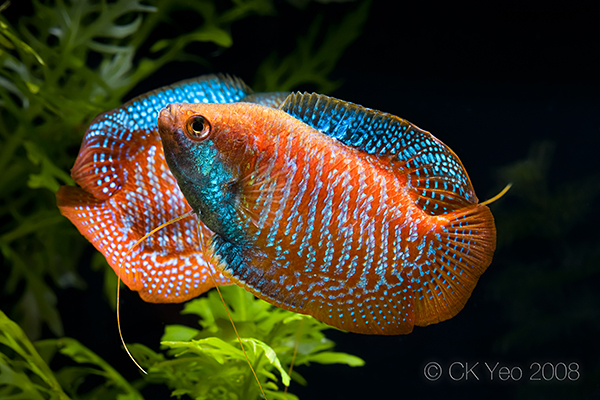
雄鱼稍大、颜色更强,成熟后背鳍和臀鳍延长;雌鱼较银灰、鳍短。多种人工色型仍应综合鳍形和体态判断。
繁殖
繁殖缸可长约 45~60 厘米,放细叶和浮水植物,水深约 15~20 厘米,轻柔海绵过滤并保留暖湿空气。状态良好的亲鱼未必需要额外升温刺激。雌鱼先入缸数天,再加入雄鱼;雄鱼用植物碎片加固泡巢,筑巢时可能追雌鱼。环抱产出的浮卵由雄鱼整理入巢,产后移走雌鱼,通常 36 小时内孵化,可在孵化后或自由游动前移开雄鱼。幼鱼首周需微饵,随后转微虫或丰年虾;大小分化明显时应分缸,避免大苗压迫小苗,一窝可多达约七百粒卵。
补充说明
选购应观察是否迟钝、异常变暗及同缸死亡情况,并了解来源。丽丽鱼虹彩病毒可随共用水体传给其他鱼,历史养殖批次调查不能直接代表今天每批鱼的感染率。日落、霓虹等为人工选育色型。
图片
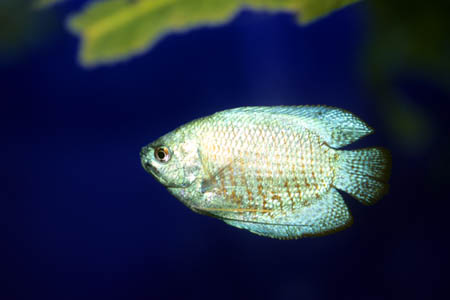
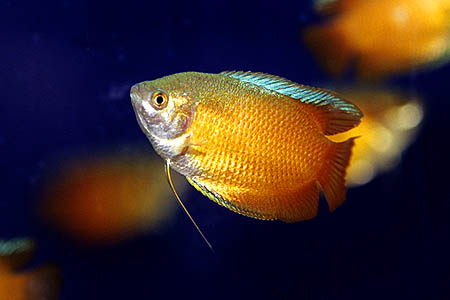
图片来自 SeriouslyFish,版权归各摄影者所有。
English
Overview
Colorful Trichogaster lalius combines shyness with territorial behavior. Small size does not make every community arrangement appropriate. Male aggression toward rivals or females, together with stock-health concerns, makes shelter and careful selection especially important.
Distribution & habitat
Its native range includes Pakistan, northern India, and Bangladesh. Reports from Nepal and Myanmar have been attributed to possible misidentification. Introduced populations occur elsewhere, including Singapore, the United States, and Colombia. Vegetated ponds, swamps, ditches, and slow channels are typical habitats; aquarium fish are commercially bred.
Aquarium setup
Even a pair in roughly 60 by 30 by 30 cm needs careful furnishing. Dense planting, floating shade, wood, and leaves provide retreats, particularly for females avoiding male harassment. Minimize turbulence; bare surroundings encourage withdrawal.
Diet & feeding
Quality prepared food can form the staple, supplemented regularly with small live or frozen items such as bloodworms.
Behaviour & compatibility
Treat it as a primary inhabitant in a small aquarium. Other anabantoids or conspicuously colored fishes may provoke males, while large vigorous feeders can intimidate them. A male-female pair is generally preferable to multiple males, yet female harassment remains possible. Peaceful small schooling companions can work when selected carefully.
Sexual dimorphism
Males are somewhat larger, more colorful, and develop longer dorsal and anal fins. Females are generally silvery with shorter fins. Use fin shape and body form alongside color in ornamental strains.
Breeding
Use a separate tank about 45–60 cm long with fine plants, floating cover, gentle sponge filtration, and roughly 15–20 cm of water. Well-conditioned fish may spawn without an additional temperature increase. Introduce the female first and the male several days later. He reinforces his bubble nest with plant fragments and may chase her during construction. Buoyant eggs enter the nest after embraces. Remove the female afterward; hatching usually occurs within 36 hours. The male can leave after hatching or before free swimming. Offer microscopic food for about a week before microworms or nauplii. Separate size groups as they grow to reduce bullying; broods may reach around 700 eggs.
Notes
Assess activity, unusual darkening, recent losses, and provenance when choosing stock. Dwarf gourami iridovirus can spread to other fishes sharing water, but historical batch studies should not be interpreted as the infection rate of every current shipment. Sunset and neon forms are selectively bred color strains.
来源
- https://www.seriouslyfish.com/species/trichogaster-lalius(抓取于 2026-10-10)
trichogaster-lalius · 文件: data/species/trichogaster-lalius.md · 状态: 草稿