吉纳非鲫
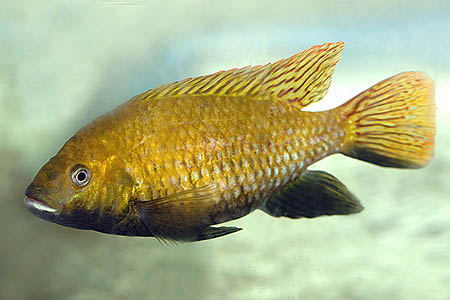
概要
| 字段 | 值 |
|---|---|
| 类别 | 鱼 |
| 学名 | Tilapia guinasana |
| 别名 | 吉納非鯽 |
| 分类 | 慈鲷目 Cichliformes › 慈鲷科 Cichlidae › Tilapia |
| 水体 | 淡水 |
| 成体体长 | 14 cm |
| 饲养难度 | 中等 |
| 最小水体 | 108 L |
| 最小缸长 | 120 cm |
| 外部数据 | seriouslyfish tilapia-guinasana;fishbase 6332 |
| 原产地 | 纳米比亚吉纳斯湖 |
| 食性 | 草食 |
| 领地性 | 是 |
| 特征 | 翻底砂: 是 |
| 繁殖方式 | 附着产卵 |
水质参数
| 参数 | 耐受范围 | 最适范围 | 单位 |
|---|---|---|---|
| 水温 | 19–25 | — | °C |
| pH | 7–7.8 | — | — |
| 总硬度 | 10–15 | — | dGH |
概述
吉纳非鲫(Tilapia guinasana)来自纳米比亚一个范围很小的深水天坑湖,在水族饲养中少见。它以刮食岩面藻类及其中的小生物为生,饲养重点是低蛋白、植物成分丰富的饮食,以及适合形成繁殖领地的岩石布置。
分布与栖息地
原生于吉纳斯湖,出于保育目的也被引入 Otjikoto 湖及纳米比亚部分水库,另有地下河记录。吉纳斯湖由地下洞穴坍塌形成,深逾 100 m,水清澈;鱼沿岩壁生活,守卫小平台作为产卵区域。
饲养环境
以沙作底床,在缸后和两侧堆置牢固岩石,用较亮照明促进藻类生长,留出平石与开阔底床作为可能的繁殖点。水草不是其原生境的典型组成,种入的水草很可能被吃掉。
食性与喂食
以低蛋白、植物性成分为主,螺旋藻薄片、紫菜和焯过的菠菜均可使用。偶尔少量补充丰年虾、红虫等活饵或冻饵。自然取食是刮下岩面藻层,同时摄入其中的小生物。
习性与混养
平时对同种关注不多,繁殖时会守卫领地。可以考虑和较大的非洲脂鲤混养,不过为了提高繁殖机会,单养缸更合适。
雌雄区分
外观很难可靠判断。较可信的方法是由有经验者观察生殖乳突:雄鱼较尖,雌鱼较圆。
繁殖
可从 6~8 条鱼开始自然形成配对,用植物成分高的优质食物调养。亲鱼会在平石或挖出的浅坑中产卵,一窝可达约 200 枚,双亲共同守护,雌鱼靠近卵,雄鱼防守外围。
卵或幼体在自由游动前可能被转移到其他坑或岩缝数次。约 10~14 天后鱼苗自由游动,双亲带领鱼群并积极防御,照料可持续数周。鱼苗可吃丰年虾无节幼体,也应提供植物性食物。
补充说明
本种的极狭窄分布及农业抽取地下水造成的湖水补给减少,使野生种群面临严重威胁。人工繁殖有保育意义,应保持不同血系纯正。原生湖中可见多种明显体色类型,而引入种群未表现出同样的多样性。
图片
图片来自 SeriouslyFish,版权归各摄影者所有。
English
Overview
Rarely kept, Tilapia guinasana comes from a very restricted Namibian sinkhole lake. Its grazing lifestyle calls for a predominantly plant-based, low-protein diet and a rocky aquarium that offers breeding surfaces as well as shelter.
Distribution & habitat
Lake Guinas is the native locality. Conservation introductions have also been made to Lake Otjikoto and some Namibian reservoirs, and underground river records exist. Guinas formed through the collapse of a subterranean cave and exceeds 100 m in depth. In its clear water, fish live beside rocky walls and defend small ledges for reproduction.
Aquarium setup
Place secure rockwork along the back and sides above a sand bed. Bright lighting encourages algae. Include flat surfaces and open patches of substrate for spawning. Plants are not characteristic of the natural habitat and may well be consumed.
Diet & feeding
Use low-protein foods with a high plant content, such as spirulina flakes, nori, and blanched spinach. Occasional small portions of live or frozen brine shrimp or bloodworms can supplement them. Wild fish graze algae and the organisms living within it from rock surfaces.
Behaviour & compatibility
Conspecifics receive relatively little attention outside breeding, when territorial defense increases. Larger African tetras are possible companions, but a dedicated tank offers better opportunities for successful reproduction.
Sexual dimorphism
Visual sexing is difficult. Examination of the genital papilla by an experienced keeper is more reliable: it is pointed in males and rounded in females.
Breeding
A group of six to eight allows pairs to develop naturally. Condition the fish with high-quality food rich in plant material. Spawning occurs on a flat stone or in an excavated depression, with up to about 200 eggs. The female stays close to the clutch while the male protects the surrounding area.
Before free swimming, the brood may be relocated repeatedly to other pits or rock crevices. At around 10–14 days the young begin swimming freely, escorted and defended by both adults. Family care may continue for weeks. Offer Artemia nauplii as well as plant-based foods to the fry.
Notes
A tiny native range and reduced groundwater input associated with agricultural extraction leave the wild population highly vulnerable. Captive breeding has conservation value, with separate lines kept pure. Distinct color forms occur in the native lake, whereas introduced populations have not developed the same variety.
来源
- https://www.seriouslyfish.com/species/tilapia-guinasana(抓取于 2026-10-10)
tilapia-guinasana · 文件: data/species/tilapia-guinasana.md · 状态: 草稿