搏氏企鹅鱼 · False Penguin Tetra
概要
| 字段 | 值 |
|---|---|
| 类别 | 鱼 |
| 学名 | Thayeria boehlkei |
| 别名 | 搏氏企鵝魚 |
| 分类 | 脂鲤目 Characiformes › 脂鲤科 Characidae › Thayeria |
| 水体 | 淡水 |
| 成体体长 | 3.6 cm |
| 饲养难度 | 入门 |
| 最小水体 | 68 L |
| 最小缸长 | 60 cm |
| 群居方式 | 群游 |
| 性情 | 温和 |
| 外部数据 | seriouslyfish thayeria-boehlkei;fishbase 10716 |
| 原产地 | 秘鲁、巴西 |
| 食性 | 肉食 |
| 繁殖方式 | 产卵 |
水质参数
| 参数 | 耐受范围 | 最适范围 | 单位 |
|---|---|---|---|
| 水温 | 22–28 | — | °C |
| 总硬度 | 0–20 | — | dGH |
概述
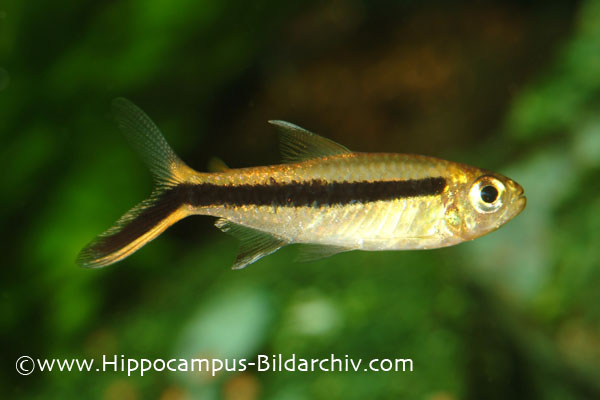
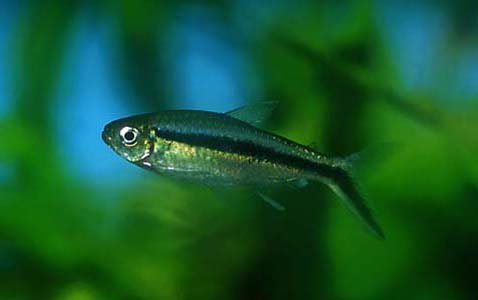
搏氏企鹅鱼(Thayeria boehlkei)常以企鹅灯之名出售,具有头部向上倾斜的游姿,粗黑条纹由尾鳍下叶沿体侧延伸至鳃盖。它是贸易中最常见的企鹅鱼属成员,通常为人工繁殖个体。
分布与栖息地
已知分布可能局限于秘鲁亚马孙河上游部分区域及巴西阿拉瓜亚河。可能利用多种栖息环境,从水下植被茂盛的湿地,到岸边树木浓密、沉水植物较少的林间溪流;这些栖息地描述仍带推测性质。
饲养环境
约 60 × 38 × 30 cm、68 L 可供小群使用,更大缸中养更多个体更理想。密植水草、木根、枝条和圆滑石块可形成良好布置,暗色底床与浮水植物提供适度遮阴。也可采用沙底、沉木和落叶,搭配柔和灯光;耐阴植物可以用于造景。
商业繁殖鱼对水质通常适应较宽,软而偏酸或较硬、偏碱的水均能适应,但仍需规律维护。
食性与喂食
自然食物以昆虫、蠕虫、甲壳动物及其他小型无脊椎动物为主。缸中不挑食,可用优质薄片和颗粒搭配摇蚊幼虫、水蚤、丰年虾等小型活饵或冷冻饵。
习性与混养
总体温和,不宜与大鱼或过分活跃的鱼争食。可搭配温和小型灯鱼、铅笔鱼、小型鲶鱼及合适的小型慈鲷。至少养 6 条,最好 10 条以上;同类数量足够时,注意力更多集中于彼此互动,偶发咬鳍行为通常较少表现。
雌雄区分
成年雌鱼腹部更圆,体色通常比雄鱼稍淡。
繁殖
繁殖较容易。独立繁殖缸宜昏暗,放入细叶植物、产卵拖把或隔网,以保护半黏性的卵,使用轻柔海绵过滤。人工繁殖亲鱼对水质要求通常不如某些灯鱼严格,仍以偏酸至接近中性的水较合适;升温据称可帮助诱导产卵。
可约 6 雄、6 雌群繁,或先分开育肥,再于傍晚放入怀卵雌鱼与状态好的雄鱼,通常次日清晨产卵。雌鱼产卵量常约 1000 粒,个别可达 3000 粒;雄鱼排精量较大时,可能需要立即局部换水。
见卵后移出亲鱼以防吞卵。卵约 12~24 小时孵化,随后 3~4 天鱼苗自由游动。先喂纤毛虫类微小饵,之后转微虫、丰年虾无节幼体。卵和早期鱼苗对光敏感,尽量保持黑暗。
补充说明
Thayeria obliqua 的黑带向上收窄,在到达背鳍前已消失;本种黑带则延伸至鳃盖,是实用的区别。名称相近和倾斜游姿本身不足以鉴别种类。
图片
图片来自 SeriouslyFish,版权归各摄影者所有。
English
Overview
Thayeria boehlkei is the penguin tetra most often encountered in the trade. It swims with the head tilted upward, and a bold black stripe runs from the lower tail lobe along the flank to the gill cover. Commercially bred specimens dominate aquarium supplies.
Distribution & habitat
The range is probably limited to parts of the upper Amazon in Peru and the Araguaia in Brazil. It may use diverse habitats, from wetlands rich in submerged plants to forest streams with dense bankside cover but little aquatic vegetation. These habitat descriptions remain partly inferential.
Aquarium setup
An aquarium around 60 × 38 × 30 cm, or 68 liters, accommodates a small group; a larger aquarium with more fish is preferable. Dense planting, roots, branches, and smooth stones work well. Dark substrate and floating plants provide shade. Sand, wood, and leaves under subdued lighting are another option, with shade-tolerant plants if desired.
Farmed fish usually adapt to a broad range of chemistry, from soft, acidic water to harder, more alkaline conditions. Regular maintenance remains necessary.
Diet & feeding
The natural diet consists mainly of insects, worms, crustaceans, and other small invertebrates. Captive fish readily take prepared foods. Alternate quality flakes or granules with small live and frozen items such as bloodworms, Daphnia, and Artemia.
Behaviour & compatibility
Choose peaceful companions rather than large or excessively active fishes. Small tetras, pencilfishes, suitable dwarf cichlids, and small catfishes are possible partners. Keep at least six individuals, preferably ten or more. With adequate numbers, social squabbling is directed mainly within the group and occasional fin-nipping is less likely to emerge.
Sexual dimorphism
Adult females have rounder abdomens and generally somewhat less intense color than males.
Breeding
Breeding is relatively easy. Use a dim, separate aquarium with fine plants, mops, or protective mesh for the semi-adhesive eggs, plus gentle sponge filtration. Farmed parents are less demanding about chemistry than many other tetras, although slightly acidic to near-neutral water is preferable. A temperature increase is reported to help trigger spawning.
A group of approximately six fish per sex can spawn. Alternatively, condition males and females separately, then introduce a gravid female and a well-conditioned male in the evening. Spawning usually follows the next morning. A female commonly produces around 1,000 eggs and may produce as many as 3,000. Heavy milt release can sometimes make an immediate partial water change necessary.
Remove the adults once eggs are present. Hatching takes about 12–24 hours, and free swimming follows three or four days later. Begin with infusoria-sized foods, then offer microworms and Artemia nauplii. Eggs and early fry are light-sensitive, so darkness is preferable.
Notes
In Thayeria obliqua, the dark marking tapers upward and disappears before reaching the dorsal fin. In T. boehlkei, it continues forward to the gill cover. Similar trade names and the shared tilted swimming posture alone do not establish identity.
来源
- https://www.seriouslyfish.com/species/thayeria-boehlkei(抓取于 2026-10-10)
thayeria-boehlkei · 文件: data/species/thayeria-boehlkei.md · 状态: 草稿