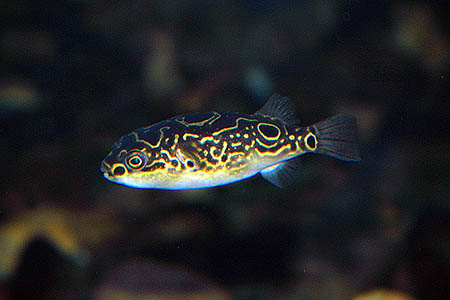
八字娃娃 · Figure Eight Puffer
概要
| 字段 | 值 |
|---|---|
| 类别 | 鱼 |
| 学名 | Tetraodon biocellatus |
| 别名 | 雙睛斑凹鼻魨、双睛斑凹鼻鲀 |
| 分类 | 鲀形目 Tetraodontiformes › 四齿鲀科 Tetraodontidae › Tetraodon |
| 水体 | 淡水 |
| 成体体长 | 8 cm |
| 饲养难度 | 中等 |
| 最小水体 | 68 L |
| 最小缸长 | 75 cm |
| 群居方式 | 群游 |
| 外部数据 | seriouslyfish tetraodon-biocellatus;fishbase 25175 |
| 原产地 | 柬埔寨、马来西亚、印度尼西亚 |
水质参数
| 参数 | 耐受范围 | 最适范围 | 单位 |
|---|---|---|---|
| 水温 | 22–26 | — | °C |
| pH | 6.5–7.5 | — | — |
| 总硬度 | 5–12 | — | dGH |
概述
八字娃娃(Tetraodon biocellatus)常见于贸易,但对饵料和水质的要求不能忽略。它活跃、会咬鳍,淡水与低盐汽水中都有记录;单养通常比群养更有利于长期维持。
分布与栖息地
分布于柬埔寨、马来西亚和印度尼西亚的河流及沿岸水域,淡水记录较多,也经常进入汽水环境。
饲养环境
可参考 75 × 30 × 30 厘米。用密植水草、根枝和砂底提供遮蔽,同时留出开阔游动区,浮水植物柔化光线。软叶可能被啃,选植物时需考虑这一点。定期部分换水,避免水质恶化;可用淡水,也有加入海盐至约 1.005 比重更长寿的饲养观察。
食性与喂食
可喂贝类、蠕虫及其他适口活冷冻饵,定期安排带壳小螺、蟹足或虾等食物来磨耗喙齿。喙齿持续生长,饵料硬度是日常照顾的一部分,不能只看是否愿意吃。
习性与混养
慢游和长鳍伙伴有被咬鳍的风险。若尝试混养,要先匹配水的盐度和伙伴的活动能力,不能把淡水、汽水候选混成同一方案。同种在大缸可共存,但单养个体通常寿命更长;坚持多尾时,四尾以上有助分散冲突,仍不保证和睦。
雌雄区分
外形很难可靠分性,成年雌鱼可能长得更大,体形只能作不确定线索。
繁殖
可能是在底部产卵、由雄鱼承担一定护卵行为的类型,但不能把这一描述当作已验证的家庭繁殖流程。
图片
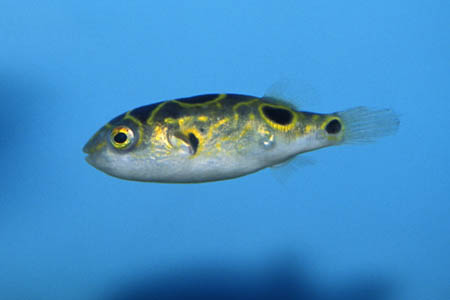
图片来自 SeriouslyFish,版权归各摄影者所有。
English
Overview
An active puffer often encountered in trade, Tetraodon biocellatus needs carefully chosen foods and consistently good water. It occurs in both fresh and brackish settings. Fin biting complicates companion choice, and solitary specimens generally fare better over the long term than groups.
Distribution & habitat
It occurs in Cambodian, Malaysian, and Indonesian rivers and coastal waters. Freshwater records are common, but brackish habitats are also used regularly.
Aquarium setup
Use the suggested 75 by 30 by 30 cm dimensions as a starting reference. Dense plants, wood, and sand provide cover, while open areas allow swimming. Floating plants soften the light, although tender leaves may be chewed. Regular partial changes are essential. Freshwater maintenance is possible, but adding marine salt to about 1.005 specific gravity has been associated with better longevity.
Diet & feeding
Shellfish, worms, and other suitable live or frozen foods are accepted. Include regular small snails and hard-shelled items to wear the growing dental plates. Food texture is a husbandry requirement as well as nutritional variety.
Behaviour & compatibility
Slow or long-finned companions are vulnerable to nipping. Any community attempt must match both salinity and activity levels. Conspecifics can coexist in a sufficiently large aquarium, but solitary fish usually live longer. Four or more are suggested if group housing is attempted, to spread aggression rather than ensure harmony.
Sexual dimorphism
External sexing is very difficult. Females may grow larger, but size is only a tentative clue.
Breeding
It apparently lays eggs on the substrate with some male care, but this should not be treated as a demonstrated aquarium breeding procedure.
来源
- https://www.seriouslyfish.com/species/tetraodon-biocellatus(抓取于 2026-10-10)
tetraodon-biocellatus · 文件: data/species/tetraodon-biocellatus.md · 状态: 草稿