饰圈沼丽鱼
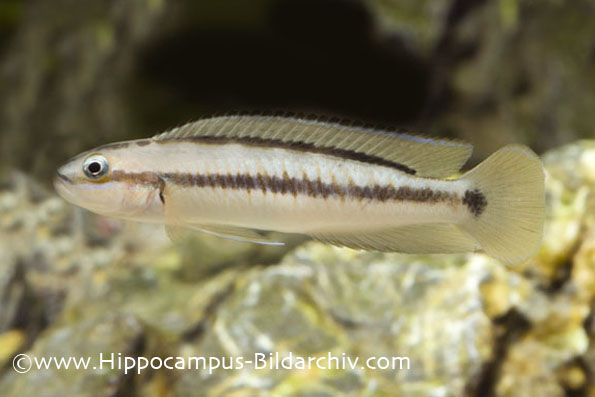
概要
| 字段 | 值 |
|---|---|
| 类别 | 鱼 |
| 学名 | Telmatochromis vittatus |
| 别名 | 飾圈沼麗魚 |
| 分类 | 慈鲷目 Cichliformes › 慈鲷科 Cichlidae › Telmatochromis |
| 水体 | 淡水 |
| 成体体长 | 8.5 cm |
| 饲养难度 | 中等 |
| 最小水体 | 68 L |
| 最小缸长 | 75 cm |
| 群居方式 | 成对 |
| 领地性 | 是 |
| 外部数据 | seriouslyfish telmatochromis-vittatus;fishbase 8890 |
| 原产地 | 坦噶尼喀湖 |
| 繁殖方式 | 附着产卵 |
水质参数
| 参数 | 耐受范围 | 最适范围 | 单位 |
|---|---|---|---|
| 水温 | 23–27 | — | °C |
| pH | 8–9.5 | — | — |
| 总硬度 | 8–25 | — | dGH |
概述
饰圈沼丽鱼(Telmatochromis vittatus)适合有丰富石洞的坦噶尼喀湖风格缸。它胆小却有领地意识,同种之间会争斗,稳定配对比随意合群更适宜。繁殖很隐蔽,常常直到鱼苗出现才发现已经产卵。
分布与栖息地
坦噶尼喀湖特有种,通常在深约 5~20 m、靠近岩区的开阔水域活动。
饲养环境
至少使用 75 cm 长的缸,更大更好。以沙为底床,用大量岩石组成洞穴,布置占据缸内较大部分。倒扣花盆和大螺壳也能充当庇护及产卵场所。
食性与喂食
活饵与冻饵应占较大比例,也可喂干粮,并搭配螺旋藻饲料或焯过的菠菜等植物性食物。
习性与混养
可与占据不同空间的中小型坦湖慈鲷同养,例如贝壳栖居种和开放水层种。对同种有攻击性,宜成对饲养;同时保留多条需明显增加空间。
雌雄区分
外观判断不算容易,成年雄鱼通常略大,体形较修长。
繁殖
从一群幼鱼中让它们自行配对,形成配对后移出其余个体。配偶关系持久。繁殖缸按常规石洞布局设置,维持合适的碱性水。
求偶较激烈,但产卵隐蔽,卵附着在洞穴或贝壳内壁、顶部。雌鱼留在里面照顾卵,雄鱼守卫外围。约产卵两周后鱼苗自由游动,此时亲鱼的照料很快减弱,可考虑将鱼苗或亲鱼转缸。
鱼苗能接受丰年虾无节幼体、微虫或磨成粉的干粮。
补充说明
相比外观近似的 Telmatochromis brichardi 和 T. bifrenatus,本种体型较大、眼较小、吻部更圆。成鱼明显的犬齿状牙齿可用于刮取岩面微小生物。
图片
图片来自 SeriouslyFish,版权归各摄影者所有。
English
Overview
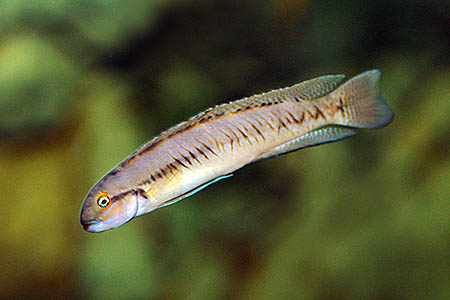
Caves and an established pair are useful starting points for Telmatochromis vittatus. This shy but territorial Tanganyikan cichlid can fit a community of smaller lake species, provided each occupies different space. Secretive spawning may go unnoticed until young appear.
Distribution & habitat
The species is endemic to Lake Tanganyika. It generally occurs in open water beside rocky habitats at depths of approximately 5–20 m.
Aquarium setup
A tank at least 75 cm long is a starting point, with larger accommodation preferable. Rockwork forming numerous caves should occupy much of the aquarium over a sandy bottom. Large snail shells or inverted flowerpots provide alternative shelters and spawning sites.
Diet & feeding
Make live and frozen foods a substantial part of the menu. Dry preparations can also be offered, along with plant material such as spirulina products or blanched spinach.
Behaviour & compatibility
Choose small or medium Tanganyikan companions that use different areas, including shell dwellers or open-water species. Conspecific aggression makes a pair the preferred arrangement. Keeping several individuals requires significantly more space.
Sexual dimorphism
Sexing by appearance is uncertain. Mature males tend to be a little larger and slimmer.
Breeding
Allow a group of juveniles to form a pair naturally, then remove the other individuals. The bond is lasting. Use the usual cave-rich arrangement and suitable alkaline conditions for breeding.
Courtship is vigorous, but eggs are deposited out of sight on a wall or ceiling inside a cave or shell. The female tends them while her partner defends the surrounding area. Free swimming begins around two weeks after spawning, at which point parental interest soon fades. Moving either the adults or fry to another aquarium is an option then.
Newly free-swimming young can eat Artemia nauplii, microworms, or powdered dry foods.
Notes
Compared with the similar Telmatochromis brichardi and T. bifrenatus, this species grows larger, has smaller eyes, and shows a rounder snout. The conspicuous canine-like teeth of adults help scrape tiny organisms from rock surfaces.
来源
- https://www.seriouslyfish.com/species/telmatochromis-vittatus(抓取于 2026-10-10)
telmatochromis-vittatus · 文件: data/species/telmatochromis-vittatus.md · 状态: 草稿