睛尾新几内亚塘鳢 · Peacock Goby
概要
| 字段 | 值 |
|---|---|
| 类别 | 鱼 |
| 学名 | Tateurndina ocellicauda |
| 别名 | 睛尾新幾內亞塘鱧 |
| 分类 | 虾虎鱼目 Gobiiformes › 塘鳢科 Eleotridae › Tateurndina |
| 水体 | 淡水 |
| 成体体长 | 7.5 cm |
| 饲养难度 | 中等 |
| 最小水体 | 41 L |
| 最小缸长 | 45 cm |
| 外部数据 | seriouslyfish tateurndina-ocellicauda;fishbase 15907 |
| 原产地 | 巴布亚新几内亚 |
| 特征 | 会跳缸: 是 |
| 领地性 | 是 |
| 繁殖方式 | 附着产卵 |
水质参数
| 参数 | 耐受范围 | 最适范围 | 单位 |
|---|---|---|---|
| 水温 | 22–26 | — | °C |
| pH | 6.5–7.5 | — | — |
| 总硬度 | 5–10 | — | dGH |
概述
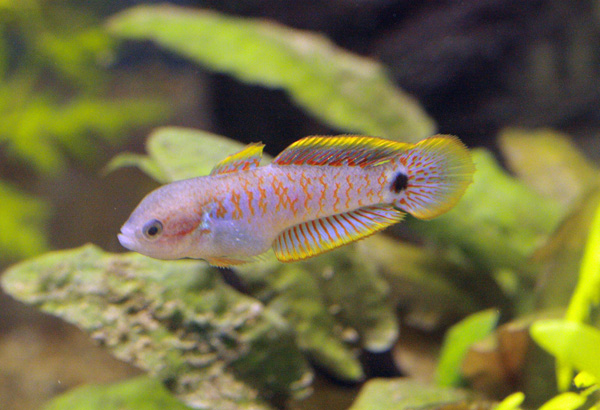
睛尾新几内亚塘鳢(Tateurndina ocellicauda)色彩鲜艳,适合温和小型鱼组成的植物缸。同种之间会展示、张鳍并有轻微领地争执,充分遮蔽反而能让它更常露面。
分布与栖息地
原产巴布亚新几内亚,在岛东部低地溪流、池塘和河流生活,最常见于雨林地区,以松散群体活动。
饲养环境
缸长至少约 45 cm、容积约 41 L,可容纳两对成鱼;增加其他领地鱼时需要更大空间。偏软、略酸的水和大量遮蔽较合适,深色底床与浮水植物帮助显示体色。
用沉木和密集草丛提供藏身处,裸缸中它们反而容易挤在仅有的遮蔽物旁。保持水质洁净但避免强水流,缸盖不能有缝隙,因为它善跳。
食性与喂食
通常可接受干粮,但更喜欢红虫、水蚤和丰年虾等小型活饵或冷冻饵,后者也有助于体色和进入繁殖状态。
习性与混养
可与小型温和同伴混养,包括适当的彩虹鱼、脂鲤、波鱼和底层鲶鱼。若与其他领地性鱼同养,需额外空间。
同种小群通常可行,争执多限于展鳍和展示,而非持续实质伤害;仍需提供足够藏身处和可分隔的区域。
雌雄区分
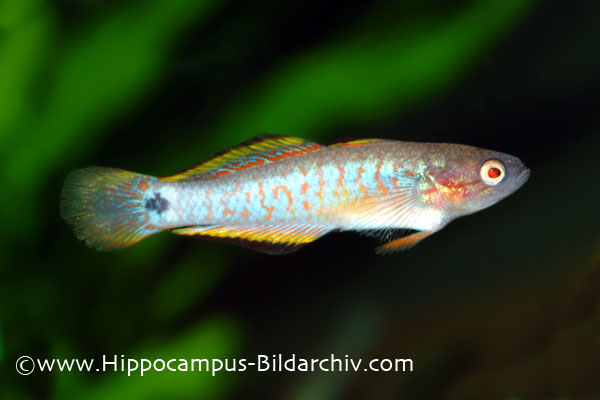
成熟雄鱼略大、更鲜艳,有明显额部隆起。雌鱼腹部黄色较明显;幼鱼可参考臀鳍外缘,多数雌鱼有深色边带,多数雄鱼没有,不能把这一特征当作百分之百准确。
繁殖
条件合适时容易繁殖,必须提供洞穴,短塑料管便于连同卵一起转移。可从 6~8 条幼鱼中自然配对,以活饵和冷冻饵调理,每周换水约 20%。
雄鱼在选定洞口展鳍,吸引腹部膨大的雌鱼进入,有时会用身体推动。卵通常产在洞顶,以细黏丝附着。产后雄鱼驱走雌鱼,持续扇水护卵;若在原缸育苗,应移走其他可能吃卵的鱼。
卵约 24~48 小时孵化,此时雄鱼停止照护,幼鱼应转入独立空间或移走成鱼。再过约 2~4 天自由游动,能立即吃丰年虾无节幼体和微虫,育苗相对容易。
补充说明
英文俗名虽带 goby,本种归于塘鳢科,而非仅凭商品名称就能归入虾虎鱼科。植物缸中丰富的遮蔽既有助日常活动,也能提供配对和产卵位置。
图片
图片来自 SeriouslyFish,版权归各摄影者所有。
English
Overview
Colorful Tateurndina ocellicauda suits planted communities of small peaceful fishes. Conspecific displays and minor territorial disputes are normal. Abundant cover encourages greater visibility rather than causing permanent concealment.
Distribution & habitat
It originates in Papua New Guinea, inhabiting eastern lowland streams, ponds, and rivers. Rainforest waters are typical, with fish forming loose groups.
Aquarium setup
At least about 45 cm of tank length and 41 L can accommodate two adult pairs. Additional territorial companions require more space. Slightly acidic, softer conditions and plentiful shelter are preferred; dark substrate and floating shade help coloration and confidence.
Provide wood and plant thickets. Bare aquariums tend to keep fish clustered around whatever cover remains. Maintain clean water without strong flow, and close lid gaps because it jumps well.
Diet & feeding
Dry preparations are usually accepted, but small live or frozen bloodworms, Daphnia, and Artemia are strongly preferred. These also support color and breeding condition.
Behaviour & compatibility
Appropriate small rainbowfishes, characins, rasboras, and bottom-dwelling catfishes are possible companions. Allow extra territory if other territorial fishes are included.
Small conspecific groups generally work. Most disputes consist of displays and fin spreading rather than substantial injury, with sufficient cover and separation still important.
Sexual dimorphism
Mature males are slightly larger, more colorful, and develop a prominent forehead hump. Females show yellow on the belly. In juveniles, most females have a dark outer anal-fin border absent from most males; this is a useful but imperfect clue.
Breeding
Reproduction is easy in suitable conditions. Provide caves; short tubes are convenient for transferring the spawning site. Six to eight juveniles can form pairs naturally. Condition them with live and frozen food and change about 20% of the water weekly.
A male displays at his cave entrance to a rounded female, sometimes nudging her inside. Eggs usually attach to the roof by fine threads. He then excludes her and fans the eggs. Remove other fish if the tank is being used for rearing, since accessible eggs can be eaten.
Hatching takes about 24–48 hours and ends paternal care. Give larvae separate quarters or remove adults. They swim freely after another two to four days and immediately take Artemia nauplii or microworms, making rearing relatively straightforward.
Notes
Despite the goby common name, it belongs to Eleotridae. A trade label alone should not determine family identification. Dense planting supplies useful daily cover as well as shelter around breeding sites.
来源
- https://www.seriouslyfish.com/species/tateurndina-ocellicauda(抓取于 2026-10-10)
tateurndina-ocellicauda · 文件: data/species/tateurndina-ocellicauda.md · 状态: 草稿