艾氏坦加尼可丽鱼
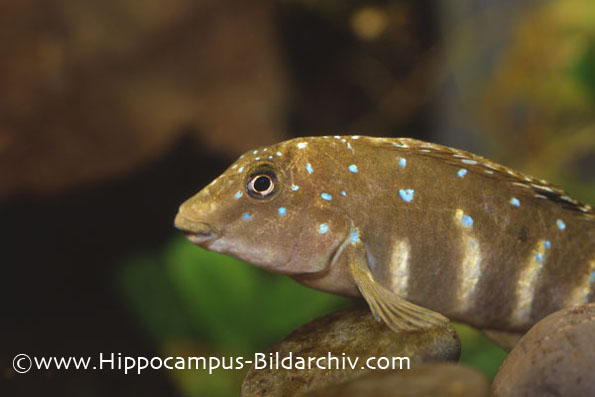
概要
| 字段 | 值 |
|---|---|
| 类别 | 鱼 |
| 学名 | Tanganicodus irsacae |
| 别名 | 艾氏坦加尼可麗魚 |
| 分类 | 慈鲷目 Cichliformes › 慈鲷科 Cichlidae › Tanganicodus |
| 水体 | 淡水 |
| 成体体长 | 7 cm |
| 饲养难度 | 中等 |
| 最小水体 | 68 L |
| 最小缸长 | 75 cm |
| 领地性 | 是 |
| 外部数据 | seriouslyfish tanganicodus-irsacae;fishbase 8875 |
| 原产地 | 坦噶尼喀湖北部 |
| 食性 | 草食 |
| 繁殖方式 | 口孵 |
水质参数
| 参数 | 耐受范围 | 最适范围 | 单位 |
|---|---|---|---|
| 水温 | 24–28 | — | °C |
| pH | 8–9 | — | — |
| 总硬度 | 8–25 | — | dGH |
概述
艾氏坦加尼可丽鱼(Tanganicodus irsacae)生活在坦噶尼喀湖浪涌冲刷的浅岸,常在岩石间作跳跃般移动。它对水质、供氧、偏高酸碱度以及食物组成均有特别要求,不适合新手草率尝试。繁殖时双亲轮流口孵,是值得观察的行为。
分布与栖息地
为坦噶尼喀湖北部特有种,生活在紧邻岸边、深度不足 1 m 的水域,周围多卵石和岩石。它以特殊牙齿刮取岩面藻类,低浮力及身体、鳍的形态适应了波浪和水流。
饲养环境
铺沙,用岩石和卵石建立洞穴及隐蔽处。较强照明有助于养出可供刮食的藻层。水体必须清洁、富氧,并维持适合本种的高 pH;缸内不必为了模拟浪涌而一味制造强流。
食性与喂食
以焯过的菠菜、螺旋藻薄片等植物性食物为主,少量小型活饵或冻饵作补充。避免贝肉、肉类尤其陆生动物肉,以及蠕虫类等高蛋白食物。
习性与混养
有领地意识,对同种有攻击性,适合单条或稳定配对饲养;多条同养需要更大的缸。不要搭配体型大或过分强势的鱼。混养应优先选择占据不同空间的鱼,例如开放水层活动的种类或贝壳栖居慈鲷。配对后关系持久。
雌雄区分
外观分性别不容易。成年雄鱼往往稍大,腹鳍有时也略长。
繁殖
建议从幼鱼群中自然配对,一旦形成配对就移出其他同种。直接把一雄一雌放在一起不保证相容,雌鱼甚至可能被追逐致死。繁殖缸至少 75 cm 长,在不同高度放置平石,并加强供氧。
雌鱼选石并清洁表面,双方展示、绕行后,雌鱼分批产卵,雄鱼受精,再由雌鱼把卵收入口内。雌鱼口孵可超过两周,期间停食,口部明显鼓起。幼鱼仍带卵黄囊时,雌鱼通常回到产卵处,每次吐出一两条,交给雄鱼接入口中。
雄鱼继续口孵约 5~10 天,再用数小时陆续将鱼苗释放到领地不同位置。双亲暂时会忽略这些鱼苗,无需立即强行隔离;若希望亲鱼再次繁殖,可把鱼苗转入育苗缸。鱼苗第一天即可吃丰年虾无节幼体和磨细螺旋藻薄片,生长较慢。
图片
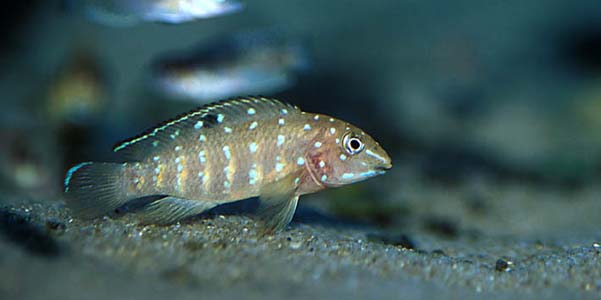
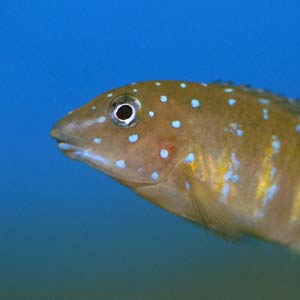
图片来自 SeriouslyFish,版权归各摄影者所有。
English
Overview
A life among wave-washed rocks has shaped Tanganicodus irsacae, a Tanganyikan goby cichlid that moves through its surroundings in short hops. Excellent water quality, ample oxygen, high pH, and appropriate feeding are essential. Its sensitivity makes it a demanding choice for a beginner.
Distribution & habitat
Endemic to northern Lake Tanganyika, it occupies rocky and pebbly margins in water shallower than 1 m. Specialized teeth remove algae from stones. Reduced buoyancy and adaptations of the body and fins help it cope with the shoreline surge.
Aquarium setup
Arrange pebbles and larger rocks into sheltered spaces above a sand bed. Bright lighting can encourage useful algal growth. Keep the water exceptionally clean and oxygenated at a suitably high pH. Strong artificial currents are not essential despite the turbulent natural setting.
Diet & feeding
Plant material should dominate the menu, using foods such as blanched spinach and spirulina flakes. Small live or frozen items can provide supplementation. Avoid protein-rich offerings such as shellfish, meat, particularly terrestrial animal meat, and worms.
Behaviour & compatibility
Conspecific aggression favors keeping a single fish or an established pair; several individuals need much greater space. Avoid large, boisterous companions. Tankmates using other parts of the aquarium, such as open-water species or shell dwellers, are better candidates. Established pairs maintain lasting bonds.
Sexual dimorphism
External sexing is difficult. Mature males are generally larger and may have somewhat longer pelvic fins.
Breeding
Allow juveniles to select partners, then remove the remaining conspecifics. Combining an arbitrary adult male and female can end in fatal harassment. Provide a breeding tank at least 75 cm long, flat stones at several heights, and excellent oxygenation.
The female cleans a chosen stone. Following display and circling, she deposits a few eggs, the male fertilizes them, and she collects them into her mouth. This repeats until spawning is complete. She may incubate for more than two weeks without feeding, becoming visibly swollen around the mouth.
While the young still carry yolk sacs, she transfers them to the male, generally at the spawning site and only one or two at a time. He continues incubation for around 5–10 days. Release is spread across several hours and locations within the territory.
Immediate separation is unnecessary because the parents initially ignore the released young. Moving fry to a rearing tank is preferable if another spawning is intended. They can take Artemia nauplii and powdered spirulina flakes from their first day, but growth is slow.
来源
- https://www.seriouslyfish.com/species/tanganicodus-irsacae(抓取于 2026-10-10)
tanganicodus-irsacae · 文件: data/species/tanganicodus-irsacae.md · 状态: 草稿