美歧须鮠 · Clown Synodontis
概要
| 字段 | 值 |
|---|---|
| 类别 | 鱼 |
| 学名 | Synodontis decorus |
| 别名 | 美歧鬚鮠、Synodontis vittatus |
| 分类 | 鲶形目 Siluriformes › 倒立鲶科 Mochokidae › Synodontis |
| 水体 | 淡水 |
| 成体体长 | 30 cm |
| 饲养难度 | 中等 |
| 最小水体 | 205 L |
| 最小缸长 | 120 cm |
| 外部数据 | seriouslyfish synodontis-decorum;fishbase 9554 |
| 原产地 | 刚果民主共和国、喀麦隆、刚果共和国 |
| 游动层 | 底层 |
| 性情 | 温和 |
| 特征 | 夜行性: 是 |
| 繁殖方式 | 散卵 |
水质参数
| 参数 | 耐受范围 | 最适范围 | 单位 |
|---|---|---|---|
| 水温 | 22–27 | — | °C |
| pH | 6–8 | — | — |
| 总硬度 | 3–25 | — | dGH |
概述
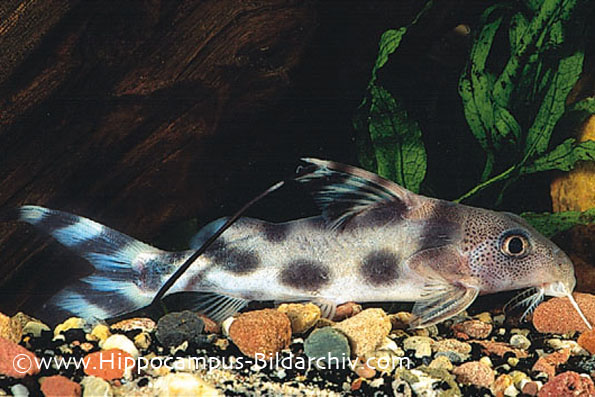
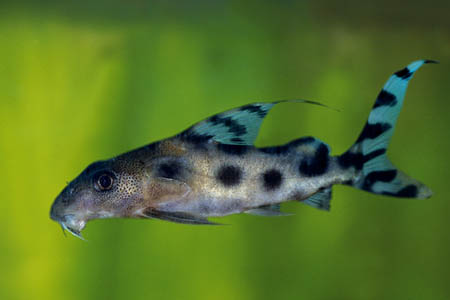
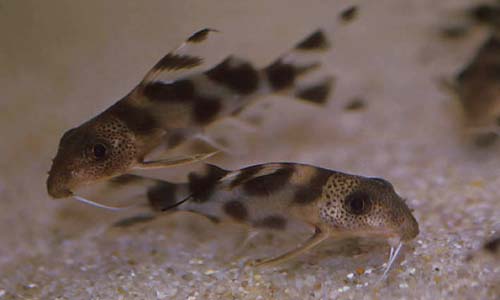
美歧须鮠(Synodontis decorus)的背鳍首根鳍条显著延长,上颌须也呈细长丝状,是外形醒目的大型鲶鱼。它隐蔽而偏夜行,对吞不下的鱼较平和,但成体体量不适合普通小型混养缸。
分布与栖息地
分布于刚果民主共和国、喀麦隆及刚果共和国,常见于河流缓流区与季节性淹水地带。
饲养环境
使用柔软底床,石块、沉木与树根提供藏身处,浮水植物遮弱光线。其他种植有益但并非必要。若想观察夜间活动,可在主灯关闭后短时使用微弱夜灯,配合少量投喂,比持续强光照射更符合其习性。
食性与喂食
可参考歧须鮠属的多样菜单,提供活饵、冷冻饵料和干饲料,并搭配去皮豌豆、黄瓜等植物性食物,供其刮食。喂食时间可配合它较愿意出现的弱光时段。
习性与混养
对体形合适、不能被吞下的伙伴通常较平和,可选较大鲃类、脂鲤、慈鲷或甲鲶。它不像一些歧须鮠那样强烈占地,空间足够时甚至可以养小群。应排除会咬鳍的鱼,避免延长的背鳍丝受到反复损伤。
雌雄区分
成年雄鱼通常较小、体色略深,雌鱼更大。生殖乳突也有区别,雄鱼尖长且带棱,雌鱼较圆;鱼鳍棘尖锐,不宜随意抓翻检查。
繁殖
野外在微生物丰富的季节性洪泛区域繁殖,为散卵型,亲鱼不护卵育幼。商业生产曾使用激素诱导,不能因此认为普通水族箱已有稳定自然繁殖方法。
补充说明
长背鳍丝与丝状上颌须是重要外形特征。选择同伴和造景时,应把成体大小与鳍丝完整性一起考虑。
图片
图片来自 SeriouslyFish,版权归各摄影者所有。
English
Overview
The greatly extended leading dorsal ray and filamentous upper-jaw barbels give Synodontis decorus a distinctive outline. This secretive, nocturnal catfish becomes large. It is relatively peaceful toward fishes it cannot swallow, but its adult bulk rules out an ordinary small community.
Distribution & habitat
It occurs in the Democratic Republic of Congo, Cameroon, and the Republic of Congo, usually in slower river sections and seasonally flooded areas.
Aquarium setup
Provide soft substrate with retreats among stones, wood, and roots. Floating vegetation can soften the light; other plants are beneficial but optional. A dim night light used briefly after the main lights switch off, together with a little food, can make its activity easier to observe without keeping the aquarium brightly lit.
Diet & feeding
Use the varied feeding approach recommended for squeakers: live, frozen, and dry foods with shelled peas, cucumber, and other plant foods for scraping. Feeding during quieter, dimly lit periods suits its tendency to remain hidden by day.
Behaviour & compatibility
Larger barbs, characins, cichlids, and loricariids are candidates if they are too large to be swallowed and otherwise compatible. This species is less territorial than many relatives and can be grouped in sufficient space. Exclude fin nippers that might repeatedly damage the extended dorsal filament.
Sexual dimorphism
Adult males are usually smaller and slightly darker than females. Male genital papillae are pointed, elongated, and ridged; female structures are rounder. Sharp fin spines make casual handling for inspection inappropriate.
Breeding
Wild fish scatter eggs in seasonally flooded areas rich in microorganisms and provide no parental care. Hormone-induced commercial production has occurred, but this is not evidence of a dependable natural-spawning method in ordinary aquaria.
Notes
The dorsal extension and fine upper-jaw barbels are useful recognition features. Companion selection should account for both eventual size and the vulnerability of those fin extensions.
来源
- https://www.seriouslyfish.com/species/synodontis-decorum(抓取于 2026-10-10)
synodontis-decorus · 文件: data/species/synodontis-decorus.md · 状态: 草稿