花鳍歧须鮠 · Polka Dot Synodontis
概要
| 字段 | 值 |
|---|---|
| 类别 | 鱼 |
| 学名 | Synodontis angelicus |
| 别名 | 花鰭歧鬚鮠、Synodontis angelica、Synodontis tholloni、Synodontis werneri、Synodontis angelicus var. zonatus |
| 分类 | 鲶形目 Siluriformes › 倒立鲶科 Mochokidae › Synodontis |
| 水体 | 淡水 |
| 成体体长 | 25 cm |
| 饲养难度 | 中等 |
| 最小水体 | 205 L |
| 最小缸长 | 120 cm |
| 领地性 | 是 |
| 外部数据 | seriouslyfish synodontis-angelicus;fishbase 9536 |
| 原产地 | 刚果民主共和国、喀麦隆、刚果共和国 |
| 繁殖方式 | 散卵 |
| 特征 | 夜行性: 是 |
水质参数
| 参数 | 耐受范围 | 最适范围 | 单位 |
|---|---|---|---|
| 水温 | 24–28 | — | °C |
| pH | 6–8 | — | — |
| 总硬度 | 3–20 | — | dGH |
概述
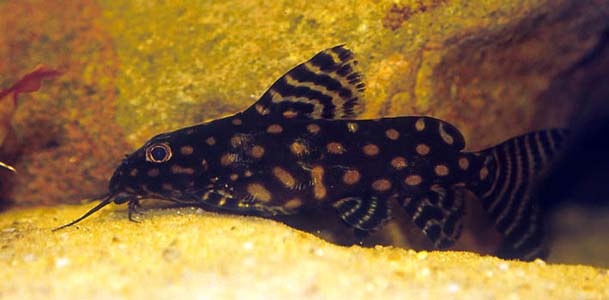
花鳍歧须鮠(Synodontis angelicus)是夜行性明显、寿命很长的鲶鱼,养护合适时可活过二十年。灰黑底色上的白色或黄色斑点因产地而异,漂亮幼鱼长大后却可能强烈排斥其他底栖鱼,不能按普通温和混养鱼安排。
分布与栖息地
分布于刚果民主共和国、喀麦隆和刚果共和国,通常生活在河流中较缓的水段。
饲养环境
柔软底床上用石块、沉木和树根构成多个隐蔽处,浮水植物可以遮弱光线。其他水草有帮助但并非必需。白天少露面符合它的夜行习性,不应为了观赏而不断拆除遮蔽。
食性与喂食
歧须鮠属通常杂食。本种可接受活饵、冷冻饵料和干饲料,去皮豌豆、黄瓜等植物性食物也可用于搭配,它会用下颌牙齿刮食。
习性与混养
不要搭配可被吞入口的小鱼。较结实的慈鲷、非洲脂鲤、象鼻鱼、刀鱼、丝足鱼及较大鲃类可作为候选,但需要逐一匹配环境与体形。它随成熟领地性增强,成鱼常完全不容忍其他底栖伙伴,尤其其他歧须鮠,因此不适合普通综合混养缸。
雌雄区分
成熟雌鱼通常比雄鱼素淡,会失去不少颜色。生殖乳突也有差异:雄鱼长、尖、有棱,雌鱼较圆。鱼鳍棘尖锐,检查需由有经验者谨慎处理,不宜为辨性别随意抓翻。
繁殖
野外在季节性淹水、微生物丰富的区域繁殖,卵散落,亲鱼不护卵育幼。商业人工繁殖曾使用激素诱导,这不等于已有可直接复制的普通家庭自然繁殖方法。
补充说明
个体斑点可能白或黄,底色可从灰变到黑,有些还带局部条纹。超过二十年的存活能力意味着长期养护责任,不能从这个记录反推出一个固定寿命区间。
图片
图片来自 SeriouslyFish,版权归各摄影者所有。
English
Overview
Strongly nocturnal and potentially very long-lived, Synodontis angelicus can survive for more than twenty years under suitable care. White or yellow spotting varies against a gray-to-black background. Attractive juveniles may become adults that strongly exclude other bottom fishes, so it is not a routine peaceful community choice.
Distribution & habitat
It occurs in the Democratic Republic of Congo, Cameroon, and the Republic of Congo, usually in slower river sections.
Aquarium setup
Provide soft substrate and retreats among stones, wood, and branching roots. Floating vegetation can soften the light, while other planting is helpful but optional. Limited daytime visibility is consistent with its nocturnal habits; removing cover to force it into view is inappropriate.
Diet & feeding
General squeaker feeding guidance describes broad omnivory. This fish accepts live, frozen, and dry foods, and plant foods such as shelled peas or cucumber can also be offered for scraping with the lower-jaw teeth.
Behaviour & compatibility
Exclude fishes small enough to be swallowed. Robust cichlids, African tetras, mormyrids, knifefishes, gouramis, or larger barbs are candidates to assess individually for size and environmental compatibility. Territoriality increases with maturity. Adults often reject other bottom dwellers altogether, especially related squeakers, making a general mixed community unsuitable.
Sexual dimorphism
Mature females are generally less colorful. Male genital papillae are long, pointed, and ridged, whereas the female structure is rounder. Examination requires experienced handling because the fin spines can injure the handler.
Breeding
Wild reproduction occurs in seasonally flooded areas rich in microorganisms. Eggs are scattered without subsequent parental care. Hormone-induced captive production has occurred, but this does not establish a simple natural-spawning method for a home aquarium.
Notes
Spot colors and background shades vary with origin, and some individuals have patches of barring. Survival beyond twenty years demonstrates the potential length of commitment; it does not define a fixed minimum-to-maximum lifespan range.
来源
- https://www.seriouslyfish.com/species/synodontis-angelicus(抓取于 2026-10-10)
synodontis-angelicus · 文件: data/species/synodontis-angelicus.md · 状态: 草稿