Stiphodon pelewensis
概要
| 字段 | 值 |
|---|---|
| 类别 | 鱼 |
| 学名 | Stiphodon pelewensis |
| 分类 | 虾虎鱼目 Gobiiformes › 虾虎鱼科 Gobiidae › Stiphodon |
| 水体 | 淡水 |
| 原产地 | 帕劳 |
| 成体体长 | 4.5 cm |
| 饲养难度 | 中等 |
| 最小水体 | 54 L |
| 最小缸长 | 60 cm |
| 群居方式 | 群游 |
| 水流偏好 | 高 |
| 特征 | 会跳缸: 是 |
| 外部数据 | seriouslyfish stiphodon-pelewensis;fishbase 60083 |
| 领地性 | 是 |
水质参数
| 参数 | 耐受范围 | 最适范围 | 单位 |
|---|---|---|---|
| 水温 | 22–28 | — | °C |
| pH | 6.5–7.5 | — | — |
| 总硬度 | 2–12 | — | dGH |
概述
Stiphodon pelewensis 是从帕劳描述的溪流虾虎,腹鳍吸盘帮助它固定在石面和攀越急流障碍。它与一些密克罗尼西亚近似种外观相像,腹部完整覆鳞是与 Stiphodon weberi 比较时的重要线索。
成熟藻膜、清洁高氧水和防逃措施是饲养基础,不能把它仅当作替水族箱清藻的工具鱼。
分布与栖息地
明确产地为帕劳。可能向北分布到马里亚纳群岛、向东到波纳佩,但研究结论不一致,这些扩展分布仍待确认。
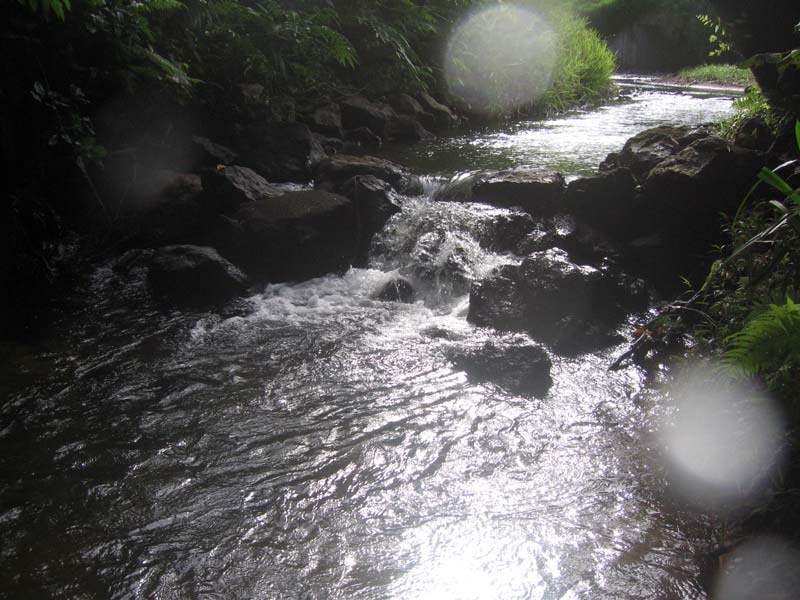
本种见于较高处溪流,常在瀑布或跌水上方。狭窄急流和浅滩之间穿插较宽、流速稍缓的水段,底部以岩床、石块和巨砾为主。岸边植物及沉水落叶常见,真正水生植物较少;透明、富氧的水让日光照及石面,形成丰富生物膜。
饲养环境
一对或小群可从 60 cm 长缸开始;多种或多雄混养需要更大的空间及更多遮挡。沙砾上安放大小不一的圆滑石,既提供附藻表面,也分隔雄鱼的视线。
持续保证清洁和高溶氧。每小时循环十至十五倍缸水可作为安排,充分充氧时五至十倍也可,不需让整个缸都处于猛烈冲流。温度接近适温上端时,水面扰动尤其重要。
旧沉木可用,避免大量析色的新木削弱光照;强光有助于培养藻膜,Microsorum、Crinum、Anubias 也能增加遮蔽和附藻表面。会挖掘睡穴或产卵点的虾虎可能掏空底沙,大石应直接支撑在缸底。
每周换水 30%~50%,保留观察面以外的藻膜,只在成熟稳定的缸中饲养。严密加盖,防止攀玻璃逃逸。
食性与喂食
Stiphodon 属专门刮食底栖藻和附着微生物,口器、可替换牙齿与吸盘共同发挥作用。应提供足够的成熟附藻石,干粮或小型活、冻动物饵即使接受,也只作为偶尔补充。
较柔软的绿藻、硅藻与蓝细菌膜较易利用,不能依赖坚韧黑毛藻。若主缸藻量不足或被其他食藻鱼吃得太快,可另用强光容器培养石块,轮换放入;适宜天气下也可户外养藻。
消瘦个体可能难以恢复,需要随时可吃的适合食物和低竞争环境,不能等到进缸后才开始培养藻。
习性与混养
雄鱼有一定领地性,多雄同养要增加底面积、藏处和食物。结合此属的群体习惯,可从一雄、至少两雌开始;雌鱼会松散聚集,雄鱼并不一定如此。
搭配体形相近、温和且需要高溶氧的中上层鱼更合适;底层伙伴应小型且不强抢食。避免大型鱼、多数守底层地盘的慈鲷及凶猛鳅类。不同种雌鱼可以混群,不能据此判断它们同种。
雌雄区分
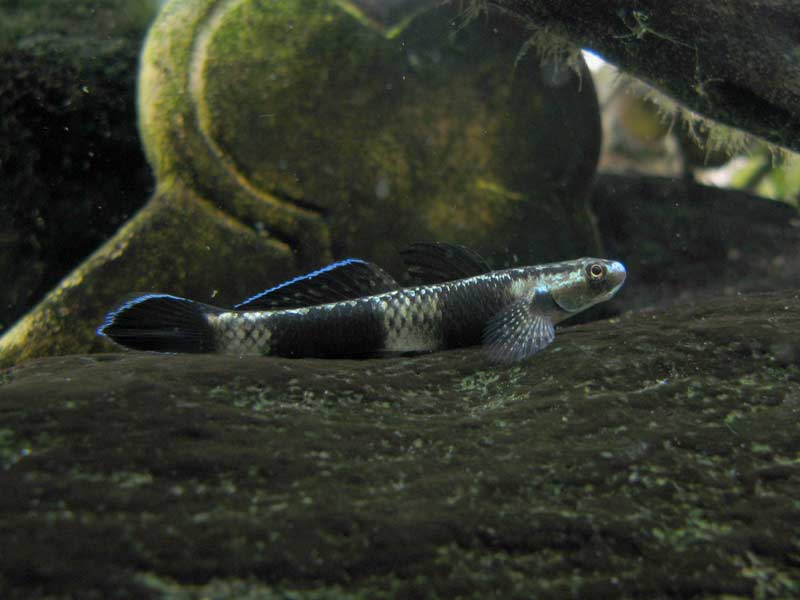
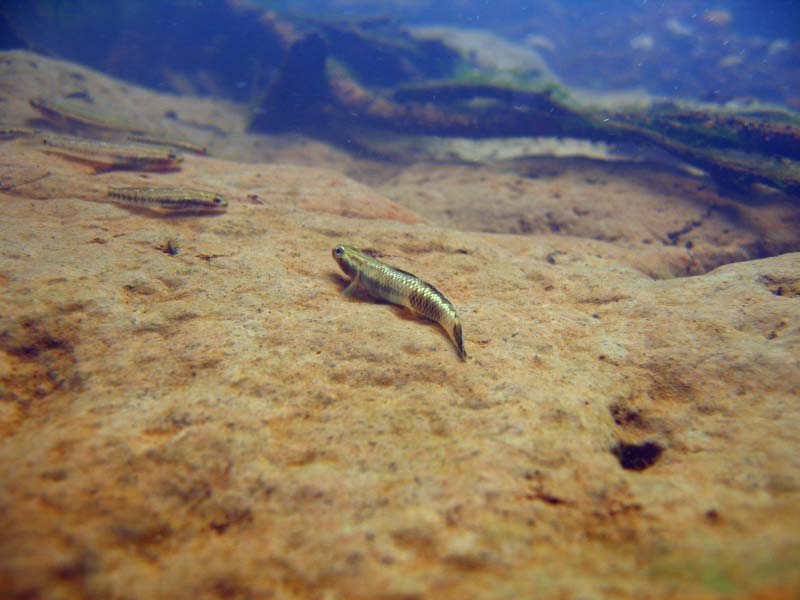
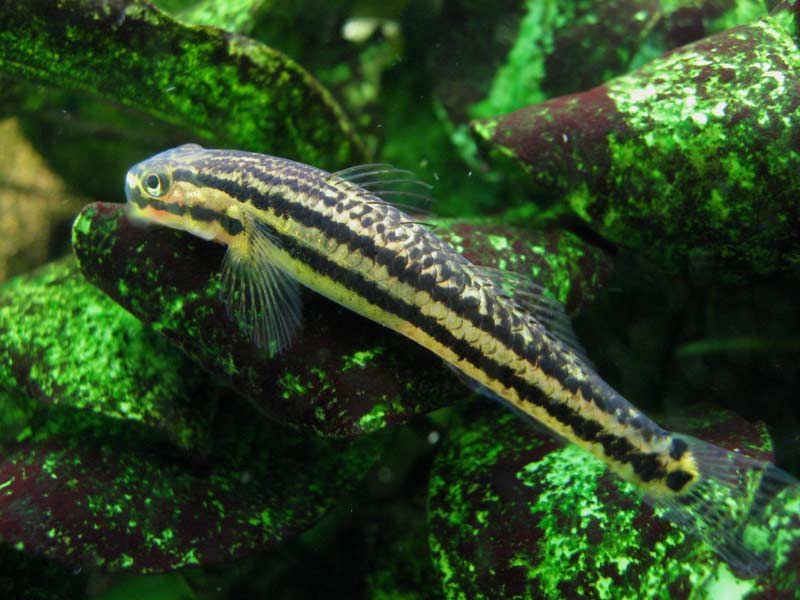
成熟雄鱼奇鳍深色,两条粗深色体横带分别位于两枚背鳍下方。雌鱼较朴素,浅底色配两条深色体侧纵纹,与其他同属雌鱼相似。
繁殖
此属为两侧洄游鱼:成鱼在淡水石下产卵,雄鱼守卵,幼体入海发育,幼鱼再回到河流。研究过的同属鱼可产数千至约一万枚约 0.5 mm 的附着卵,孵化不足一天。
初孵幼体口、肛门和眼睛尚未正常运作,卵黄约三至四天耗尽,期间需要顺流到海。其后经历海洋浮游、近岸定居和溯河,腹鳍吸盘使幼鱼能攀越陡坡和瀑布。
近缘 Stiphodon percnopterygionus 记录的浮游期为七十八至一百四十六天,较冷时延长。该结果提示育苗过程复杂,并非本种已验证的周期;淡水产卵成功不能等同于完成整个生活史。
补充说明
与 Stiphodon weberi 比较时,本种腹部完整覆鳞,后者腹部无鳞。鉴定最好结合覆鳞、性别花纹和可靠产地;没有产地的相似鱼不能仅凭颜色扩展本种分布。
图片
图片来自 SeriouslyFish,版权归各摄影者所有。
English
Overview
Described from Palau, Stiphodon pelewensis is a stream goby whose pelvic disc assists attachment and climbing. Several Micronesian relatives look similar. Its fully scaled belly is a useful distinction from Stiphodon weberi.
A mature supply of biofilm, clean oxygen-rich water, and a secure enclosure are central to its care. It should not be acquired merely as an algae-cleaning accessory.
Distribution & habitat
Palau is the confirmed origin. Occurrence farther north in the Mariana Islands and east to Pohnpei has been proposed, but conflicting studies leave those extensions uncertain.
This species occupies higher-elevation stream habitats, often above falls or cascades. Narrow, fast runs and riffles alternate with wider, slower stretches over bedrock, stones, and boulders. Bankside plants and submerged leaves are common, whereas aquatic plants are scarce. Clear oxygenated water allows sunlight to support productive biofilm on exposed surfaces.
Aquarium setup
An aquarium 60 cm long can accommodate a pair or small group; mixed species or several males require more space and cover. Place rounded stones of varying sizes over sand or gravel to provide grazing surfaces and interrupt sight lines.
Maintain clean, highly oxygenated water continuously. Circulation of 10–15 tank volumes hourly is one option, with 5–10 feasible where aeration is adequate. Violent flow throughout the aquarium is unnecessary. Surface movement becomes especially important near the warmer end of the temperature range.
Use aged wood rather than fresh pieces that strongly stain the water and reduce light. Bright lighting supports biofilm; hardy Microsorum, Crinum, and Anubias can supply cover and additional grazing surfaces. Because these gobies may excavate sleeping or spawning holes, support heavy stones directly on the tank base.
Change 30–50% of the water weekly while retaining algae away from the viewing pane. Introduce fish only into a stable, mature aquarium and fit a close cover against glass-climbing escapes.
Diet & feeding
The genus specializes in grazing benthic algae with associated microorganisms, using specialized mouthparts, replaceable teeth, and the pelvic disc. Provide abundant mature surfaces. Accepted dry foods and small live or frozen animal foods should remain occasional additions.
Softer green growth, diatoms, and cyanobacterial films are more usable than tough black brush algae. If the main aquarium cannot produce enough, or other grazers deplete it rapidly, cultivate spare rocks in a strongly lit container and rotate them. Outdoor culture is possible in suitable conditions.
Thin individuals can be difficult to restore. They need food already available and little competition; beginning an algae culture only after their arrival may be too late.
Behaviour & compatibility
Males show some territoriality. Several require extra floor space, shelters, and food. The genus's social pattern supports a starting group of one male with at least two females. Females associate loosely, whereas males are not necessarily gregarious.
Choose similarly sized, peaceful fishes that also need oxygen-rich water for the upper levels. Bottom dwellers should be small and unassertive at feeding time. Avoid large fishes, most territorial bottom-dwelling cichlids, and aggressive loaches. Females of different species can group together, so association does not confirm identity.
Sexual dimorphism
Mature males have dark unpaired fins and two broad dark bars, one beneath each dorsal fin. Females are plainer, showing a pale background with two dark flank stripes, much like females of several congeners.
Breeding
The genus follows an amphidromous cycle: adults spawn beneath rocks in freshwater, males guard the eggs, larvae develop at sea, and juveniles return to streams. Studied congeners can lay thousands, sometimes around 10,000, of attached eggs approximately 0.5 mm across, hatching within a day.
New larvae do not yet have functional mouths, anuses, or eyes. Their yolk lasts roughly three to four days, during which they must drift to the sea. Pelagic development and coastal settlement precede the upstream journey, during which the pelvic disc helps juveniles negotiate steep surfaces and waterfalls.
A study of Stiphodon percnopterygionus found a pelagic duration of 78–146 days, extended under cooler conditions. That illustrates the difficulty of rearing but is not an established timetable for S. pelewensis. Freshwater spawning alone does not complete the life cycle.
Notes
The belly is fully scaled in this species but unscaled in Stiphodon weberi. Combine scalation, sex-dependent markings, and dependable locality information when identifying fish. Similar coloration without a collection record cannot establish an extension of the species' range.
来源
- https://www.seriouslyfish.com/species/stiphodon-pelewensis(抓取于 2026-10-10)
stiphodon-pelewensis · 文件: data/species/stiphodon-pelewensis.md · 状态: 草稿