Stiphodon alcedo
概要
| 字段 | 值 |
|---|---|
| 类别 | 鱼 |
| 学名 | Stiphodon alcedo |
| 分类 | 虾虎鱼目 Gobiiformes › 虾虎鱼科 Gobiidae › Stiphodon |
| 水体 | 淡水 |
| 原产地 | 日本 |
| 成体体长 | 5 cm |
| 饲养难度 | 中等 |
| 群居方式 | 群游 |
| 水流偏好 | 高 |
| 特征 | 会跳缸: 是 |
| 外部数据 | seriouslyfish stiphodon-alcedo;fishbase 66598 |
水质参数
| 参数 | 耐受范围 | 最适范围 | 单位 |
|---|---|---|---|
| 水温 | 22–28 | — | °C |
| pH | 6.5–7.5 | — | — |
| 总硬度 | 2–12 | — | dGH |
概述
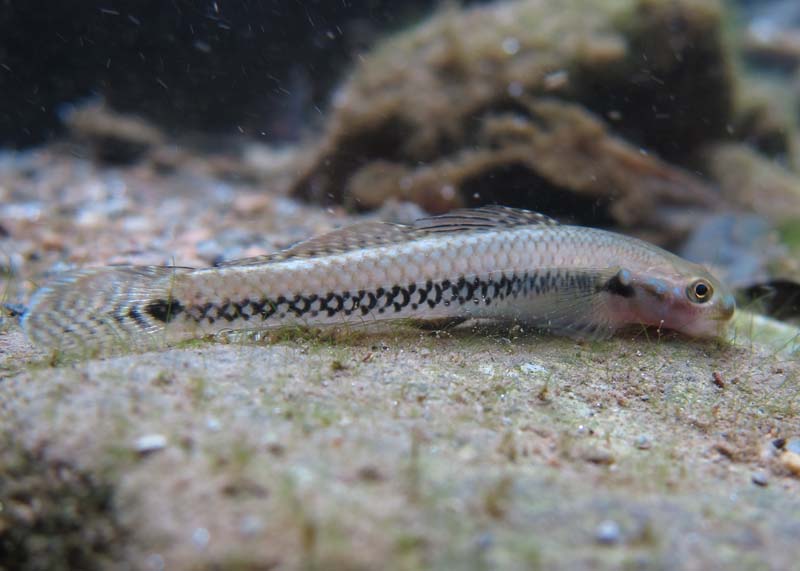
Stiphodon alcedo 是日本琉球群岛的溪流虾虎。繁殖雄鱼头侧呈金属蓝绿色,身体可转黑或带橙色,第一背鳍尖而不拖成长丝。饲养重点是长期充足的溶氧与可持续补充的藻膜,漂亮的雄鱼显色不能替代健康状态判断。
分布与栖息地
已知来自冲绳岛四条溪流和西表岛两条溪流,在日本比同域的 Stiphodon percnopterygionus 少见。黑潮可能从更南方输送幼鱼,但这仍是推测。
本种属于偏好坡度较小河段的类型,见于较宽的中缓流溪段,浅滩、流道、深潭和小跌水相间。此属典型环境为短小沿海溪流,岩床和卵石上覆盖丰富生物膜,水清且富氧;岸边植物和落叶常见,真正水生植物较少。
饲养环境
用成熟、稳定的溪流缸,沙或砾石上放置大小不同的圆滑石块,形成躲藏处与视觉遮挡。雄鱼睡眠或繁殖时可能钻挖底床,大石应直接支撑在缸底,不能靠松散沙层承重。
持续过滤、充氧;每小时循环十至十五倍水量是可用安排,充氧充分时五至十倍也可,不必追求全缸急冲。强光帮助藻膜生长,旧沉木可用,新木析出的茶色物质会削弱透光。耐受此环境的 Microsorum、Crinum、Anubias 可提供额外附藻表面和遮蔽。
每周换水 30%~50%,同时保留观察面以外的附着藻。缸盖要严密,这些虾虎能攀附玻璃;不能放进刚开设、还没有稳定藻膜的新缸。
食性与喂食
Stiphodon 属以底栖藻和附着微生物为主要食物,伸缩口器与可替换牙齿配合腹鳍吸盘刮食。沉底干粮和红虫等动物性饵料有时会被接受,但只宜偶尔补充,不能代替持续可啃食的成熟表面。
藻量不足时,可另设强光容器培养附藻石,轮换放入主缸;适宜气候下也可户外培养。较易利用硅藻、蓝细菌膜与柔软绿藻,不能指望它清除坚韧黑毛藻。严重消瘦个体需要现成食物并暂避竞争,否则即使水清也可能继续衰弱。
习性与混养
同属的混养经验适用于安排环境:可搭配体形接近、温和且喜欢富氧溪流的中上层鱼,也可选择不抢食的小型底栖鱼;避开大型鱼、凶猛抢食鳅和守底层地盘的慈鲷。
雄鱼会维持较松散的领域,繁殖时更明显;空间、食物及遮挡充足才适合多雄。雌鱼常松散结群,以一雄配至少两雌为基本组合。混入相似种雌鱼时,群聚行为本身不能证明鉴定正确。
雌雄区分
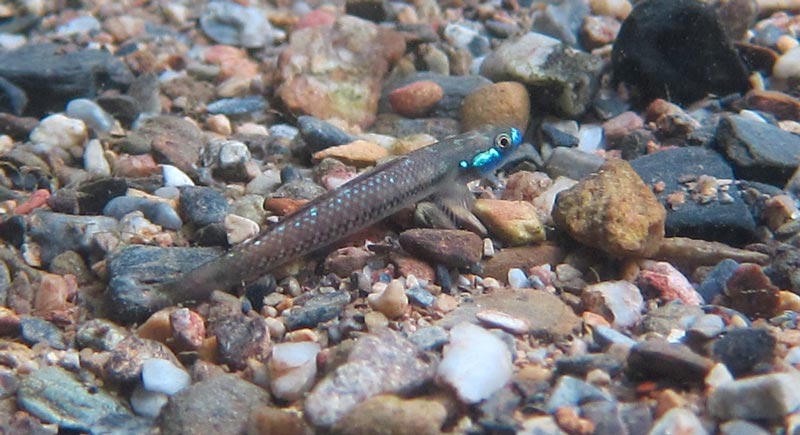
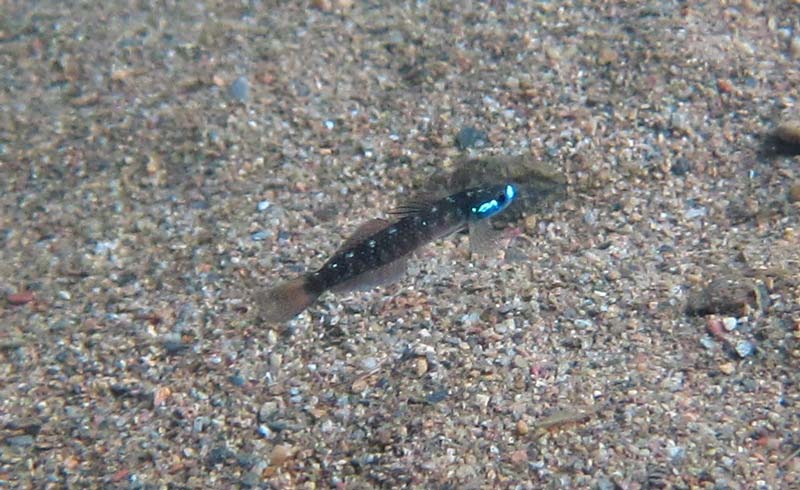
非繁殖雄鱼偏浅棕,头背可红褐,体侧有深色纵纹,胸鳍基部上方有蓝金色斑,部分鳍缘呈白色。繁殖时头侧和唇部现金属蓝绿色,头顶发黑,身体常黑而带蓝绿横纹,有时侧腹橙色;小雄鱼的橙色鳍更显眼。求偶间歇可以很快恢复棕色纵纹。
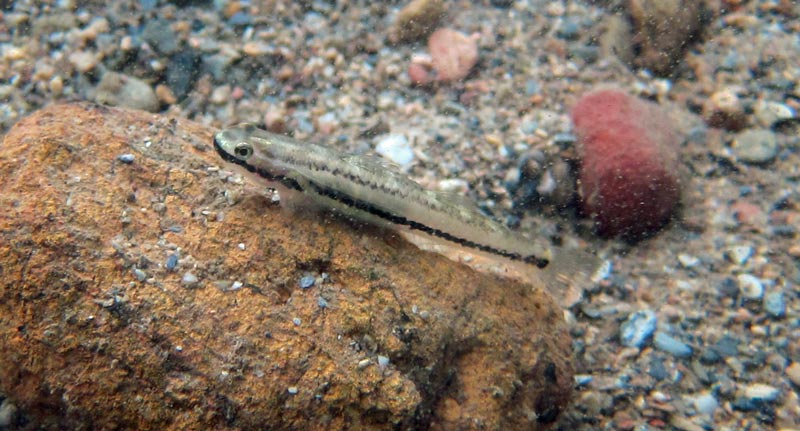
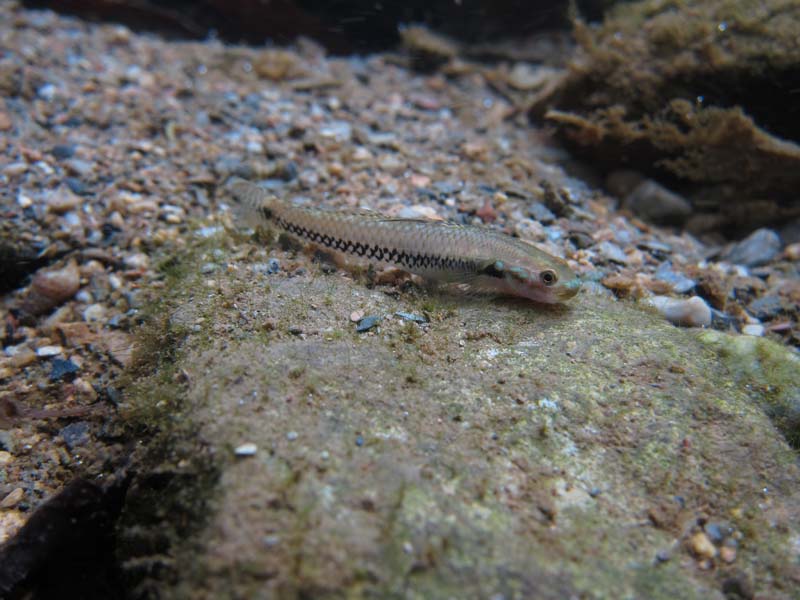
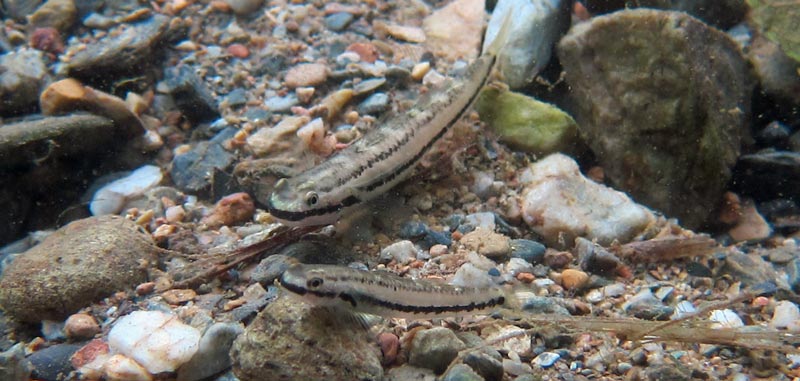
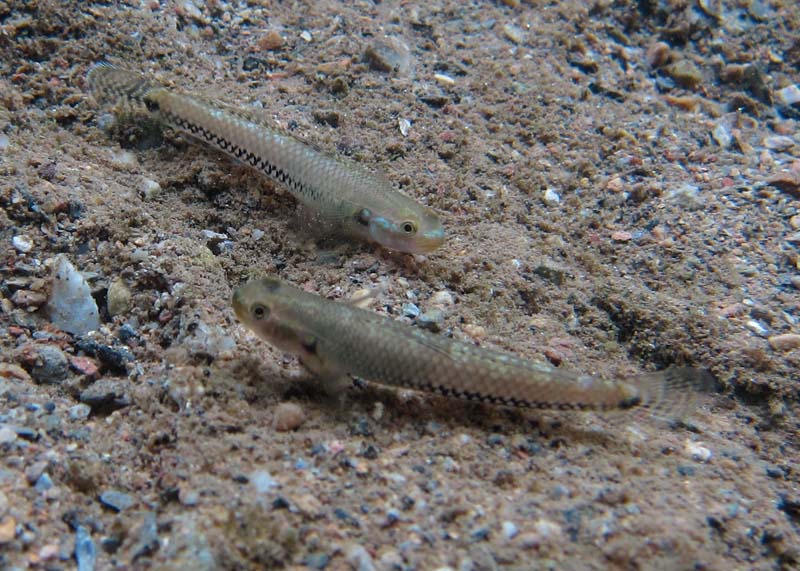
雌鱼底色奶白,体侧上下两条暗纹间距较宽,上纹细而淡,下纹由斑块组成;缺少雄鱼明显的白色鳍纹。不能用某一瞬间是否发黑作为唯一性别依据。
繁殖
此属具有两侧洄游生活史:成鱼在淡水岩石下产卵,雄鱼护卵,幼体顺流入海发育,再回到河流。已研究的同属鱼一次可产数千至约一万枚约 0.5 mm 的附着卵,不足一天孵化;初孵幼体尚未具备正常摄食和视觉功能,卵黄约三至四天耗尽,期间需到达海洋。
海洋阶段不能简单由淡水缸里的产卵成功替代。近缘 Stiphodon percnopterygionus 的浮游期研究为七十八至一百四十六天,低温时更长;这不是本种已验证的育苗周期。回游幼鱼利用腹鳍吸盘攀越障碍,历时可达数月。
冲绳本种雄鱼仅在十月至十二月观察到婚姻色,因此推测繁殖期较短;这是由显色推断的季节,不能当作固定催产日历。
补充说明
本种雄鱼第一背鳍第四、第五棘延长,但并非丝状;胸鳍基部的金属斑以及雌鱼间距较宽的两条侧纹可帮助识别。此属外观相似种很多,可靠产地与完整鳍形比单张显色照片更有用。
图片
图片来自 SeriouslyFish,版权归各摄影者所有。
English
Overview
A Ryukyu stream goby, Stiphodon alcedo combines a pointed, nonfilamentous male first dorsal with metallic turquoise on the head during courtship. Breeding males may become black or orange. Its care depends on a continuing supply of edible biofilm and oxygen, not simply on bringing out those colors.
Distribution & habitat
Records cover four streams on Okinawa and two on Iriomote, Japan. It is less common there than Stiphodon percnopterygionus. Transport of larvae from farther south by the Kuroshio Current remains a possible explanation rather than a confirmed extension of its range.
This species occupies the gentler-gradient type of stream: broader channels with slow to moderate runs, riffles, pools, and small cascades. Typical habitats of the genus have rock beds, rounded stones, clear oxygenated water, and rich biofilm. Bankside vegetation and fallen leaves are common; submerged plants are much less so.
Aquarium setup
Use an established aquarium with sand or gravel, rounded stones of different sizes, shelters, and interrupted sight lines. These gobies may burrow to sleep or spawn, so support heavy rocks on the aquarium base rather than loose sediment.
Maintain filtration and aeration continuously. Circulation of 10–15 tank volumes hourly is one workable arrangement; 5–10 can suffice with strong oxygenation. A violent current throughout the tank is unnecessary. Strong lighting sustains grazing surfaces. Aged wood is suitable, whereas fresh wood can stain the water and reduce light penetration. Hardy Microsorum, Crinum, or Anubias provide cover and additional surfaces for algae.
Replace 30–50% of the water weekly, leaving growth on surfaces other than the viewing glass. Fit a close cover because these fish can climb glass. A newly established tank without stable biofilm is unsuitable.
Diet & feeding
The feeding specialization of Stiphodon is scraping benthic algae and associated microorganisms. Protrusible mouthparts, replaceable teeth, and the pelvic disc work together during grazing. Some sinking foods or bloodworms may be eaten, but they are occasional supplements rather than substitutes for productive surfaces.
Grow algae on spare rocks in a separate brightly lit container if the main tank cannot keep pace with consumption. Outdoor cultivation is possible in suitable weather. Diatoms, cyanobacterial films, and softer green growth are more useful than tough black brush algae. Severely thin newcomers need immediate access to food without competitors; clean water alone will not reverse starvation.
Behaviour & compatibility
Community arrangements should follow experience with the genus: choose small, peaceful stream fishes for the upper water and unassertive bottom dwellers. Large fishes, aggressive feeding loaches, and territorial bottom-dwelling cichlids are poor choices.
Males defend loose areas, particularly during breeding. Several require ample room, food, and cover. Females form loose groups, making one male with at least two females a useful starting combination. Similar females may group across species, so association is not an identification test.
Sexual dimorphism
Outside courtship, males are pale brown with reddish tones on the head and back, a dark flank stripe, a blue-gold mark above the pectoral base, and white markings on several fins. Nuptial males develop turquoise lips and head sides, a black crown, and often black bodies with turquoise bars. Orange flanks or fins can occur, especially in small males. Brown striped coloration can return quickly between displays.
Females are creamy with widely separated lateral stripes: the upper one is thin and pale, and the lower consists of blotches. They lack the male's conspicuous white fin pattern. A single dark or pale moment is therefore an unreliable sexing criterion.
Breeding
The genus has an amphidromous cycle. Adults spawn beneath rocks in freshwater, males guard the eggs, larvae drift to sea, and developing juveniles eventually return upstream. Studied congeners produce thousands of attached eggs, sometimes around 10,000, approximately 0.5 mm across. Hatching can occur within a day. The poorly developed larvae must reach the sea before their yolk is exhausted after roughly three to four days.
Spawning in freshwater is consequently only the beginning. A study of Stiphodon percnopterygionus found a pelagic phase of 78–146 days, longer in colder conditions; that is a comparison, not an established rearing timetable for this species. Returning juveniles use the pelvic disc to negotiate obstacles, and migration can take months.
On Okinawa, nuptial males of S. alcedo were observed only from October through December. A short breeding season is inferred from that pattern rather than demonstrated as a fixed spawning schedule.
Notes
Elongated fourth and fifth dorsal spines, without threadlike extensions, help distinguish males. The metallic pectoral-base mark and the widely separated female stripes are also useful. Dependable collection locality and intact fin structure are stronger clues than one photograph of a displaying fish.
来源
- https://www.seriouslyfish.com/species/stiphodon-alcedo(抓取于 2026-10-10)
stiphodon-alcedo · 文件: data/species/stiphodon-alcedo.md · 状态: 草稿