瓦氏锯盖足鲈 · Vaillant's Chocolate Gourami
概要
| 字段 | 值 |
|---|---|
| 类别 | 鱼 |
| 学名 | Sphaerichthys vaillanti |
| 别名 | 瓦氏鋸蓋足鱸 |
| 分类 | 攀鲈目 Anabantiformes › 丝足鲈科 Osphronemidae › Sphaerichthys |
| 水体 | 淡水 |
| 原产地 | 印度尼西亚 |
| 成体体长 | 5.5 cm |
| 饲养难度 | 中等 |
| 最小水体 | 54 L |
| 最小缸长 | 60 cm |
| 群居方式 | 群游 |
| 水流偏好 | 低 |
| 外部数据 | seriouslyfish sphaerichthys-vaillanti;fishbase 25141 |
| 食性 | 肉食 |
| 繁殖方式 | 口孵 |
水质参数
| 参数 | 耐受范围 | 最适范围 | 单位 |
|---|---|---|---|
| 水温 | 21–25 | — | °C |
| pH | 3.5–6.5 | — | — |
| 总硬度 | 0–3 | — | dGH |
概述
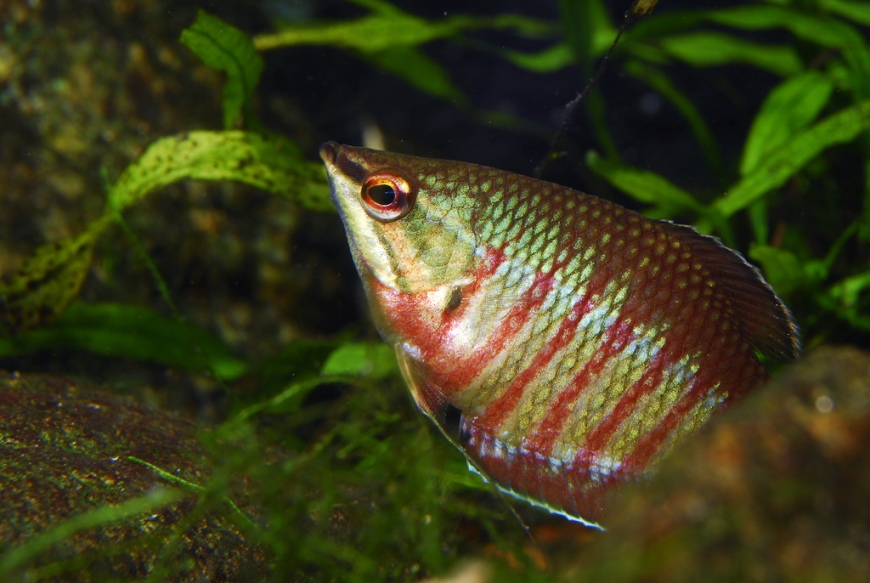
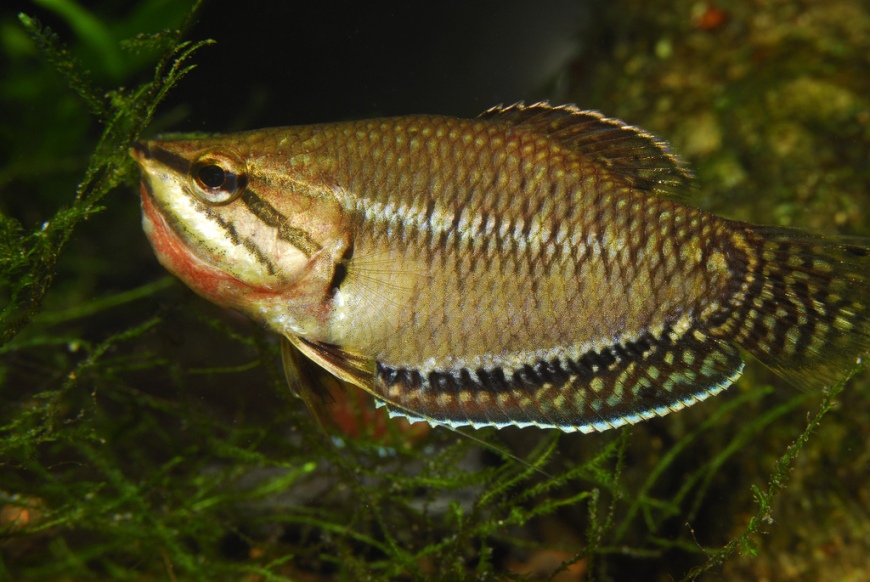
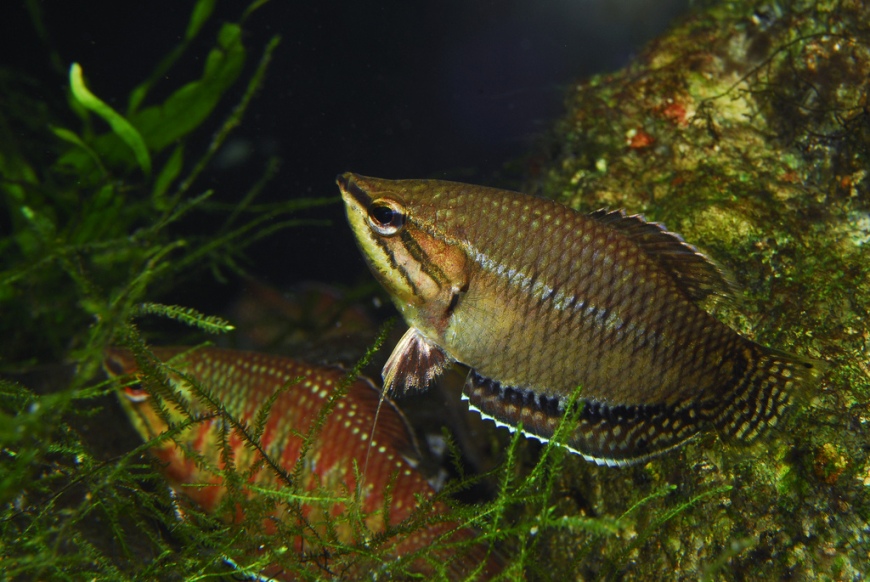
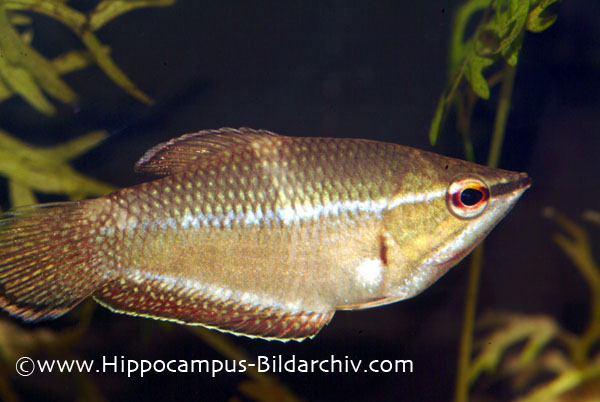
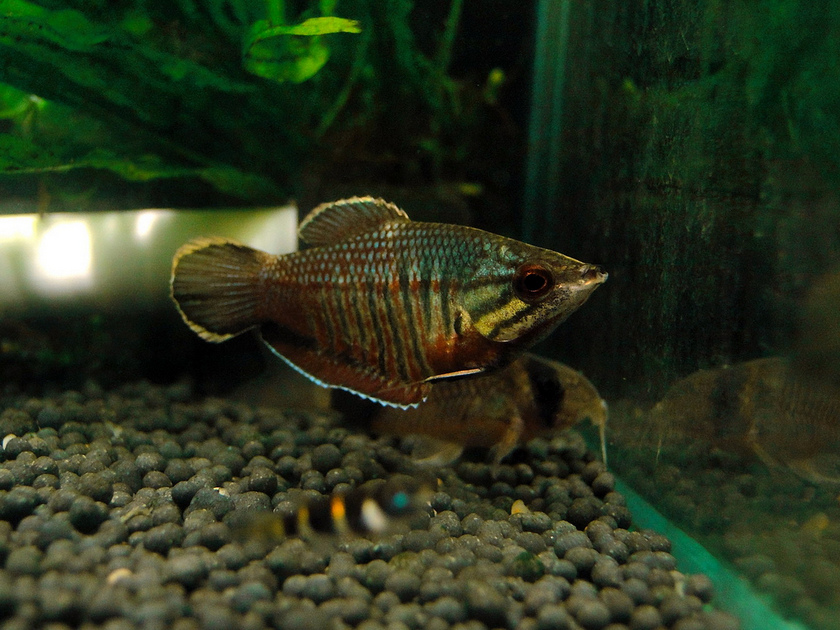
瓦氏锯盖足鲈(Sphaerichthys vaillanti)雌鱼反而更鲜艳,适应后呈红绿相间竖纹,雄鱼多保持褐色。繁殖由雄鱼口孵;商品名称中的武士并不表示它好斗或来自日本。
分布与栖息地
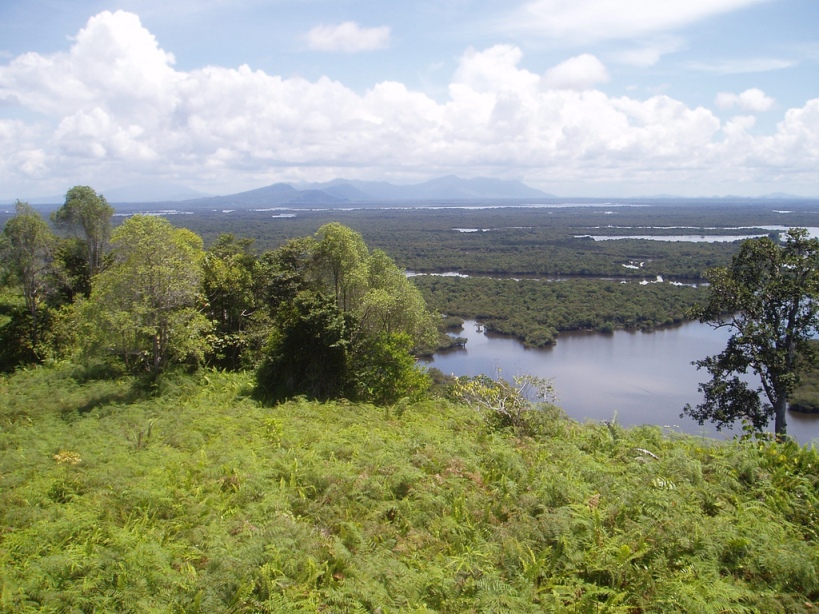
似为印度尼西亚西加里曼丹卡普阿斯河流域特有,记录涵盖上游森塔伦湖区及较下游新当附近。可能主要利用泥炭沼泽与黑水小溪;模式地点实际是微染色清水中的淹没树根,另有在落叶碎屑间拟态枯叶的观察。
饲养环境
至少参考 60 × 30 厘米底面积,以软沙、沉木、洞穴和落叶形成遮蔽,配弱光、耐阴植物与浮水植物。低密度下每周换约 10%~15%,水流轻缓,避免大换水造成波动。
食性与喂食
以微小甲壳类、蠕虫、昆虫幼虫等为食,每日供给小型活冷冻饵。有些个体之后会接受干粮,但新鱼可能挑食。
习性与混养
建议至少六尾,群体有等级并会争夺食物或偏好位置,群养也似有助自然配对。它不形成紧密鱼群,且易被大型或活跃鱼压制,只选温和小鱼作伙伴。
雌雄区分
雌鱼下颌轮廓直、头较尖,红绿竖纹在繁殖时更加明显。雄鱼下颌略圆、可扩张以口孵,颜色较褐。新到或状态不佳时发色弱,不宜仅凭颜色判断。
繁殖
雌鱼通常主动求偶,近乎直立环抱后卵在底部受精,再由雄鱼拾入口中。口孵雄鱼躲在安静处少食或停食,约七至二十天放出十至四十尾幼鱼。可在产后数天移开雄鱼,或转移释放幼鱼,须保证新水与原缸水温水质相符。幼鱼能吃微虫、初孵丰年虾,每天小换约 10%,上方保留温暖潮湿空气。
图片
图片来自 SeriouslyFish,版权归各摄影者所有。
English
Overview
Bright red-and-green females and subdued brownish males make Sphaerichthys vaillanti unusual among familiar chocolate gouramis. Males brood the offspring in their mouths. The trade name “samurai” describes neither its origin nor an especially combative temperament.
Distribution & habitat
It appears restricted to the Kapuas drainage of West Kalimantan, with records from the Danau Sentarum system and downstream toward Sintang. Peat swamps and blackwater creeks are thought important, but the type locality contained lightly stained clear water and submerged roots. Fish also shelter among leaves and debris, where pattern and movement apparently aid dead-leaf mimicry.
Aquarium setup
Provide at least a 60 by 30 cm footprint with soft sand, wood, caves, and leaf litter. Dim lighting, low-light plants, and floating cover suit it. Keep flow gentle and perform regular small changes around 10–15% weekly when lightly stocked, avoiding abrupt shifts from large replacements.
Diet & feeding
Feed daily small live or frozen invertebrates such as crustaceans, worms, and insect larvae. Newly acquired fish may be selective; prepared food acceptance sometimes improves after acclimation.
Behaviour & compatibility
Keep at least six for social interaction and potentially easier pair formation. Hierarchies develop, with displacement around food or favorite retreats, but this is not tight schooling. Large or boisterous companions can intimidate it; small peaceful fishes are more suitable.
Sexual dimorphism
Females have a straighter jaw, pointed head, and red-green bars that intensify during breeding. Males have a rounder, expandable lower jaw and remain brownish. Poorly settled fish may lack clear colors, so jaw shape is useful alongside pattern.
Breeding
Females normally initiate courtship. Upright embraces precede substrate fertilization, and the male gathers the eggs into his mouth. He retreats and eats little or nothing for seven to twenty days before releasing roughly ten to forty young. The brooding male or newly released fry can be separated using matched water. Young take microworms or nauplii immediately. Daily changes near 10% and warm humid air beneath a close-fitting cover aid development.
来源
- https://www.seriouslyfish.com/species/sphaerichthys-vaillanti(抓取于 2026-10-10)
sphaerichthys-vaillanti · 文件: data/species/sphaerichthys-vaillanti.md · 状态: 草稿