锯盖足鲈 · Chocolate Gourami
概要
| 字段 | 值 |
|---|---|
| 类别 | 鱼 |
| 学名 | Sphaerichthys osphromenoides |
| 别名 | 鋸蓋足鱸 |
| 分类 | 攀鲈目 Anabantiformes › 丝足鲈科 Osphronemidae › Sphaerichthys |
| 水体 | 淡水 |
| 原产地 | 印度尼西亚、马来西亚 |
| 成体体长 | 5 cm |
| 饲养难度 | 中等 |
| 最小水体 | 54 L |
| 最小缸长 | 60 cm |
| 群居方式 | 群游 |
| 水流偏好 | 低 |
| 外部数据 | seriouslyfish sphaerichthys-osphromenoides;fishbase 11235 |
| 食性 | 肉食 |
| 繁殖方式 | 口孵 |
水质参数
| 参数 | 耐受范围 | 最适范围 | 单位 |
|---|---|---|---|
| 水温 | 26–31 | — | °C |
| pH | 4–6.5 | — | — |
| 总硬度 | 0–3 | — | dGH |
概述
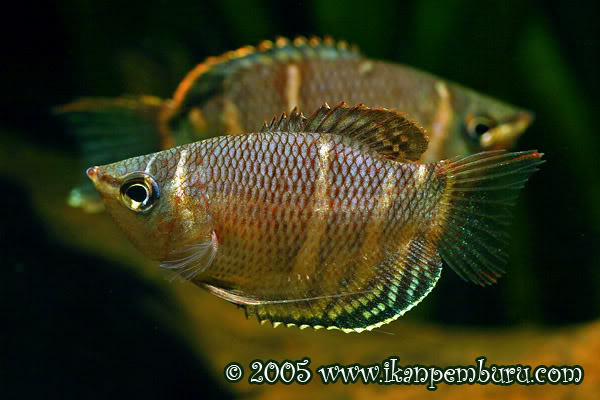
锯盖足鲈(Sphaerichthys osphromenoides)行动缓慢、容易在争食中吃亏,适合安静的软酸水环境。繁殖由雌鱼口孵,而不是雄鱼口孵或筑泡巢,这是识别其繁殖习性的关键。
分布与栖息地
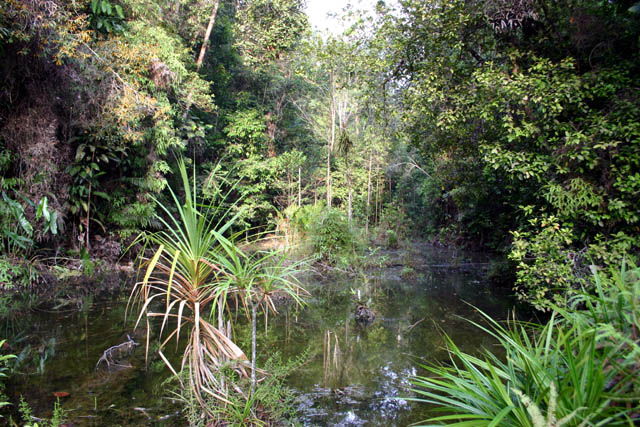
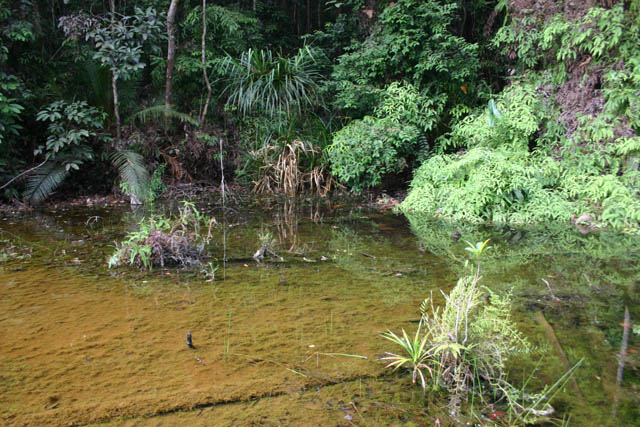
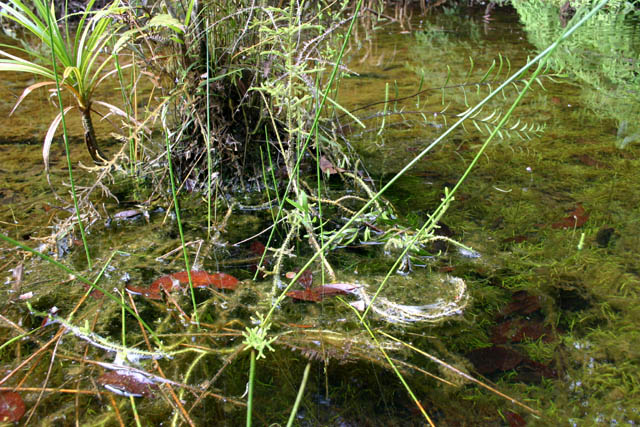
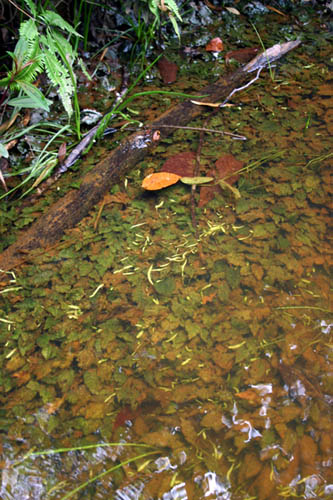
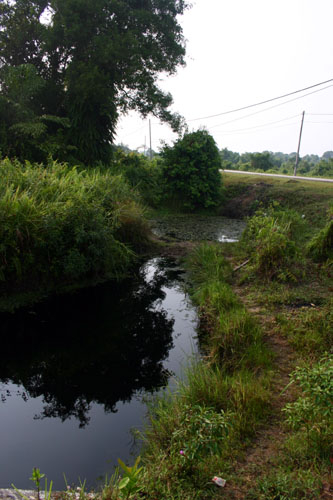
分布于马来半岛、苏门答腊和婆罗洲,包括砂拉越及西加里曼丹。新加坡曾有记录,但种群是否仍存不确定。主要栖息泥炭沼泽及黑水溪流,也有水化学相似的清水环境;林冠、枝叶和有机碎屑形成弱光与极低矿化度。
饲养环境
群体至少参考 60 × 30 厘米底面积,细沙、沉木、洞穴和落叶提供遮挡,使用耐阴植物及浮水遮光。弱水流更合适,低密度饲养时每周换约 10%~15%;避免参数不一致的大换水。野生鱼对极软酸水要求较严格,人工繁育鱼通常更能适应。
食性与喂食
捕食微小甲壳类、蠕虫和昆虫幼虫等,每日给予合口小型活冷冻饵。初期可能不吃干粮,有些个体适应后会接受,不能把训练过程当作断供活饵的理由。
习性与混养
建议至少六尾,让同种互动自然展开,但它不是紧密群游鱼。群体有等级,强势个体可能在食物或偏好位置驱赶同伴。伙伴应小而温和,避开争食强的鱼;不要与婆罗洲锯盖足鲈混养,以减少杂交风险。
雌雄区分
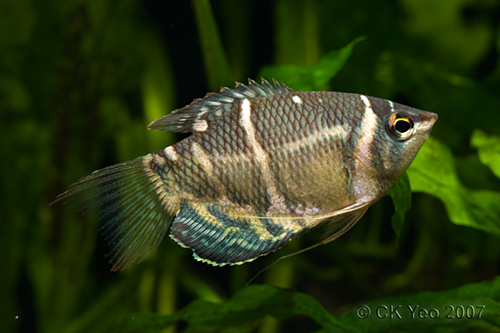
成年雄鱼头形较尖、下颌轮廓较直;雌鱼下颌略圆,口孵时可扩张。鳍长与颜色并非所有产地都适合用来分性。
繁殖
可成对或群体繁殖,雄鱼通常先求偶。亲鱼近乎直立环抱,卵在底部受精后由雌鱼拾入口中,期间双方防卫周边。含卵雌鱼躲在安静处,很少或完全不进食,约七至二十天释放十至四十尾自由游动幼鱼。可分开含卵雌鱼或转移放出的幼鱼,但水温与水化学必须匹配。幼鱼可直接吃微虫或初孵丰年虾,每日约 10% 小换水,并以缸盖保留温暖潮湿空气帮助迷鳃发育。
补充说明
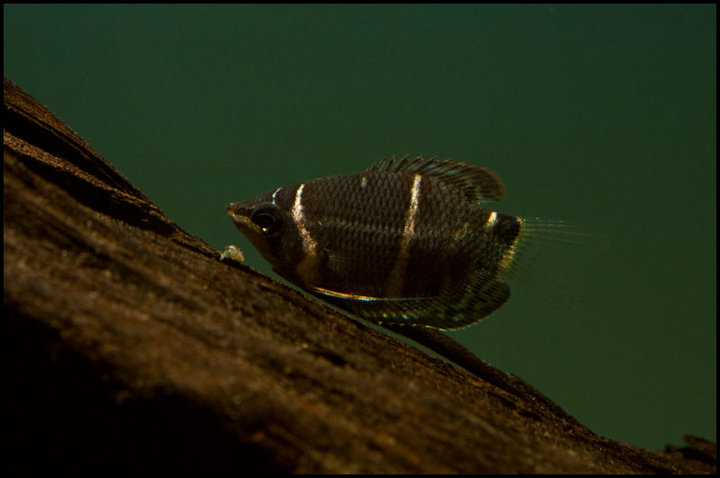
与婆罗洲锯盖足鲈相比,本种缺少其额外的明显浅色竖带,或仅在背鳍前残留小斑。某些群体颜色与鳍形有差异。
图片
图片来自 SeriouslyFish,版权归各摄影者所有。
English
Overview
Slow-moving Sphaerichthys osphromenoides needs a quiet soft-water aquarium where it can feed without competition. Breeding is distinctive: the female carries eggs and young in her mouth. It should not be treated as a bubble nester or paternal mouthbrooder.
Distribution & habitat
It occurs across the Malay Peninsula, Sumatra, and Borneo, including Sarawak and West Kalimantan. A Singapore population has been recorded but may no longer persist. Peat swamps and blackwater streams dominate its habitat, alongside some chemically similar clear waters with plentiful vegetation.
Aquarium setup
Provide at least a 60 by 30 cm footprint for a group, furnishing it with sand, wood, retreats, leaves, and subdued planting. Keep current weak. With light stocking, weekly changes around 10–15% are suitable; avoid large replacements with mismatched water. Wild fish need especially soft acidic conditions, whereas captive-bred individuals are often more adaptable.
Diet & feeding
Offer daily small live or frozen crustaceans, worms, and insect larvae. Prepared food may be rejected initially, though some fish learn to accept it. Maintain reliable suitable meals while assessing adaptation.
Behaviour & compatibility
Keep at least six to support social interaction, without expecting tight schooling. Hierarchies develop, with dominant fish displacing others around food or preferred positions. Choose small peaceful companions and avoid forceful feeders. Do not combine it with S. selatanensis because of hybridization risk.
Sexual dimorphism
Males have a more pointed head and straight lower-jaw profile. Females show a slightly rounded jaw with expandable tissue for brooding. Fin length and color are not consistently reliable across populations.
Breeding
A pair or group can breed, usually following male-initiated courtship. Eggs are fertilized on the substrate during upright embraces and collected by the female, with both adults defending the area. She withdraws and eats little or nothing while brooding for seven to twenty days, then releases roughly ten to forty swimming young. Separate the female or newly released fry if desired, using matched water. Young accept microworms or nauplii immediately. Small daily changes near 10% and a covered warm, humid air space support growth and labyrinth development.
Notes
Compared with S. selatanensis, it lacks the additional distinct pale vertical bar, or has only a small mark before the dorsal fin. Geographic differences in fin shape and coloration also occur.
来源
ID:sphaerichthys-osphromenoides · 文件: data/species/sphaerichthys-osphromenoides.md · 状态: 草稿