宽体沙鳅
概要
| 字段 | 值 |
|---|---|
| 类别 | 鱼 |
| 学名 | Sinibotia reevesae |
| 别名 | 寬體沙鰍、Botia reevesae |
| 分类 | 鲤形目 Cypriniformes › 沙鳅科 Botiidae › Sinibotia |
| 水体 | 淡水 |
| 原产地 | 中国 |
| 成体体长 | 9.5 cm |
| 饲养难度 | 中等 |
| 最小水体 | 108 L |
| 最小缸长 | 120 cm |
| 群居方式 | 群游 |
| 特征 | 会跳缸: 是 |
| 外部数据 | seriouslyfish sinibotia-reevesae;fishbase 46127 |
| 性情 | 温和 |
水质参数
| 参数 | 耐受范围 | 最适范围 | 单位 |
|---|---|---|---|
| 水温 | 20–25.5 | — | °C |
| pH | 6.5–8 | — | — |
| 总硬度 | 2–15 | — | dGH |
概述
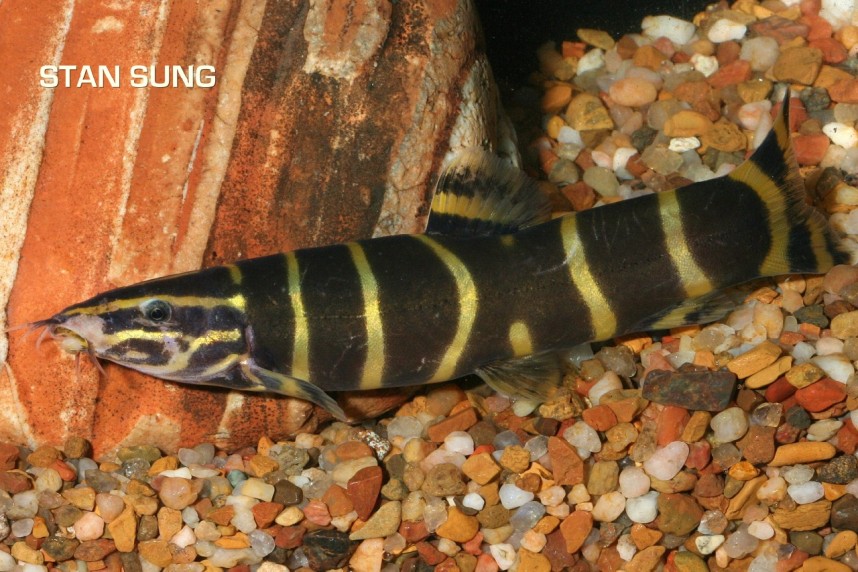
宽体沙鳅(Sinibotia reevesae)体侧有 7~8 条较宽深色横带,头侧没有美丽沙鳅(Sinibotia pulchra)那样的褐色虫纹。它较少进入贸易,可能随其他中华沙鳅混入,性情温和而隐蔽。
分布与栖息地
已知分布集中在中国四川泸县一带的长江水域,完整范围可能尚未厘清。少见可能与捕捉困难或密度较低有关,不能直接据此判断各地数量。
1990 年 11 月的模式产地记录为清水,水流适中至较缓,河床主要是沙,夹有石块。这是特定时间和地点的观察,不代表全年条件完全相同。
饲养环境
底面积至少约 120 × 30 cm,用沙或细砾、圆滑石块、沉木及根枝制造丰富躲藏空间。弱光与耐阴植物增加遮蔽,去掉锐边并封堵易卡住鱼身的小孔,缸盖保持严密。
中华沙鳅属看来偏好一定水流,也能适应溪流式布置,但溶氧充分、循环适度时不必制造猛烈湍流。只在成熟稳定的鱼缸中饲养,保持清洁、避免有机废物积累,每周换水约 30%~50%。
食性与喂食
本种可能在底部捕食昆虫、甲壳类和小鱼,但天然食谱尚未明确确认。缸内可交替提供红虫、水蚯蚓、切碎贝肉、蚯蚓等活饵或冷冻饵,以及优质沉底饲料。适应后喂食可能相当积极,也会在投喂时游到中层。
习性与混养
平时倾向待在安静区域或藏身处,性情很温和,可与环境需求相同的鱼混养。温和、体型相称的开阔水域鱼较适合;其他鳅类、沙鳅或鲶鱼还需逐种核对水温、水流、成年大小及空间。
中华沙鳅属群居并似乎具有等级关系,建议至少 3~4 条。孤养可能退缩或攻击形似鱼;只有两三条时,优势鱼可能持续压制其他鱼,使弱鱼停食。
雌雄区分
成熟雌鱼可能更丰满,但外观性别差异尚未确认。
繁殖
尚无水族箱繁殖记录。野外可能季节性繁殖,也可能伴随迁移,均应保留推测性质。
补充说明
本种暗色横带通常比浅色间隔宽,头上有四条暗纹,尾鳍偏红,前部有一条连续暗色竖纹,各尾叶另有一两条暗带。辨认时应结合头侧没有虫纹、身体带数及鳍纹,而非只凭一种颜色。
中华沙鳅属眼下棘受惊时会竖起,捕捞时需防止缠网和刺伤。持续消瘦应受到关注,但不能仅凭体形就判定某种病原感染。
图片
图片来自 SeriouslyFish,版权归各摄影者所有。
English
Overview
Broad dark body bands, usually seven or eight, distinguish Sinibotia reevesae, whose head lacks the brown worm-like marks seen in Sinibotia pulchra. It is uncommon in trade and may arrive mixed with other members of the genus. Its disposition is peaceful and retiring.
Distribution & habitat
Known records center on the Yangtze around Luxian, Sichuan, China. The full range may be incompletely documented. Apparent rarity could reflect difficult capture or low density rather than establishing abundance everywhere.
A November 1990 observation at the type locality described clear water with moderate to slow flow over mainly sand and some rocks. This is a dated site observation, not a description of every season.
Aquarium setup
Allow a footprint of at least approximately 120 × 30 cm. Sand or fine gravel, smooth stones, and woody roots or branches provide a network of retreats. Subdued lighting and shade-tolerant plants add cover. Remove sharp edges and trapping openings, and secure the lid.
Sinibotia appear to favor some current and can suit stream-style layouts, but strong turbulence is unnecessary if circulation and oxygen are adequate. Use a stable, mature aquarium, keep water clean, prevent waste accumulation, and change about 30–50% weekly.
Diet & feeding
Feeding on insects, crustaceans, and small fishes near the bottom is suggested for wild fish, not confirmed as a complete natural diet. In captivity, alternate live or frozen bloodworms, Tubifex, chopped shellfish, and earthworms with quality sinking foods. Settled fish can feed energetically and may rise into midwater during meals.
Behaviour & compatibility
It usually occupies quieter areas or shelter outside feeding periods. Its peaceful nature permits companions with matching environmental needs. Peaceful open-water fishes of suitable size are useful candidates. Assess other loaches and catfishes individually for temperature, current, adult size, and available space.
Social groups and apparent hierarchies characterize Sinibotia, so at least three or four are recommended. Isolated fish may withdraw or attack similarly shaped tankmates. With only two or three, a dominant individual may suppress others until they stop eating.
Sexual dimorphism
Mature females may be fuller-bodied, but external differences have not been confirmed.
Breeding
Aquarium breeding has not been recorded. Seasonal spawning and possible migration in the wild remain suggestions.
Notes
Dark body bars are generally wider than the pale spaces. Four dark head stripes accompany a reddish tail with a continuous dark stripe across its front and one or two further bands on each lobe. Use the unmarked head sides, bar count, and fin pattern together rather than relying on color alone.
Spines below the eyes in Sinibotia may rise when fish are stressed, creating a risk of net entanglement or injury. Investigate persistent wasting without identifying a pathogen solely from body shape.
来源
- https://www.seriouslyfish.com/species/sinibotia-reevesae(抓取于 2026-10-10)
sinibotia-reevesae · 文件: data/species/sinibotia-reevesae.md · 状态: 草稿