Sicyopus exallisquamulus
概要
| 字段 | 值 |
|---|---|
| 类别 | 鱼 |
| 学名 | Sicyopus exallisquamulus |
| 分类 | 虾虎鱼目 Gobiiformes › 虾虎鱼科 Gobiidae › Sicyopus |
| 水体 | 淡水 |
| 原产地 | 印度尼西亚 |
| 成体体长 | 5.2 cm |
| 饲养难度 | 中等 |
| 最小水体 | 54 L |
| 最小缸长 | 60 cm |
| 群居方式 | 群游 |
| 水流偏好 | 高 |
| 特征 | 会跳缸: 是 |
| 外部数据 | seriouslyfish sicyopus-exallisquamulus;fishbase 62748 |
水质参数
| 参数 | 耐受范围 | 最适范围 | 单位 |
|---|---|---|---|
| 水温 | 22–28 | — | °C |
| pH | 6.5–7.5 | — | — |
| 总硬度 | 2–12 | — | dGH |
概述
Sicyopus exallisquamulus 是印度尼西亚哈马黑拉岛描述的溪流虾虎,常被误卖为斯里兰卡的另一种鱼。不能仅按“爬岩虾虎”印象把它当作刮藻鱼,实际投喂要重视小型活饵和冷冻饵。
分布与栖息地
模式产地在马鲁古群岛哈马黑拉岛。其他马鲁古或印尼地区可能也有分布,爪哇采到的相似鱼尤其值得注意,但尚不能直接合并为确证分布。
同属鱼多生活在热带岛屿较短的沿海溪流,常在瀑布或急滩上游。基岩、大小石块与少量落叶常见,水草通常不多,清澈富氧的水与日照支持岩面生物膜。这是属级栖境背景,不能据此把每个岛屿采点都描述成相同。
饲养环境
水必须始终洁净且富氧,可采用较大过滤、造流泵或气石。建议每小时循环约十至十五倍缸水,充氧充分时五至十倍也可行,不必全缸湍急。
沙、砾或混合底床上铺圆滑水磨石,多雄或多种共养时增加洞隙和视线遮挡。沉木应选已浸透的旧木,避免新木大量染水。耐受的蕨类、水榕等可尝试。
只放入成熟缸,每周约 30%~50% 换水。它能爬玻璃也善跳,缸盖要严密,适温偏高端更要加强水面扰动以维持氧气。
食性与喂食
缸中不刮食生物膜,却愿意接受红虫、丰年虾、水蚤等小活饵或冷冻饵,似乎偏专门捕食小型动物。干粮据报道常被完全忽略,不能期待靠岩面藻或薄片维持。
小型活体无脊椎动物可能成为猎物;即使有同属鱼与虾共养经验,也不能作为本种对虾安全的保证。
习性与混养
可以与合适的温和上层流水鱼搭配,避免大型鱼、猛烈抢食者和底层强领地慈鲷。其他溪流虾虎或小型鳅需依实际性情、空间评估。
同属鱼的领域行为似乎主要在繁殖时较松散。雌鱼常组成松散小群,一雄搭配至少两雌是较合理的起点;多个雄鱼需要更多空间、遮蔽与足够食物。
雌雄区分
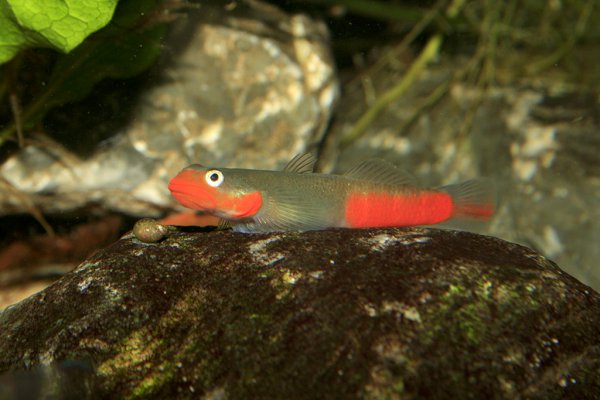
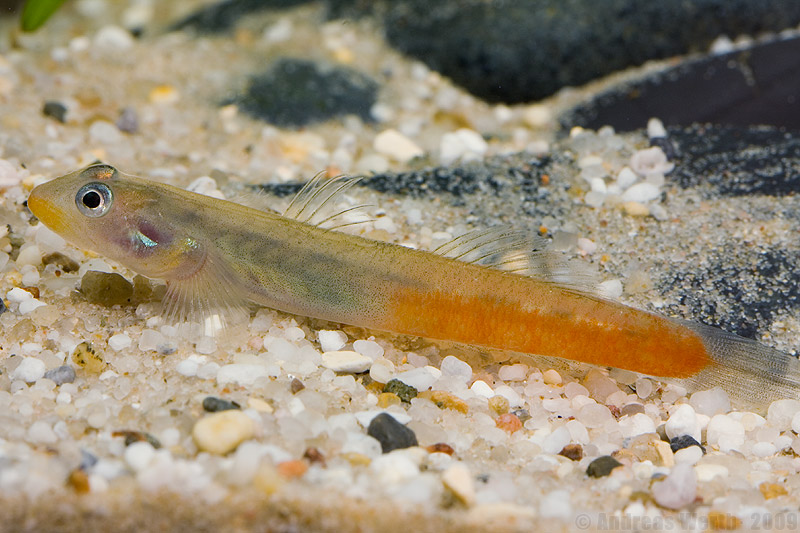
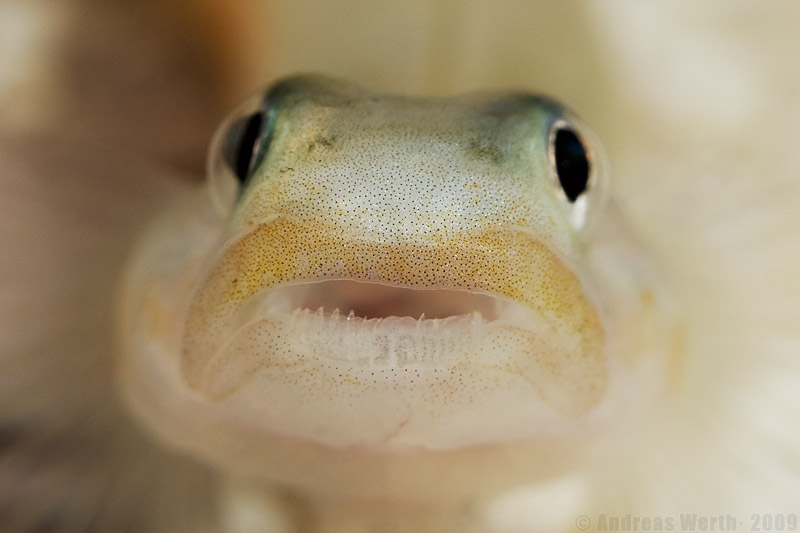
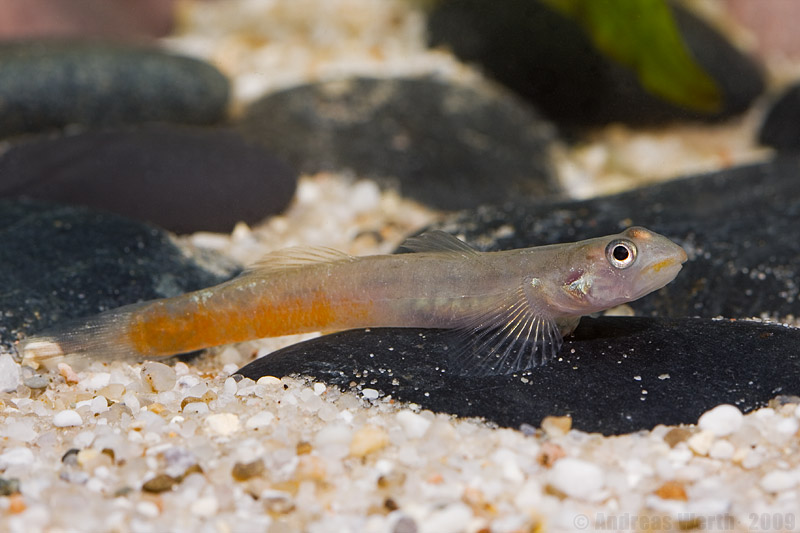
雄鱼不成对鳍较长,第一背鳍明显延长,颌部更发达,生殖突偏锥形;雌鱼相关鳍不延长,生殖突较矩形。
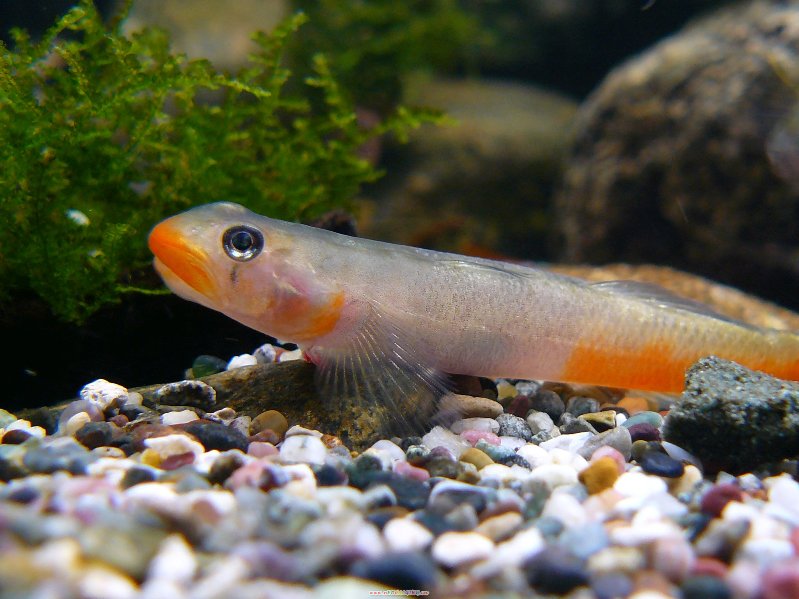
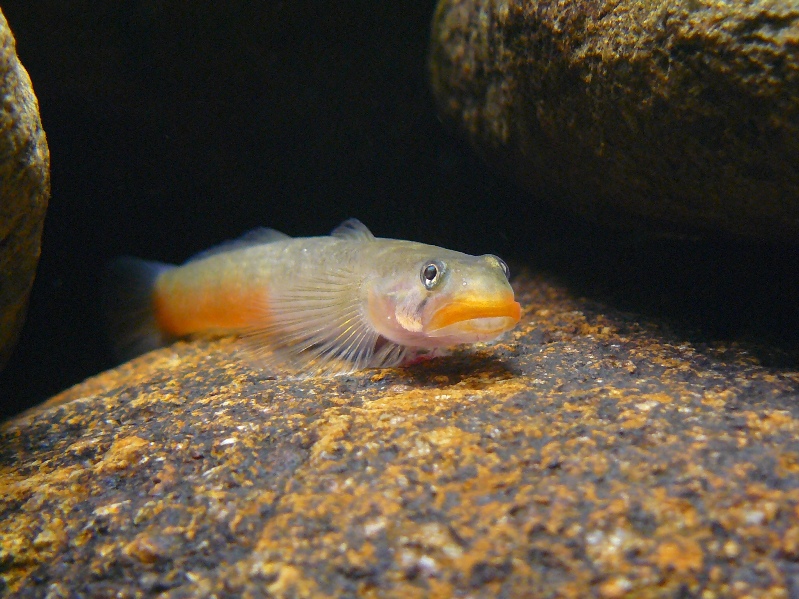
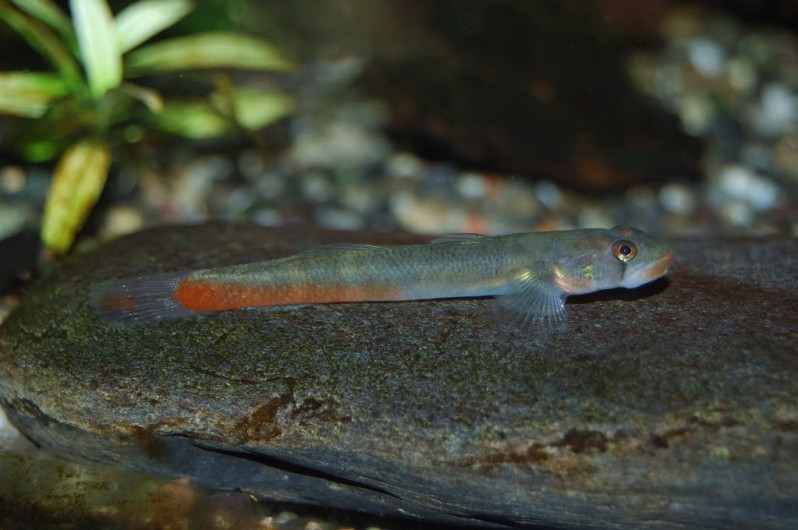
优势雄鱼头下部与身体后下部橙色更明显,弱势雄鱼可能接近雌鱼朴素的颜色,不能单靠橙色少就断定为雌鱼。
繁殖
有求偶和偶发产卵观察,但尚缺可采用的完整人工育成流程。同属鱼具有两侧洄游生活史,成鱼在淡水溪流产卵,初孵仔鱼漂流下海,在海水环境发育后再上溯,有时需越过瀑布。
这种早期海水阶段使育苗不同于全程淡水的吻虾虎,不能把成鱼淡水饲养条件直接等同于全程育苗水质。
补充说明
贸易中常误标为 Sicyopus jonklaasi,但后者是斯里兰卡特有种。本种雄鱼第三或第四背鳍鳍条形成丝状延伸;第一背鳍下的小鳞较稀疏,雄鱼为栉鳞、雌鱼为圆鳞。
属级分类历经调整,外观近似与共享爬岩行为都不足以确认种名,可靠产地和形态细节需一起使用。
图片
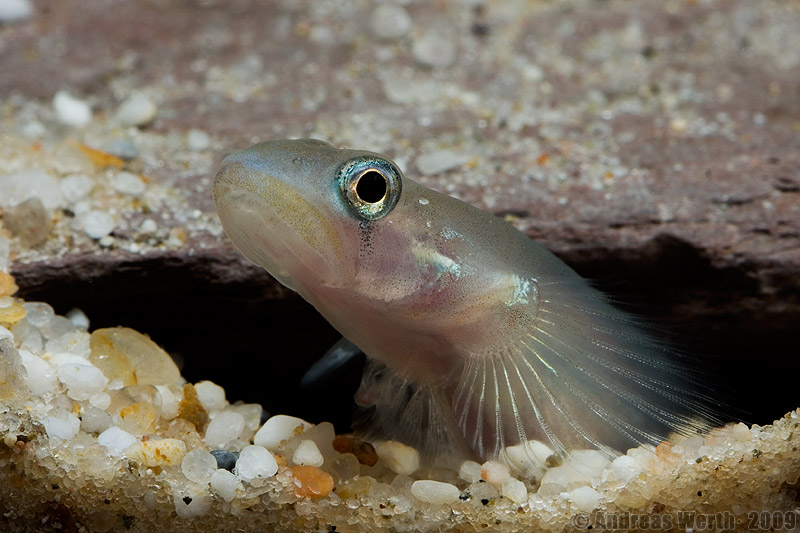
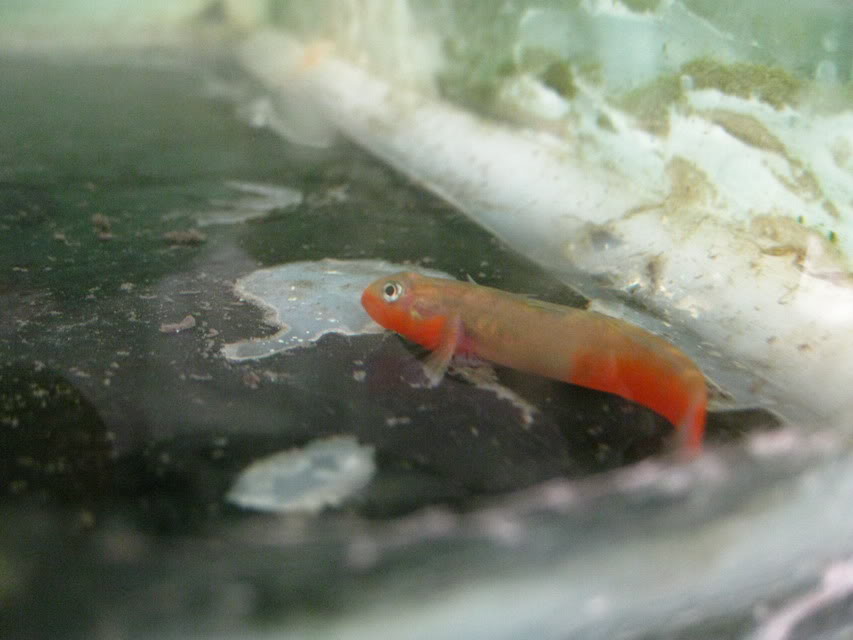
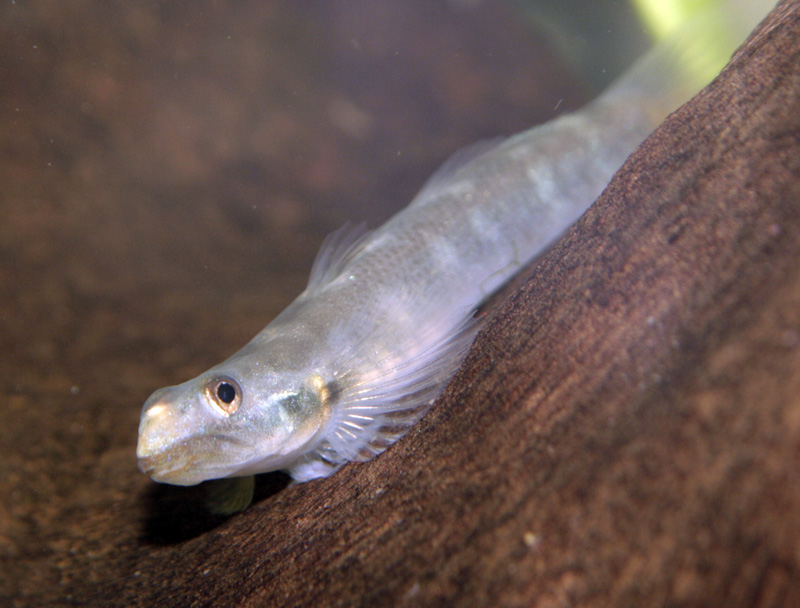
图片来自 SeriouslyFish,版权归各摄影者所有。
English
Overview
Described from Halmahera, Sicyopus exallisquamulus is often sold under the name of a Sri Lankan species. Its rock-climbing-goby appearance should not be mistaken for evidence of an algae-grazing diet. Small live and frozen foods are central to captive feeding.
Distribution & habitat
The type origin is Halmahera in Indonesia's Maluku Islands. A wider range in Maluku or elsewhere in Indonesia is possible, with similar Javan fish of particular interest, but these records are not confirmed equivalent populations.
Members of the genus generally occupy short tropical island streams, often above falls or cataracts. Bedrock, stones, and some leaf litter occur beneath clear, oxygenated water supporting biofilm. This is a broader habitat description rather than a verified account of every locality.
Aquarium setup
Maintain clean, highly oxygenated water using substantial filtration, circulation, or aeration. Around ten to fifteen aquarium volumes per hour is suggested, with five to ten feasible when oxygenation is excellent. Torrent-like conditions throughout are unnecessary.
Cover sand, gravel, or a mixture with rounded water-worn rocks. Multiple males need refuges and broken sight lines. Use aged wood rather than fresh pieces that heavily stain the clear water. Hardy ferns or Anubias can be tried.
Introduce fish only to a mature system and change roughly 30–50% weekly. A tight cover is essential because the fish climb glass and jump readily. Increase surface agitation toward the warmer end of the suitable range.
Diet & feeding
It does not graze aquarium biofilm but accepts small live or frozen bloodworms, Artemia, and water fleas, suggesting specialized predation. Dry foods are reportedly ignored. Algae-coated rocks or flakes alone are therefore inadequate provision.
Small live invertebrates may be prey. Reports of shrimp kept with other members of the genus do not establish shrimp safety for this species.
Behaviour & compatibility
Appropriate peaceful upper-water stream fishes can be considered. Avoid large companions, forceful feeders, and strongly territorial bottom-dwelling cichlids. Other stream gobies or small loaches require assessment of behavior and space.
Territoriality in the genus appears mainly loose and breeding-related. Females tend to form small groups, making one male with at least two females a reasonable starting arrangement. Additional males need more room, cover, and sufficient food.
Sexual dimorphism
Males have longer unpaired fins, a conspicuously extended first dorsal, a more developed jaw, and a conical genital papilla. Females lack the fin extensions and have a more rectangular papilla.
Strong orange below the head and toward the rear underside develops fully in dominant males. Subordinates can resemble plain females, making orange intensity alone unreliable.
Breeding
Courtship and occasional spawning have been observed, but a dependable complete captive-rearing method is unavailable. Related Sicyopus follow an amphidromous life history: adults spawn in freshwater streams, drifting larvae reach the sea, and developing young later migrate upstream, sometimes climbing waterfalls.
That early marine phase distinguishes rearing from the wholly freshwater cycle of some stream gobies. Adult freshwater conditions should not be assumed sufficient for the entire larval period.
Notes
The frequently misapplied name Sicyopus jonklaasi belongs to a Sri Lankan endemic. Male dorsal rays three or four become filamentous in this species. Small, widely spaced scales beneath the first dorsal are ctenoid in males and cycloid in females.
Revised generic relationships and shared climbing behavior make dependable locality information and anatomical details more useful than a superficial trade resemblance.
来源
- https://www.seriouslyfish.com/species/sicyopus-exallisquamulus(抓取于 2026-10-10)
sicyopus-exallisquamulus · 文件: data/species/sicyopus-exallisquamulus.md · 状态: 草稿