盘鳍瓢眼鰕虎鱼
概要
| 字段 | 值 |
|---|---|
| 类别 | 鱼 |
| 学名 | Sicyopus discordipinnis |
| 别名 | 盤鰭瓢眼鰕虎魚 |
| 分类 | 虾虎鱼目 Gobiiformes › 虾虎鱼科 Gobiidae › Sicyopus |
| 水体 | 淡水 |
| 原产地 | 巴布亚新几内亚 |
| 成体体长 | 3 cm |
| 饲养难度 | 中等 |
| 最小水体 | 54 L |
| 最小缸长 | 60 cm |
| 群居方式 | 群游 |
| 水流偏好 | 高 |
| 特征 | 会跳缸: 是 |
| 外部数据 | seriouslyfish sicyopus-discordipinnis;fishbase 52098 |
水质参数
| 参数 | 耐受范围 | 最适范围 | 单位 |
|---|---|---|---|
| 水温 | 22–26 | — | °C |
| pH | 6–7.5 | — | — |
| 总硬度 | 2–12 | — | dGH |
概述
盘鳍瓢眼鰕虎鱼(Sicyopus discordipinnis)是一种来自巴布亚新几内亚及附近岛屿的小型溪流鱼,常规贸易中少见。它的食性和雌雄差异仍有推测成分,不能把同属鱼的经验全部视为本种已经验证的结论。
分布与栖息地
记录来自新几内亚北部,以及诺曼比、新汉诺威和布干维尔等岛屿,模式产地在韦瓦克东南的溪流。
同属鱼多生活在热带岛屿短小的沿海溪流,常见石质河床、巨石和瀑布,水清澈而含氧充足。石面生物膜丰富,岸边植被与落叶常见,水草通常不多;这些是属级生态背景。
饲养环境
使用稳定成熟的缸,以沙或细砾铺底,加大小圆石,其中一些可稍抬高并留平坦顶面。造景应同时提供藏身点和视线隔断。陈化沉木与耐受环境的水草可选,大量染水的新木不适合这种清水溪流布景。
过滤、造流和增氧共同维持高溶氧,建议每小时循环十至十五倍缸水,增氧良好时五至十倍也可考虑。每周换水三成至一半,暖水时加强水面扰动。它能够攀爬玻璃和跳跃,缸盖及开口必须封好。
食性与喂食
推测它与同属成员一样偏向捕食小动物,但本种具体摄食资料有限,不能据此宣称已经确认其完整食谱或干饲料接受程度。
习性与混养
可考虑温和、适应高溶氧环境的中上层小鱼。避开大型鱼、强占底层领地或抢食凶猛的伙伴,多数慈鲷不适合。雄鱼可能有领地性,应以足够空间与石隙分隔;按属级群体经验,可从一雄、至少两雌的小群开始。
雌雄区分
雌鱼可能比雄鱼颜色素淡,但这一差别尚未得到确认,不宜单凭体色就断定性别。
繁殖
瓢眼鰕虎鱼属有复杂的两侧洄游生活史:成鱼在溪流生活和繁殖,幼体下漂到海中发育,之后再上溯。属内虽有缸内求偶、产卵记录,完整养大鱼苗仍是困难环节,不能用普通淡水育苗流程替代。
补充说明
可能只有少数私人采集者饲养过本种。近缘虾虎鱼容易因外观相似和商品标签混乱而误认,产地和形态证据比贸易名称更可靠。
图片
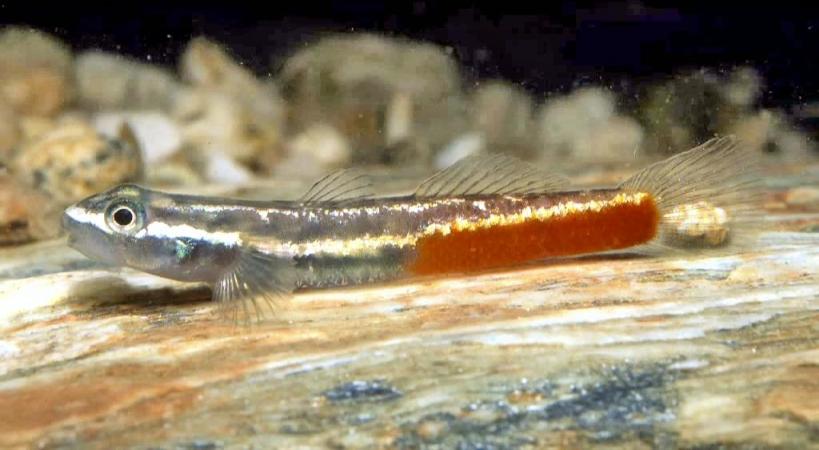
图片来自 SeriouslyFish,版权归各摄影者所有。
English
Overview
Sicyopus discordipinnis is a small stream goby from Papua New Guinea and neighboring islands. It is not a routine aquarium trade species. Several details, including diet and sex differences, remain tentative rather than established from extensive captive experience.
Distribution & habitat
Records include northern New Guinea, Normanby, New Hanover, and Bougainville. The type locality is a creek southeast of Wewak.
Members of the genus generally occupy short coastal streams on tropical islands, sometimes above waterfalls. Clear oxygenated water, rock beds, boulders, and abundant surface biofilm characterize these settings. Bankside vegetation and fallen leaves may be plentiful while submerged plants are scarce. This provides genus-level ecological context rather than a complete site description for this species.
Aquarium setup
Choose a mature aquarium with stable conditions. Cover sand or gravel with rounded stones, including some raised rocks with flat upper surfaces. Create both hiding places and interrupted sightlines. Seasoned wood and hardy plants are optional; strongly tannin-releasing new wood can darken a layout intended for clear-water stream fish.
Combine filtration and aeration to maintain oxygen. Suggested circulation is approximately 10–15 tank volumes an hour, with 5–10 feasible where oxygenation is good. Change around 30–50% of the water weekly and increase surface agitation at warmer temperatures. Secure the cover and all openings against climbing and jumping fish.
Diet & feeding
A predatory diet resembling that of related species is considered probable. This does not establish a complete species-specific menu or confirm acceptance of prepared foods.
Behaviour & compatibility
Carefully selected peaceful open-water fishes may be suitable. Avoid large companions, aggressive feeders, and fishes that strongly defend the lower aquarium, including most cichlids. Males may show territorial behavior, so provide space and separated shelters. Genus-level guidance suggests starting with one male and at least two females.
Sexual dimorphism
Females are expected to be less colorful, but this remains unconfirmed. Color alone is not a secure sexing method.
Breeding
The genus has an amphidromous life cycle: adults reproduce in streams, larvae move downstream into marine conditions, and developing juveniles eventually return upstream. Courtship and spawning observations do not amount to a reliable aquarium rearing procedure through all stages.
Notes
A few private collectors may have kept this fish. Similar appearance, unreliable labeling, and absent locality information make identification difficult among these gobies.
来源
- https://www.seriouslyfish.com/species/sicyopus-discordipinnis(抓取于 2026-10-10)
sicyopus-discordipinnis · 文件: data/species/sicyopus-discordipinnis.md · 状态: 草稿