Sewellia sp. 'SEW03'
概要
| 字段 | 值 |
|---|---|
| 类别 | 鱼 |
| 学名 | Sewellia sp. 'SEW03' |
| 分类 | 鲤形目 Cypriniformes › 腹吸鳅科 Gastromyzontidae › Sewellia |
| 水体 | 淡水 |
| 原产地 | 越南中部顺化一带,贸易个体产地尚未确认 |
| 成体体长 | 6 cm |
| 饲养难度 | 中等 |
| 最小水体 | 68 L |
| 最小缸长 | 75 cm |
| 群居方式 | 群游 |
| 水流偏好 | 高 |
| 特征 | 会跳缸: 是 |
| 外部数据 | seriouslyfish sewellia-sp-sew03 |
水质参数
| 参数 | 耐受范围 | 最适范围 | 单位 |
|---|---|---|---|
| 水温 | 20–24 | — | °C |
| pH | 6–7.5 | — | — |
| 总硬度 | 1–10 | — | dGH |
概述
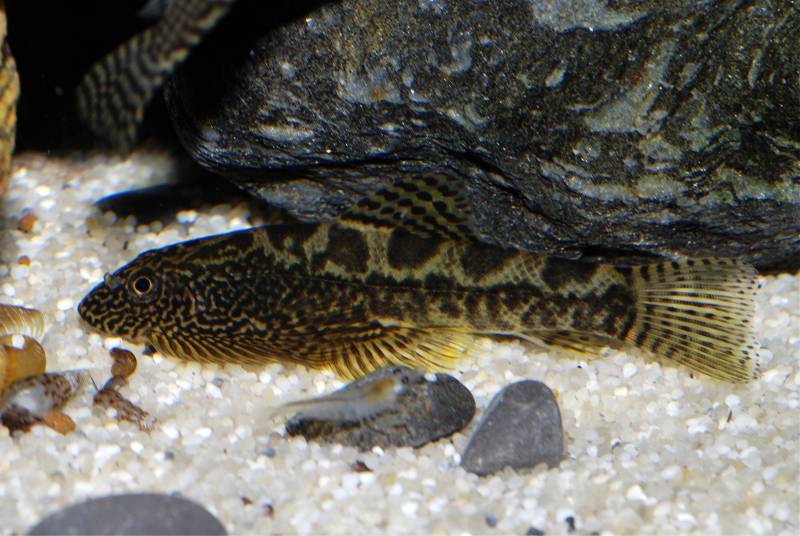
Sewellia sp. ‘SEW03’ 常与 SEW02 混批进口,外形接近但腹鳍和臀鳍间看不出明显空隙,身份仍未确定。饲养重点是充氧水流、成熟藻膜和持续食物供应,而不只是增加过滤器功率。
分布与栖息地
可能来自越南中部顺化地区,贸易来源尚未获得确认。同属鱼典型栖地是清澈、浅而急的溪流上游,砂砾、大石和裸岩构成主要底部;日照充足的石面可形成丰富附着生物。
饲养环境
布置足够的石面供啃食,并使用大容量过滤和造流、气石等设备保持洁净高溶氧水体;可参考每小时 15–20 倍缸水量的循环。照明要能维持藻类生长,规律换水时保留多数表面的生物膜。
老沉木、适应力强的附生水草和外露过滤海绵都能增加遮蔽或觅食面。新沉木若明显染水,会削弱照明效果。新开缸不可直接放鱼,缸盖须严密,防止其沿玻璃爬出。
食性与喂食
主要啃食底部藻类及伴生微生物,可能兼食遇到的昆虫幼体。优先维持软绿藻和硅藻,不把难啃的黑毛藻当作主要食物。蔬菜和螺旋藻配制的凝胶饵可作补充;若同缸食藻鱼多,可单独培育藻石并定期交换。
消瘦的新鱼需特别留意,严重虚弱后不容易恢复。恢复期要持续提供合口食物,减少抢食压力。
习性与混养
同属鱼常以较大群体出现,可从六尾以上饲养,以减轻胆怯并分散优势个体的压力。抢占觅食面时会发生抬身、腹部相向的对峙,雄鱼通常更占优势。
对外形不同的鱼往往较宽容,伙伴仍须适应急流和高溶氧。谨慎搭配其他吸鳅及同一区域觅食的底栖鱼,胆小者容易缺食;混养宜有较大底面积、复杂布局及丰富藻面。
雌雄区分
成熟雄鱼吻较方、体形较瘦,胸鳍从体侧近直角展开,胸鳍前部鳍条及头背可见柔软突起。雌鱼较宽,吻部到胸鳍的外缘更顺滑连贯。
繁殖
可用同属经验作尝试:准备成熟的较粗圆砾、藻石和气动海绵过滤,砾缝可隔开亲鱼与卵,也供幼鱼躲藏和觅食。偏凉换水可能起到诱发作用,但这些方法不代表 SEW03 已有独立成功记录。
同属的求偶包括雄鱼追逐、绕行及接触雌鱼,随后结对升入水流排卵。早期幼鱼不能像成鱼一样牢固贴附,需微小活饵;能到砾石上方觅食后再用丰年虾无节幼体和微虫。清理外滤时先检查是否藏有幼鱼。
图片
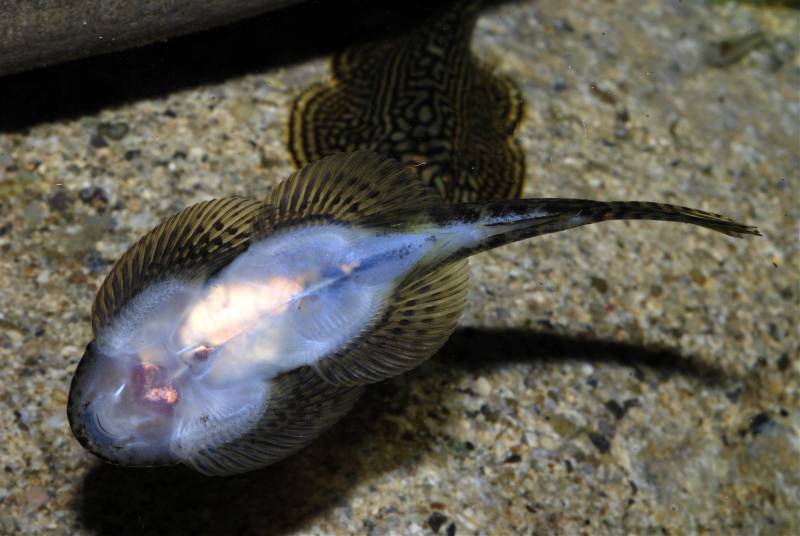
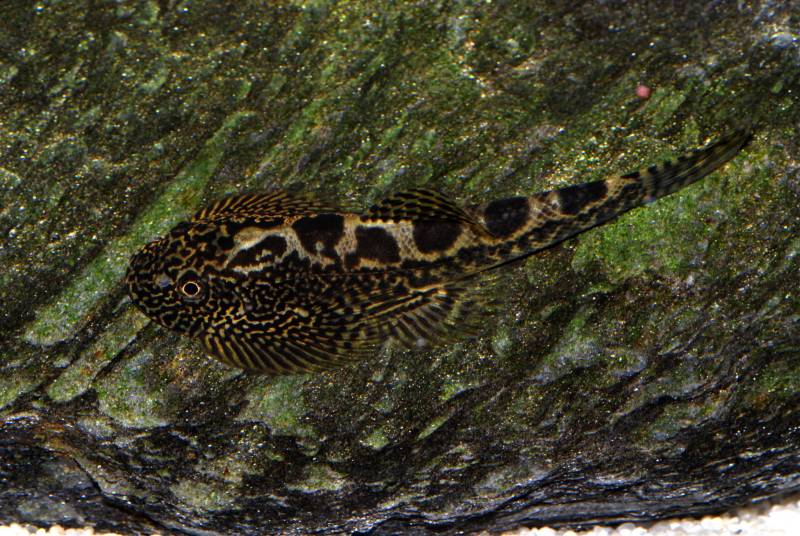
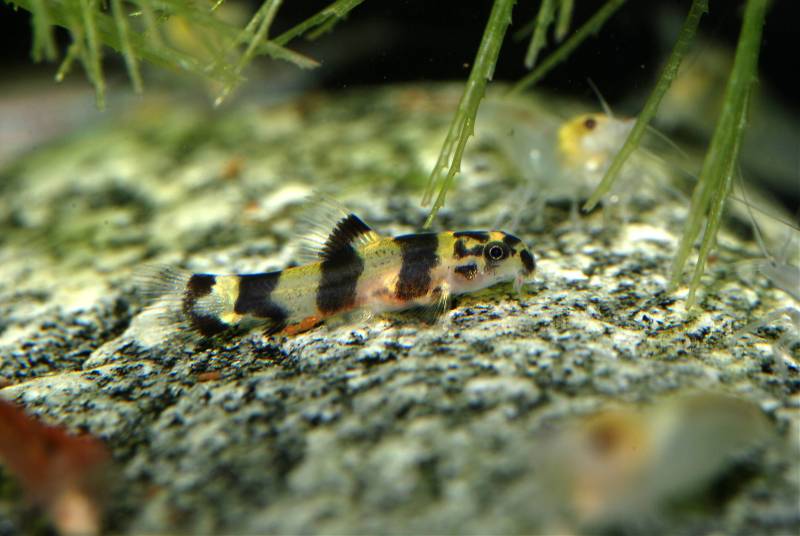
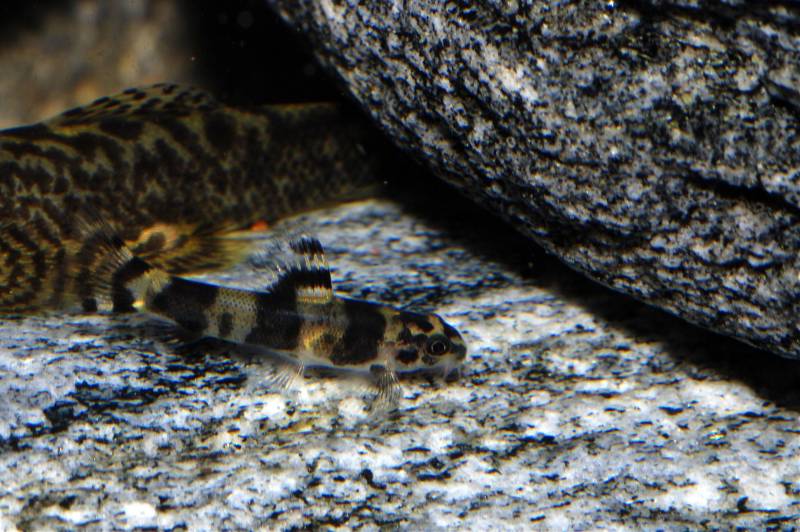
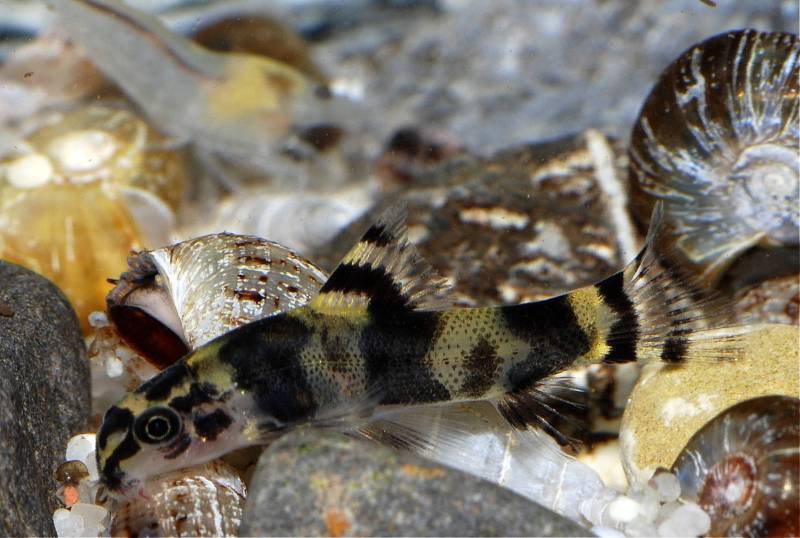
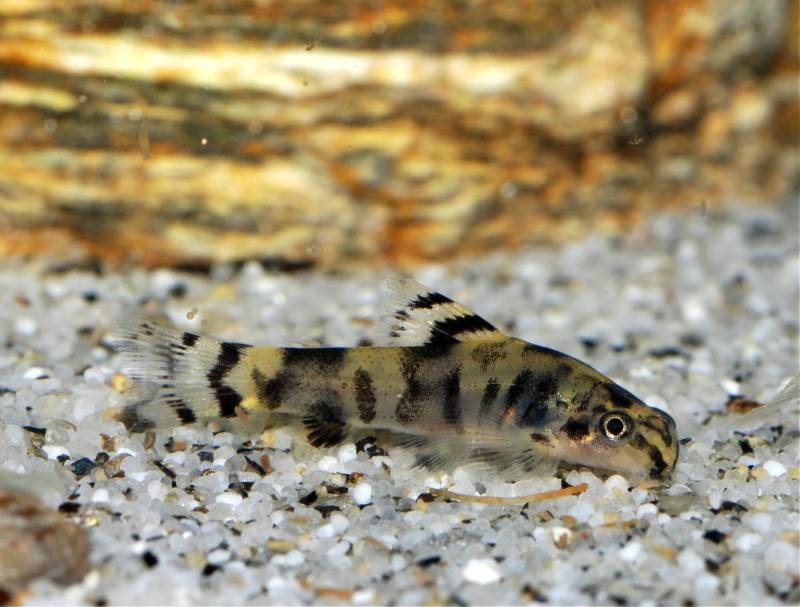
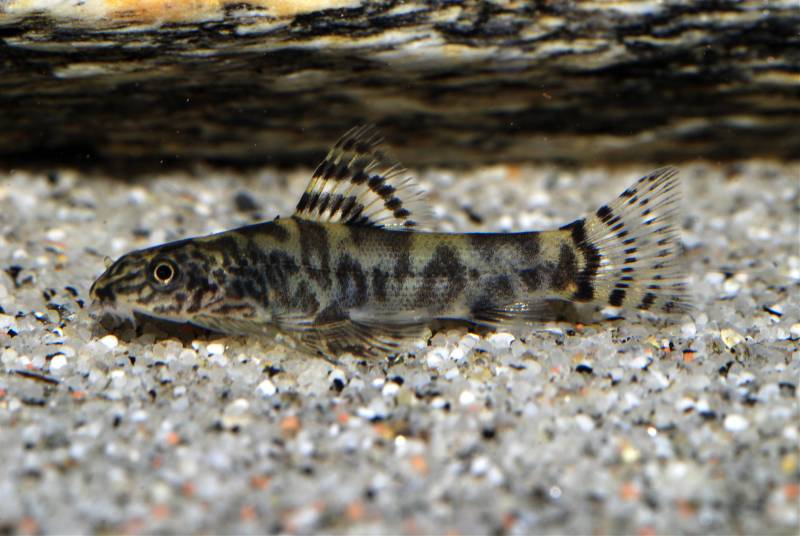
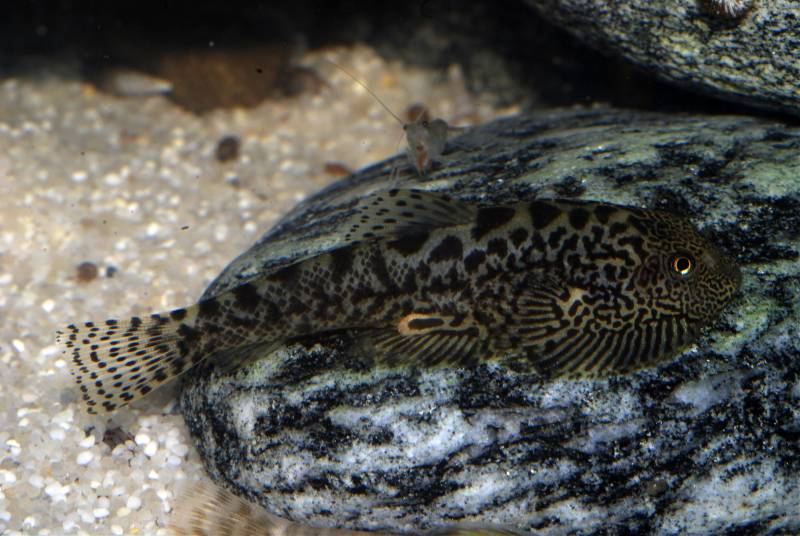
图片来自 SeriouslyFish,版权归各摄影者所有。
English
Overview
Often imported alongside SEW02, Sewellia sp. ‘SEW03’ remains unidentified. Its pelvic and anal fins lack an obvious intervening gap. Successful care depends on mature food-bearing surfaces as well as strong circulation and oxygenation.
Distribution & habitat
A Hue-area origin in central Vietnam is suspected for traded fish, rather than firmly established. Typical habitats of the genus are clear, shallow upland streams over rock, sand, and gravel. Well-lit submerged surfaces support dense communities of attached organisms.
Aquarium setup
Arrange ample stone surfaces for grazing and use substantial filtration supported by pumps or aeration. Turnover of roughly 15–20 aquarium volumes hourly is a useful reference. Combine regular water changes with lighting that sustains algae, preserving biofilm across most surfaces.
Old wood, hardy attached plants, and exposed filter sponges add shelter or grazing opportunities. Avoid strongly staining fresh wood, which reduces light penetration. Wait for biological maturity before stocking and secure the cover against glass-climbing escapes.
Diet & feeding
The main natural food is attached algae together with its microbial community; taking insect larvae is considered probable. Maintain diatoms and soft green algae rather than relying on tough brush growth. Vegetable and spirulina gel mixtures are useful supplements. In heavily grazed aquariums, grow spare algae-covered stones separately and rotate them.
Emaciated arrivals require special attention. Recovery can be difficult, so keep appropriate food continuously available while preventing competition.
Behaviour & compatibility
A group of six or more follows the genus’s tendency to form aggregations and helps distribute social pressure. Disputes over feeding sites may involve raised bodies and belly-to-belly displays, with males usually more dominant.
Dissimilar fishes are generally tolerated, provided they suit the current and oxygen regime. Other sucker-bodied loaches and bottom grazers may face serious competition. Give such mixtures ample floor space, structure, and food-bearing surfaces, especially when some species are shy.
Sexual dimorphism
Mature males are slimmer with a square snout and pectorals extending almost directly sideways. Soft tubercles occur on the front pectoral rays and upper head. Females have a broader outline, with a smoother contour between snout and fins.
Breeding
A trial based on related species can use coarse rounded gravel that is already biologically mature, algae-bearing rocks, and an air-powered sponge filter. Gravel spaces separate eggs from adults and shelter feeding fry. Cooler replacement water may stimulate activity, but these techniques are not an independent success record for SEW03.
Courtship in the genus includes pursuit, circling, and contact before the pair rises into the flow to spawn. Young lack the adults’ strong attachment ability. Begin with microscopic live foods and progress to Artemia nauplii and microworms as they forage above the gravel. Inspect canister filters for young before cleaning.
来源
- https://www.seriouslyfish.com/species/sewellia-sp-sew03(抓取于 2026-10-10)
sewellia-sp-sew03 · 文件: data/species/sewellia-sp-sew03.md · 状态: 草稿