白锯脂鲤 · Black Piranha/Rhom
概要
| 字段 | 值 |
|---|---|
| 类别 | 鱼 |
| 学名 | Serrasalmus rhombeus |
| 别名 | 黑锯脂鲤、白鋸脂鯉、黑鋸脂鯉 |
| 分类 | 脂鲤目 Characiformes › 锯鲑脂鲤科 Serrasalmidae › Serrasalmus |
| 水体 | 淡水 |
| 成体体长 | 45 cm |
| 饲养难度 | 中等 |
| 最小水体 | 425 L |
| 最小缸长 | 210 cm |
| 群居方式 | 独居 |
| 外部数据 | seriouslyfish serrasalmus-rhombeus;fishbase 11970 |
| 原产地 | 南美洲北部多国有记录,但真实范围及种群归属有争议 |
| 食性 | 肉食 |
| 特征 | 吃小鱼: 是 |
| 繁殖方式 | 附着产卵 |
水质参数
| 参数 | 耐受范围 | 最适范围 | 单位 |
|---|---|---|---|
| 水温 | 22.2–27.8 | — | °C |
| 总硬度 | 1–20 | — | dGH |
概述
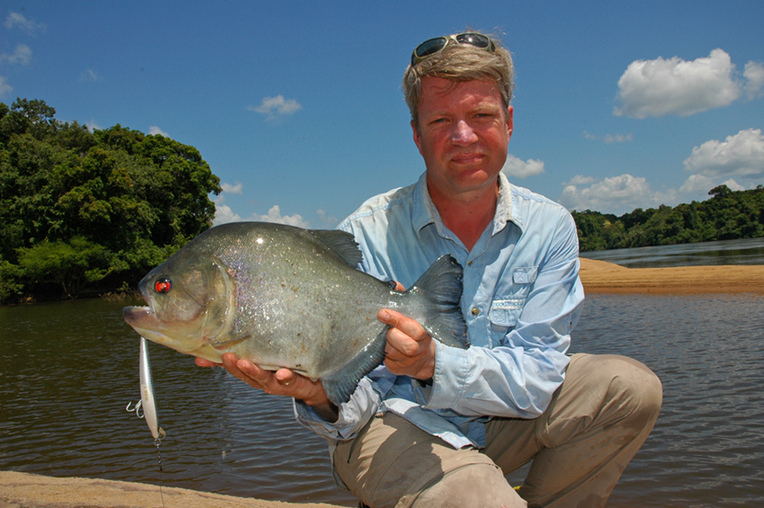
白锯脂鲤(Serrasalmus rhombeus)也常被称为黑色食人鱼,成熟个体深红色眼睛较醒目。各地鱼在体形、颜色和最终大小上差异很大,可能涉及尚未厘清的种群或种界;饲养应以单条为原则。
分布与栖息地
传统记录遍及委内瑞拉、圭亚那、苏里南、法属圭亚那、哥伦比亚、厄瓜多尔、秘鲁、玻利维亚和巴西,但真实分布有争论,部分产地可能实际上属于其他近似种。
成鱼常在较大、较深的河道及急滩附近活动,幼鱼多在安静、植被密集的区域。白水环境个体通常较浅色,清水或黑水型往往更暗。
饲养环境
单条成鱼至少约 210 × 45 cm 底面积。维持充分供氧,用砂底及沉木、树根提供部分遮蔽,也可尝试水草,但可能被啃。
必须保持清洁,每周换水最多约一半。加热棒宜外置或接在过滤管路中;若留在主缸,应使用坚固护罩,防止鱼咬设备。
食性与喂食
野外机会性摄食鱼鳍、鱼肉、小鱼、昆虫和甲壳动物,也会吃腐肉。其他近似种吃植物材料的记录不能直接当成本种已确认食性。
多数能逐渐接受非活饵。幼鱼可喂红虫、水蚯蚓、丰年虾和碎虾肉;成鱼可吃较大贝肉、虾、鱿鱼块、鱼肉及蚯蚓,通常每周两至三餐即可。新到鱼可能暂时拒食,要关注适应情况,不必依赖有传病风险的活饵鱼;避免大量陆生动物肉类。
习性与混养
不适合与其他鱼共养,同种间也可能持续争斗至只剩一条。与硬甲鲶鱼或同种短期共存的个案不能作为长期安全保证。
雌雄区分
缺少可靠的常规外部差异,仅繁殖状态雌鱼通常更丰满,不能仅凭平时体形判别。
繁殖
人工繁殖极少,空间不足造成互相攻击是主要障碍之一。历史上一处动物园的大型密植设施曾观察到鱼在水草莫丝中产卵并守护周围区域,卵随后移出单独育苗。
部分幼鱼一年后曾被放回成鱼设施,据报道起初得到容忍,长至约 15 cm 后又遭攻击。这是特定案例,不代表亲鱼与后代能长期稳定同养。
补充说明
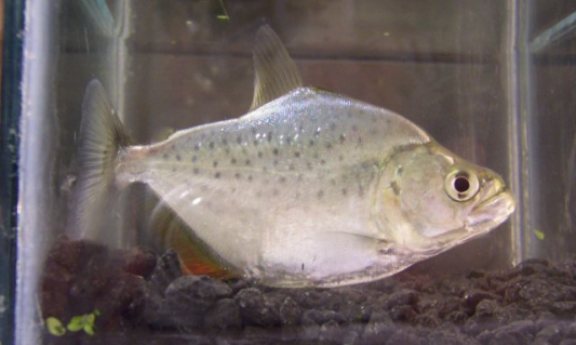
幼鱼尚未出现成熟红眼时很容易误认;“钻石”“高背”“全黑”等商品名也可能混合产地和外观概念。不要只靠商家产地标签或单一颜色决定身份。
图片
图片来自 SeriouslyFish,版权归各摄影者所有。
English
Overview
Serrasalmus rhombeus is known under both black- and white-piranha names. Deep red eyes characterize mature fish, but geographic forms differ markedly in shape, color, and eventual size. Unresolved population or species boundaries may be involved. Individual housing is the appropriate default.
Distribution & habitat
Traditional records span much of northern South America, but the actual range is disputed and some localities may concern other species.
Adults favor larger, deeper channels and areas near rapids. Young more often occupy quiet, densely vegetated margins. Fish from turbid whitewater tend to be paler than clearwater or blackwater forms.
Aquarium setup
A single adult needs a footprint around 210 × 45 cm or larger. Supply ample oxygen, sand, and some wood or roots for shelter. Plants can be attempted but may be bitten.
Excellent water quality is necessary, with weekly changes up to about half the volume. External or inline heating reduces opportunities for equipment damage; a heater left inside needs a strong guard.
Diet & feeding
Wild fish opportunistically consume fins, flesh, small fishes, insects, crustaceans, and carrion. Plant consumption established for certain relatives should not automatically be attributed to this species.
Most individuals gradually accept nonliving foods. Young can receive worms, brine shrimp, and chopped shrimp; adults take larger shellfish, shrimp, squid, fish flesh, and earthworms. Two or three meals weekly generally suffice after maturity. Newly introduced fish may initially refuse food and require observation during adjustment. Avoid unnecessary feeder fish and large quantities of terrestrial meat.
Behaviour & compatibility
Mixed housing is unsuitable, and fighting between conspecifics may continue until only one remains. Isolated accounts of coexistence with armored catfishes or other members of the species do not establish long-term safety.
Sexual dimorphism
Dependable routine external differences are lacking. Females in spawning condition are generally fuller, but ordinary body shape alone is inconclusive.
Breeding
Captive reproduction is rare, with aggression and insufficient space major obstacles. A historical zoo spawning occurred in a large planted installation, with eggs deposited among aquatic moss and the surrounding area defended. Eggs were removed for separate rearing.
Some young were returned a year later and reportedly tolerated initially, then attacked after reaching around 15 cm. This individual account does not establish stable cohabitation between parents and offspring.
Notes
Juveniles without the mature red eye are easily misidentified. Diamond, high-back, and jet-black trade labels may mix locality claims with appearance. Neither a seller's locality nor one color feature should be used alone to determine identity.
来源
- https://www.seriouslyfish.com/species/serrasalmus-rhombeus(抓取于 2026-10-10)
serrasalmus-rhombeus · 文件: data/species/serrasalmus-rhombeus.md · 状态: 草稿