Serrasalmus maculatus · Mac
概要
| 字段 | 值 |
|---|---|
| 类别 | 鱼 |
| 学名 | Serrasalmus maculatus |
| 分类 | 脂鲤目 Characiformes › 锯鲑脂鲤科 Serrasalmidae › Serrasalmus |
| 水体 | 淡水 |
| 成体体长 | 21 cm |
| 饲养难度 | 中等 |
| 最小水体 | 243 L |
| 最小缸长 | 120 cm |
| 外部数据 | seriouslyfish serrasalmus-maculatus;fishbase 58140 |
| 原产地 | 哥伦比亚、秘鲁、巴西、玻利维亚、巴拉圭、乌拉圭、阿根廷 |
| 食性 | 肉食 |
| 特征 | 吃小鱼: 是 |
| 繁殖方式 | 产卵 |
| 领地性 | 是 |
水质参数
| 参数 | 耐受范围 | 最适范围 | 单位 |
|---|---|---|---|
| 水温 | 21.1–30 | — | °C |
| 总硬度 | 5–15 | — | dGH |
概述
Serrasalmus maculatus 是体型相对可控、但仍需专门饲养的水虎鱼。它会捕食小鱼和啃咬其他鱼的鳍、肉,默认应单条养,不宜把偶见的混养成功当作普遍规律。
分布与栖息地
从巴西西部瓜波雷河描述,现有范围涉及亚马孙、巴拉圭及巴拉那河水系,记录国家包括哥伦比亚、秘鲁、巴西、玻利维亚、巴拉圭、乌拉圭和阿根廷。
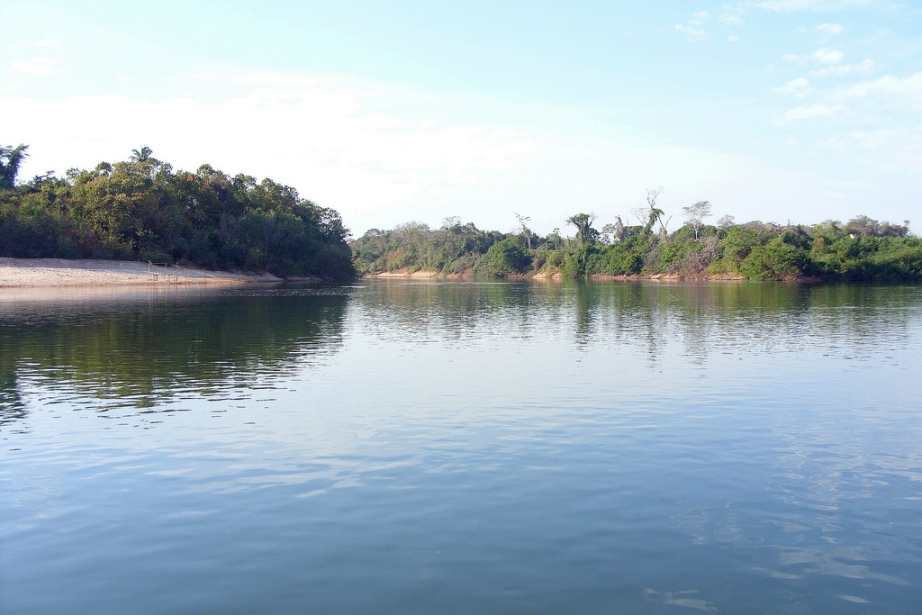
生活在河流、水池和小溪,似偏好岸边或水下植物密集的阴影区。野外曾见约二十条的小群巡视一定范围,这不能直接等同于有限缸体内群养安全。
饲养环境
单条成鱼至少约 120 × 45 cm 底面积,砂底配沉木和根枝供躲藏,维持充分增氧。可尝试种水草,但有被咬的可能。
水质需保持良好,每周部分换水可达约 50%。尽可能外置加热或将加热器装在过滤系统内;缸内设备至少用坚固防护罩,减少被咬坏的机会。
食性与喂食
天然主要利用其他鱼的鳍和肉,也吃小鱼、昆虫及甲壳动物;胃含物研究发现少量植物成分。新到个体可能暂不接受死饵,应观察摄食和体况,逐步适应合适食物。
幼鱼可用红虫、水蚯蚓、丰年虾和切碎虾肉,成鱼给较大块的贝肉、虾、鱿鱼、小型鱼类及蚯蚓。成年后通常每周喂两至三次即可。避免大量牛心、鸡肉等,不必靠饲料鱼喂养,以免带入疾病或寄生虫。
习性与混养
最稳妥是单条专养。与异型、其他鲶鱼或同种群体长期共存的零散报告并不可靠;同种群养争议较大,需要非常有经验的饲养者和远超过单鱼标准的空间。
雌雄区分
没有可靠的常态外观分性方法,临产雌鱼通常腹部较饱满。
繁殖
本种有人工繁殖记录,野外并非只在单一季节产卵,但繁殖需要多套大缸及容纳大量鱼苗的条件,不适合一般混养缸随手尝试。
一份详细经验从超过 750 L 的成熟密植群体缸开始。观察到配对后,雌雄分开调理约两周,再先放雄鱼进入另一种植缸,约一天后引入雌鱼。部分雄鱼会严重咬伤雌鱼,产卵等待期也不同,必须能及时分开。
雄鱼选点并咬断周边植物,但未吃掉;双方在产卵点反复接触。一次约八百至一千二百枚卵,在 28 °C 约五十四至五十八小时孵化,一周内起游,可用丰年虾无节幼体等适口活饵育苗。该例产后移走亲鱼,另有雄鱼留守护卵且强烈驱赶靠近者的观察。
补充说明
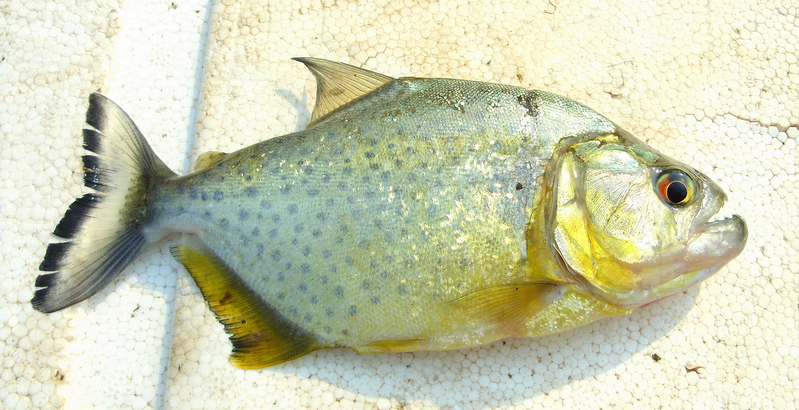
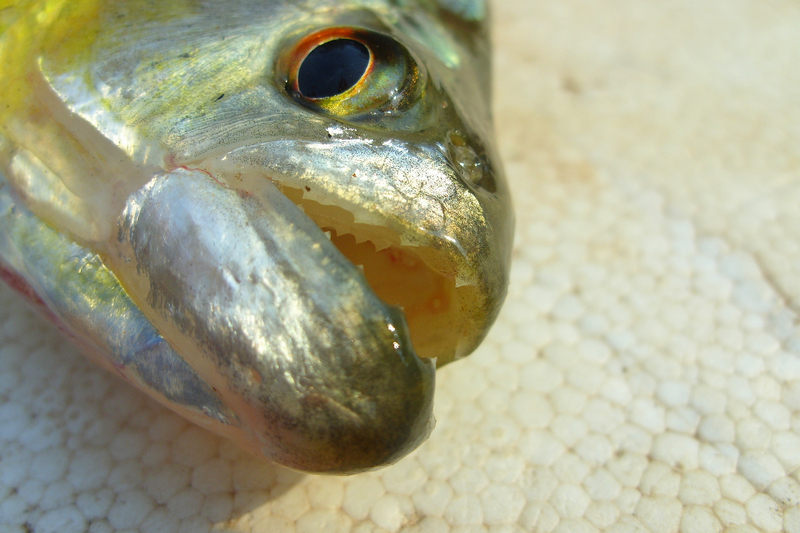
与相似种(Serrasalmus spilopleura)长期有误认,尾鳍近末端黑带及面颊形态可作线索,但相关分类处理仍有争论。商品名「gold piranha」或「golden mac」不能代替种级辨认。
图片
图片来自 SeriouslyFish,版权归各摄影者所有。
English
Overview
Serrasalmus maculatus is a comparatively manageable-sized piranha requiring dedicated accommodation. Predation on small fishes and biting at other fishes' fins make solitary maintenance the default; isolated reports of coexistence do not establish general compatibility.
Distribution & habitat
Originally described from the Guaporé in western Brazil, it is recorded across the Amazon, Paraguay, and Paraná systems in Colombia, Peru, Brazil, Bolivia, Paraguay, Uruguay, and Argentina.
Rivers, pools, and creeks are occupied, apparently with a preference for shaded vegetation-rich margins. Wild groups of roughly twenty have been observed patrolling an area, which does not establish safety in a confined aquarium.
Aquarium setup
A single adult needs about 120 × 45 cm of floor space or more. Sand and woody shelter suit a well-oxygenated layout. Plants can be tried but may be bitten.
Maintain excellent water quality with substantial weekly partial changes, up to roughly 50%. Keep heating outside the display where possible, or use robust guards around vulnerable submerged equipment.
Diet & feeding
Natural feeding includes fins and flesh, small fish, insects, and crustaceans; small quantities of plant material have also appeared in stomach analyses. Newly imported fish may initially reject dead food, so monitor intake and condition during adjustment.
Young fish take bloodworms, Tubifex, Artemia, and chopped shrimp. Adults need larger suitable items, including shellfish, squid, small fish, and earthworms, generally two or three feedings weekly. Avoid substantial mammalian or bird meat and unnecessary feeder fish, which can carry parasites or disease.
Behaviour & compatibility
Keeping one specimen is the prudent standard. Reports of successful combinations with catfish or conspecifics remain uncertain. Group maintenance is disputed and requires extensive experience and much greater accommodation than the single-fish recommendation.
Sexual dimorphism
No dependable routine external distinction is recorded. Females approaching spawning are usually rounder in the abdomen.
Breeding
Captive reproduction is documented, and wild spawning is not strictly seasonal. Attempts demand several large aquaria and capacity for numerous fry.
One detailed account began with adults in a planted aquarium exceeding 750 L. Identified partners were conditioned separately for about two weeks. A male then entered a further planted tank, followed by the female roughly a day later. Male aggression sometimes caused serious injury, and waiting times varied, making separation facilities essential.
The male selected a site and clipped vegetation without consuming it. Repeated contact over that site produced approximately eight hundred to twelve hundred eggs. At 28 °C, hatching took about fifty-four to fifty-eight hours, with free swimming within a week. Young received suitably small live foods, including Artemia nauplii. Adults were removed in that attempt, while other observations describe aggressive paternal guarding of the eggs.
Notes
Confusion with Serrasalmus spilopleura has been longstanding. A dark band near the tail's outer portion and cheek structure offer identification clues, but aspects of the taxonomic treatment remain debated. Golden-mac trade names are not definitive identification.
来源
- https://www.seriouslyfish.com/species/serrasalmus-maculatus(抓取于 2026-10-10)
serrasalmus-maculatus · 文件: data/species/serrasalmus-maculatus.md · 状态: 草稿