长身锯脂鲤 · Pike Piranha
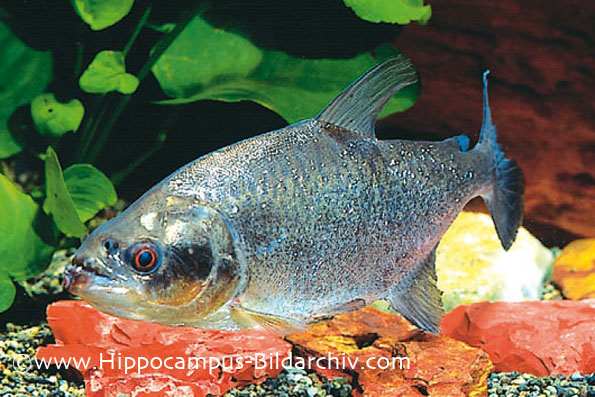
概要
| 字段 | 值 |
|---|---|
| 类别 | 鱼 |
| 学名 | Serrasalmus elongatus |
| 别名 | 長身鋸脂鯉 |
| 分类 | 脂鲤目 Characiformes › 锯鲑脂鲤科 Serrasalmidae › Serrasalmus |
| 水体 | 淡水 |
| 成体体长 | 30 cm |
| 饲养难度 | 中等 |
| 最小水体 | 432 L |
| 最小缸长 | 120 cm |
| 群居方式 | 独居 |
| 外部数据 | seriouslyfish serrasalmus-elongatus;fishbase 11964 |
| 原产地 | 委内瑞拉、厄瓜多尔、秘鲁、玻利维亚和巴西的亚马孙河、奥里诺科河流域 |
水质参数
| 参数 | 耐受范围 | 最适范围 | 单位 |
|---|---|---|---|
| 水温 | 24–28 | — | °C |
| 总硬度 | 0–15 | — | dGH |
概述
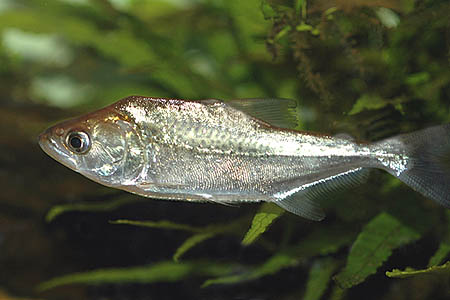
长身锯脂鲤(Serrasalmus elongatus)身体较修长流线,是较易凭体形辨认的食人鱼类。它活动力强、取食鱼鳍和鱼鳞,只适合单条专养,不能将幼鱼的纤细体形当成成年空间需求较低的依据。
分布与栖息地
广布亚马孙河及奥里诺科河流域,涉及委内瑞拉、厄瓜多尔、秘鲁、玻利维亚和巴西。黑水、白水以及草原清水环境均有记录。
幼鱼常靠近由漂浮草本形成的水上草甸,成鱼更常进入主河道较深、有水流的地方,也见于季节性被淹森林和常年湖泊。
饲养环境
长期至少约 120 × 60 cm 底面积。幼鱼和新到鱼适合有植物、树根、枝条及浮水遮蔽的环境,过度空旷容易紧张。成鱼可用砂底、较大沉木及开阔空间布置,维持良好溶氧和水流,照明偏弱至中等。
外滤或底滤回水沿缸长方向布置,轻微扰动水面;合理布局后不一定需要额外造浪。保持非常清洁的水质,每周换水最多约一半。加热棒尽可能外置,或用坚固护罩防咬。
食性与喂食
胃内容物观察提示主要为动物性食物,包括较小鱼类和无脊椎动物,并且明确会大量啃食其他鱼的鳍、鳞。多数个体可逐渐接受非活饵,但新到或较大的鱼可能暂时拒食。
幼鱼可用红虫、水蚯蚓、丰年虾和碎虾肉,成鱼换成贝肉、虾、鱿鱼块、鱼肉及蚯蚓等更大食物,成年后每周两至三餐即可作参考。避免大量陆生肉类,也无需使用有传病风险的活饵鱼。
习性与混养
不适合与其他鱼同养,所谓短期共存经验并不能消除其咬鳍、食鳞风险。它并非群居鱼,同种之间可能持续争斗到只剩一条。
个体性情有差异,有的胆小,有的会主动追咬靠近缸边的手,维护时不要假定熟悉饲主就不会咬。
雌雄区分
以臀鳍形状或尾柄花纹辨别性别的说法尚未得到确认,不能作为可靠判断。
补充说明
大型成鱼会逐渐长得更厚实,轮廓甚至接近菱形。“黑面罩”型眼部有宽黑带,另一些个体胸鳍、喉部及鳃盖下方红橙色较显著;这些差异不应自行解释为不同种或性别。
图片
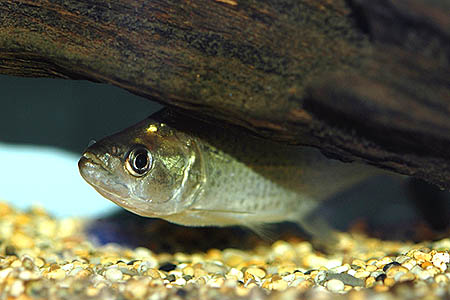
图片来自 SeriouslyFish,版权归各摄影者所有。
English
Overview
Serrasalmus elongatus has an unusually streamlined shape that helps distinguish it from many piranha relatives. It is active and feeds on fins and scales, making single-specimen housing appropriate. A slender juvenile should not be mistaken for a fish with modest adult space requirements.
Distribution & habitat
It occurs in the Amazon and Orinoco basins across Venezuela, Ecuador, Peru, Bolivia, and Brazil. Records include blackwater, whitewater, and clear grassland environments.
Young often occur near floating grassy meadows. Adults tend to use deeper flowing sections of major channels, with additional records from flooded forest and permanent lakes.
Aquarium setup
Provide a long-term footprint around 120 × 60 cm or larger. Juveniles and newly arrived fish benefit from plants, branches, roots, and floating cover. Overly exposed tanks can increase nervousness. Adults suit a sand-bottomed arrangement with substantial wood, open room, good oxygenation, and current under subdued to moderate lighting.
Return filtered water along the tank's length, gently disturbing the surface. Additional pumps are not automatically necessary when circulation is arranged effectively. Keep water exceptionally clean, replacing up to around half weekly. External heating or a sturdy heater guard reduces equipment damage.
Diet & feeding
Stomach observations suggest animal food predominates, including smaller fishes and invertebrates. Heavy consumption of other fishes' fins and scales is established. Most individuals can gradually accept nonliving offerings, although larger or newly transported specimens may initially refuse food.
Young accept worms, brine shrimp, and chopped shrimp. Adults can receive shellfish, shrimp, squid, fish flesh, and earthworms, with two or three meals weekly serving as a reference after maturity. Avoid large quantities of terrestrial meat and unnecessary feeder fish with their disease risks.
Behaviour & compatibility
Other fishes are unsuitable companions. Temporary coexistence does not remove fin- and scale-biting risks. It is not naturally social, and fighting between conspecifics may continue until only one survives.
Individual behavior varies: some remain shy, while others actively pursue hands near the aquarium. Familiarity should not be assumed to prevent a bite during maintenance.
Sexual dimorphism
Proposed differences in anal-fin shape or tail-base markings have not been confirmed as reliable sexing characters.
Notes
Large adults become deeper-bodied and may approach a diamond-shaped outline. A black-mask form develops a broad eye stripe, while other fish show stronger red-orange on the throat, lower gill cover, and pectorals. These differences should not automatically be interpreted as separate species or sexes.
来源
- https://www.seriouslyfish.com/species/serrasalmus-elongatus(抓取于 2026-10-10)
serrasalmus-elongatus · 文件: data/species/serrasalmus-elongatus.md · 状态: 草稿