Serpenticobitis zonata
概要
| 字段 | 值 |
|---|---|
| 类别 | 鱼 |
| 学名 | Serpenticobitis zonata |
| 分类 | 鲤形目 Cypriniformes › 蛇鳅科 Serpenticobitidae › Serpenticobitis |
| 水体 | 淡水 |
| 原产地 | 老挝、泰国 |
| 成体体长 | 5 cm |
| 饲养难度 | 中等 |
| 最小水体 | 68 L |
| 最小缸长 | 75 cm |
| 群居方式 | 群游 |
| 性情 | 温和 |
| 水流偏好 | 高 |
| 外部数据 | seriouslyfish serpenticobitis-zonata;fishbase 50394 |
| 食性 | 杂食 |
水质参数
| 参数 | 耐受范围 | 最适范围 | 单位 |
|---|---|---|---|
| 水温 | 26 | — | °C |
| pH | 6–7 | — | — |
| 总硬度 | 2–10 | — | dGH |
概述
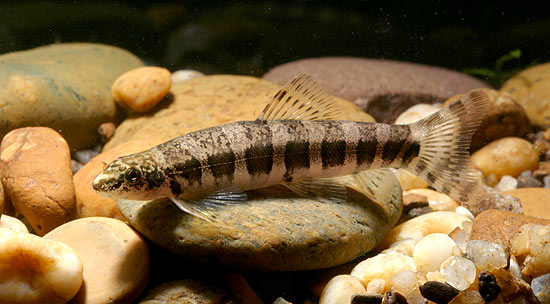
Serpenticobitis zonata 是栖居清澈急流上游的小型鳅,浅色身体上通常有七至八条规则深色竖带,部分个体的浅色间隔内另有细深色条纹。它性情隐蔽,适合高溶氧、干净且有遮蔽物的溪流式水族箱。
分布与栖息地
已知分布包括老挝湄公河中游的 Xe Bangfai、Xe Bang Hiang 两个支流系统,以及泰国东南部尖竹汶府。
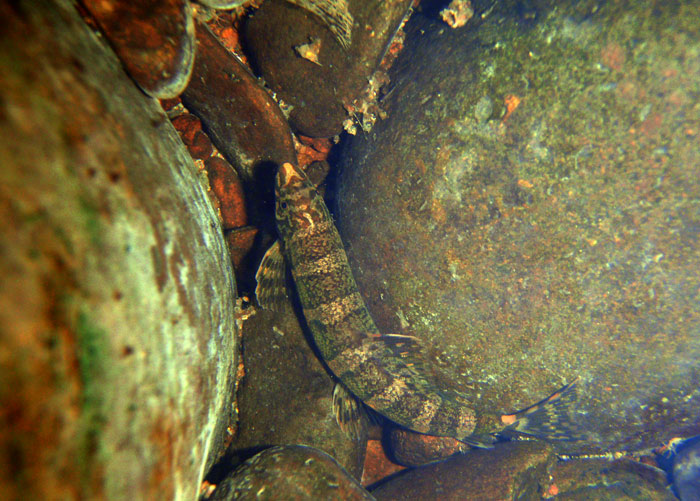
栖息地多为浅而流急的源头溪流或小支流,浅滩之间可夹有潭池或跌水。河床由岩块、细砂和砾石组成,可见岸边植被及局部沉水落叶,真正水生植物通常不多。阳光与高溶氧有利于石面生物膜生长;大雨时水深和流量上升,也可能暂时浑浊。
饲养环境
底面积至少约 75 × 30 cm。用不同大小的岩石、细砾和局部砂地搭配沉木,形成溪流般的遮蔽物与开放通道。耐受力较强的附生水草可固定在布景上,不必勉强种植大量底床水草。
重点是充足溶氧和持续水流,并非制造难以躲避的洪流。按需要组合外滤、造流设备和气石。它不能耐受有机污染物累积,每周约换水 30%–50%,持续维持洁净水体。
食性与喂食
属于杂食鱼,野外食物可能主要是小昆虫、蠕虫、甲壳动物及其他浮游动物,植物性物质与有机碎屑所占比例较小。
缸内可接受适口干粮,但不宜只喂干粮。每天搭配水蚤、丰年虾、红虫等小型活饵或冻饵,更有利于体色和体况。
习性与混养
对同种温和,也似乎更适应有同伴的环境,建议至少四条。性情较隐蔽,加入一两群适应相近流水条件、在开放水域活动的小型鱼,可能使它更愿意出来活动。
部分溪流吸鳅及同样适应流水的鱼可作为候选伙伴,但仍应按具体种类挑选。与体形接近、占据相似空间的其他鳅混养不属首选,若尝试,需要更大的水族箱。
补充说明
以本种名称出售的鱼,很多似乎其实是同属近亲。核对花纹尤其有用:本种是在浅色底上排列较宽深色竖带;常被混淆的近亲则整体较暗,侧面有八至九条细浅色带贯穿体高,不能仅凭卖家标签认定。
这类鱼眼下具有可活动的棘,头小、身体近圆筒形,尾鳍基部有明显黑斑。其分类位置曾有多种解释,现有分类采用蛇鳅科。
图片
图片来自 SeriouslyFish,版权归各摄影者所有。
English
Overview
A pale body crossed by seven or eight regular dark bars is characteristic of Serpenticobitis zonata. Some individuals have additional narrow dark lines within the pale spaces. This small, retiring loach belongs in a clean, oxygen-rich stream aquarium with ample cover.
Distribution & habitat
Records come from the Xe Bangfai and Xe Bang Hiang drainages in the middle Mekong region of Laos, together with Chanthaburi province in southeastern Thailand.
It occupies shallow headwaters and minor tributaries with fast water, often alternating between riffles, pools, and small cascades. Stones, sand, gravel, and larger boulders form the bottom. Bankside vegetation and submerged leaves may be present, while true aquatic plants are generally scarce.
Sunlit, oxygenated surfaces support abundant biofilm. Heavy rainfall can temporarily raise depth and current speed while making the water turbid.
Aquarium setup
Use a footprint of at least about 75 × 30 cm. Combine varied stones, fine gravel, sandy patches, and wood to create a stream-like layout with sheltered spaces and open routes. Hardy plants attached to the hardscape are more suitable than an extensive conventional planted bed.
Maintain good circulation and high oxygen availability without trying to reproduce an uncontrolled torrent. External filtration, circulation pumps, and air stones can be combined as needed. Organic waste must not accumulate; change roughly 30%–50% of the water each week to maintain consistently clean conditions.
Diet & feeding
This is an omnivore. Small insects, worms, crustaceans, and other zooplankton probably supply most of its natural food, with smaller contributions from plant material and organic debris.
Appropriately sized dry foods are accepted, but use them alongside daily small live or frozen foods. Daphnia, Artemia, and bloodworms help support condition and coloration.
Behaviour & compatibility
It is peaceful with its own kind and appears to benefit from company. Keep at least four. One or two groups of small open-water fish suited to similar stream conditions may encourage these shy loaches to spend more time in view.
Some hillstream loaches and other current-adapted fishes are possible companions, subject to the needs of the particular species. Other loaches with closely similar body shapes and space requirements are less suitable default choices; attempts at such combinations need larger quarters.
Notes
Many fish offered under this name appear to belong to a different member of the genus. Examine the pattern: this species has prominent dark bars over a pale background, whereas its commonly confused relative has a darker body crossed by eight or nine narrow pale bands extending through the body depth.
Members of this group have a movable spine beneath the eye, a small head, a nearly cylindrical body, and a conspicuous dark spot where the tail fin begins. Their family placement was historically disputed; the genus was assigned to Serpenticobitidae when that family was established in 2012.
来源
- https://www.seriouslyfish.com/species/serpenticobitis-zonata(抓取于 2026-10-10)
serpenticobitis-zonata · 文件: data/species/serpenticobitis-zonata.md · 状态: 草稿