乔氏硬骨舌鱼 · Australian Arowana
概要
| 字段 | 值 |
|---|---|
| 类别 | 鱼 |
| 学名 | Scleropages jardinii |
| 别名 | 喬氏硬骨舌魚 |
| 分类 | 骨舌鱼目 Osteoglossiformes › 骨舌鱼科 Osteoglossidae › Scleropages |
| 水体 | 淡水 |
| 成体体长 | 90 cm |
| 饲养难度 | 中等 |
| 最小水体 | 648 L |
| 最小缸长 | 180 cm |
| 群居方式 | 独居 |
| 特征 | 吃小鱼: 是;会跳缸: 是 |
| 外部数据 | seriouslyfish scleropages-jardinii;fishbase 7536 |
| 原产地 | 印度尼西亚、巴布亚新几内亚、澳大利亚 |
| 性情 | 攻击性 |
| 领地性 | 是 |
| 繁殖方式 | 口孵 |
水质参数
| 参数 | 耐受范围 | 最适范围 | 单位 |
|---|---|---|---|
| 水温 | 24–29 | — | °C |
| pH | 6.8–7.5 | — | — |
概述
乔氏硬骨舌鱼(Scleropages jardinii)是攻击性较强的澳洲龙鱼,部分个体完全不能容忍缸友。成年体形与领地性都要求大型设施,通常以单养作为安排起点,不能将幼鱼时期的相处情况当作终身保证。
分布与栖息地
分布于印度尼西亚、巴布亚新几内亚和澳大利亚,利用缓流或静水溪流、旧河道水潭和沼泽。较偏好清水,有水面植物或悬垂枝条提供掩护的区域。
饲养环境
成年底面积约 180 × 60 cm 只是绝对下限,越宽敞越有利于活动;装饰可简化,不能挤掉泳道。
需要强大有效的过滤和严格规律换水,长期劣质水会影响眼和鳃的状态。水质保持在已有范围内,避免酸碱度持续偏高。缸盖必须厚重、严密固定,足以防止强力跳跃。
食性与喂食
不必依赖大量活饵鱼,它们有带入疾病和寄生虫的风险。可用蚯蚓、先经过营养调养的昆虫幼虫,以及红虫、带壳虾、贝肉和颗粒等冷冻或干饲料搭配。
应保持食物多样,避免只肯吃某一项。较小幼鱼适合一天分几次少量喂,较大个体可降低频次,每次及时清除剩饵,避免污染。
习性与混养
小鱼会被吃掉,大鱼也不自动安全。部分个体能与强健、大小合适的鱼同养,另一些则拒绝所有伙伴。若尝试混养,可将本鱼最后加入,并在成长过程中持续观察。
多数个体对其他龙鱼很强势、占地明显。极大空间内维持六至十条可能分散攻击,但所需资源超出多数家庭,不能以此作为小缸群养的理由;通常单养更合适。
繁殖
人工环境偶有繁殖,商业繁殖更多采用大型户外土池,普通鱼缸难提供足够空间。属于口孵,幼鱼孵化后仍随亲鱼生活,离口觅食,遇险可返回亲鱼口中,随后逐渐独立。
补充说明
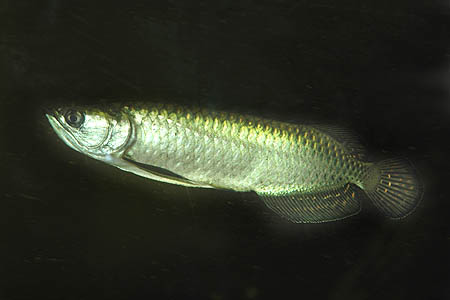
与亚洲龙鱼(Scleropages formosus)相比,鳞片更小、排列更密,体色偏铜褐。与硬骨舌鱼(Scleropages leichardti)相比,头部轮廓更倾斜,须更朝下,鳃盖有花纹。
这些区别适合与整体体形一起核对,不能把“澳洲龙”标签当作两种鱼完全相同的凭据。
图片
图片来自 SeriouslyFish,版权归各摄影者所有。
English
Overview
Scleropages jardinii is an aggressive Australian arowana, and some individuals tolerate no companions at all. Adult size and territorial behavior demand substantial accommodation. Solitary housing is the sensible starting point; juvenile tolerance is not a lifelong guarantee.
Distribution & habitat
It occurs in Indonesia, Papua New Guinea, and Australia, using slow or still streams, billabongs, and swamps. Clear water with surface plants or overhanging branches is favored.
Aquarium setup
A footprint around 180 × 60 cm is only an absolute lower limit for an adult. More space is preferable, and decoration should not obstruct swimming room.
Use powerful effective filtration and a disciplined water-change routine. Prolonged poor conditions can affect the eyes and gills. Stay within the established chemistry range rather than allowing persistently elevated pH. A heavy, securely fitted cover must resist powerful jumps.
Diet & feeding
Large quantities of feeder fish are unnecessary and can introduce parasites or disease. Alternatives include earthworms, nutritionally conditioned insect larvae, bloodworms, shell-on prawn, mussel, and accepted pellets or frozen foods.
Vary the menu to reduce dependence on a single favored item. Small juveniles benefit from several modest meals daily; larger individuals need less frequent feeding. Remove uneaten food promptly.
Behaviour & compatibility
Small fishes are prey, and large companions are not automatically safe. Some individuals coexist with robust, appropriately sized fishes, while others reject every tankmate. If a community is attempted, introduce the arowana last and continue observing as it grows.
Most are strongly territorial toward other arowanas. A group of six to ten may distribute aggression only where truly exceptional space is available. This is not a justification for group housing in an ordinary aquarium, and solitary maintenance is generally preferable.
Breeding
Captive spawning occurs infrequently, with commercial production more commonly using large outdoor earthen ponds. The space required is difficult to provide indoors. It is a mouthbrooder. Hatched young continue to associate with the parent, leaving the mouth to feed and returning when threatened before gradually becoming independent.
Notes
Compared with Scleropages formosus, it has smaller, more numerous scales and a bronze appearance. A more sloping head, downward-directed barbels, and patterned gill covers distinguish it from Scleropages leichardti.
These clues should be assessed together. An Australian-arowana sales label does not establish that the two regional species are interchangeable.
来源
- https://www.seriouslyfish.com/species/scleropages-jardinii(抓取于 2026-10-10)
scleropages-jardinii · 文件: data/species/scleropages-jardinii.md · 状态: 草稿