Scleromystax sp. C113
概要
| 字段 | 值 |
|---|---|
| 类别 | 鱼 |
| 学名 | Scleromystax sp. C113 |
| 分类 | 鲶形目 Siluriformes › 美鲶科 Callichthyidae › Scleromystax |
| 水体 | 淡水 |
| 原产地 | 巴西 |
| 成体体长 | 6.5 cm |
| 饲养难度 | 入门 |
| 最小水体 | 108 L |
| 最小缸长 | 120 cm |
| 群居方式 | 群游 |
| 外部数据 | seriouslyfish scleromystax-c113 |
| 领地性 | 是 |
| 繁殖方式 | 附着产卵 |
水质参数
| 参数 | 耐受范围 | 最适范围 | 单位 |
|---|---|---|---|
| 水温 | 16–24 | — | °C |
| pH | 5–7.5 | — | — |
| 总硬度 | 1–10 | — | dGH |
概述
Scleromystax sp. C113 是尚未正式定名的甲鲶,雄鱼之间领地争斗明显,小缸不能并养多雄。对其他鱼通常较温和,但安排同种数量和性别时,不能把它当作普通温和鼠鱼直接组群。
分布与栖息地
据称采自巴西东部巴伊亚州、萨尔瓦多以南一带,具体产地仍未确认。
饲养环境
优先铺细沙,圆滑砾石也可使用,但必须保持清洁。应有适当遮蔽,计划在足够大空间内养多条雄鱼时尤其重要。遮蔽并不能让小缸多雄变得合适。
食性与喂食
同属鱼多为搜食型杂食鱼,人工饲养常用沉底干粮与小型活饵、冷冻红虫和水蚯蚓等搭配。要专门规律投喂,不能依靠其他鱼的残饵,也不能指望它替代日常清缸。
习性与混养
雄鱼对同种雄鱼攻击性领地行为强,小型缸内不可共同饲养。其他情况下通常较温和,选择同伴时仍需把雄间竞争与一般混养性情区分开。
雌雄区分
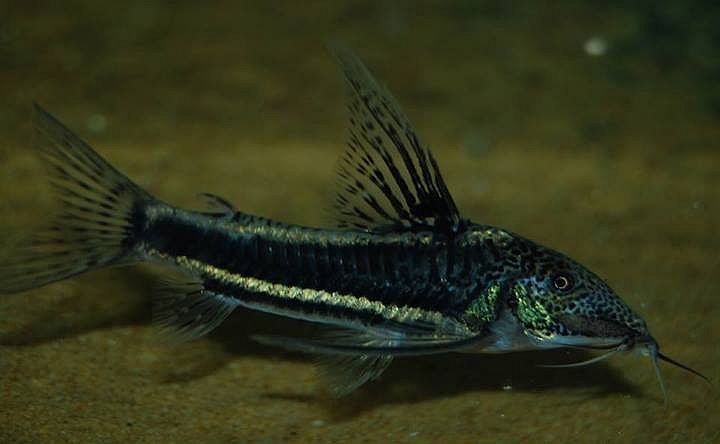
雄鱼的花纹更浓,胸鳍和背鳍比雌鱼更长。
繁殖
可以采用近缘鼠鱼常用方法,但亲鱼比例以一雄一雌为宜,避免多雄忙于互斗。雌鱼明显抱卵时,以适温范围内稍凉的新水换水约 50%~70%,加强充氧与水流,可每天重复到产卵。
卵可能附在玻璃、细叶植物或沉水产卵拖把上,拖把便于整体移卵。产后将成鱼或卵隔离,玻璃卵可用手指轻轻滚起,孵化容器使用相同水体并充分充氧。有繁殖者加入少量亚甲蓝或一两枚桤木果辅助防霉。
孵化一般约三至四天,卵黄吸收后喂微虫、丰年虾无节幼体。鱼苗不算容易养大,需保持非常好的水质;薄沙底似乎比完全裸底较少出现健康问题。
补充说明
C113 是供未定名贸易鱼识别的编号,不能将它理解为已经确定的新种正式名称。
相关甲鲶可借特化肠道摄取空气,偶尔上浮吞气常见。胸鳍硬棘可能造成疼痛刺伤,棘基分泌物可能有轻微毒性,搬运时要小心。
图片
图片来自 SeriouslyFish,版权归各摄影者所有。
English
Overview
The unidentified Scleromystax sp. C113 requires careful attention to sex ratios. Males defend space aggressively against one another and cannot share a small aquarium. Otherwise generally peaceful behavior does not make an ordinary mixed-male cory group appropriate.
Distribution & habitat
It was reportedly collected in eastern Brazil's Bahia State, south of Salvador. A precise confirmed locality remains unavailable.
Aquarium setup
Fine sand is preferable, while rounded gravel requires excellent cleaning. Provide cover, especially when attempting to house more than one male in sufficiently spacious quarters. Shelter does not make multiple males suitable for a small tank.
Diet & feeding
Members of Scleromystax are generally foraging omnivores. Captive feeding commonly combines sinking preparations with small live or frozen bloodworms and aquatic worms.
Offer varied meals specifically for these fish. Scraps from tankmates are unreliable, and catfish cannot take over routine cleaning.
Behaviour & compatibility
Territorial aggression is directed strongly between males, which should not be kept together in small aquaria. Outside that context the fish is generally peaceful. Male rivalry and compatibility with other inhabitants must therefore be considered separately.
Sexual dimorphism
Males have more intense markings and longer dorsal and pectoral fins than females.
Breeding
Methods used with related catfishes can be employed, but use one male per female so rivals do not concentrate on fighting. Once the female is visibly gravid, replace around 50–70% of the water with slightly cooler water within the appropriate range and increase aeration and movement. Repeat daily if necessary until spawning.
Eggs may adhere to glass, fine plants, or submerged mops, with mops simplifying collection. Separate adults and eggs after spawning. Glass-bound eggs can be gently rolled free and incubated in the same water with ample oxygenation. Some breeders use a little methylene blue or one or two alder cones to discourage fungus.
Hatching generally takes three to four days. Once yolk is absorbed, fry accept microworms and Artemia nauplii. Rearing is demanding and requires excellent water quality. A thin sand layer appears to reduce health problems compared with completely bare flooring.
Notes
C113 is an identification code for an unresolved aquarium fish, not a formal species name.
Related armored catfishes can supplement respiration through a specialized intestine, explaining occasional surface gulps. Rigid pectoral spines may cause painful punctures, and nearby gland secretions are suspected of mild toxicity, so handle with care.
来源
- https://www.seriouslyfish.com/species/scleromystax-c113(抓取于 2026-10-10)
scleromystax-sp-c113 · 文件: data/species/scleromystax-sp-c113.md · 状态: 草稿